
Mintaka Pass
High mountain pass on the northern approach to Pakistan's Hunza Valley. Historically served as one of two ancient access routes from Central Asia (with nearby Kilik Pass); remote and rarely used today.
Overview
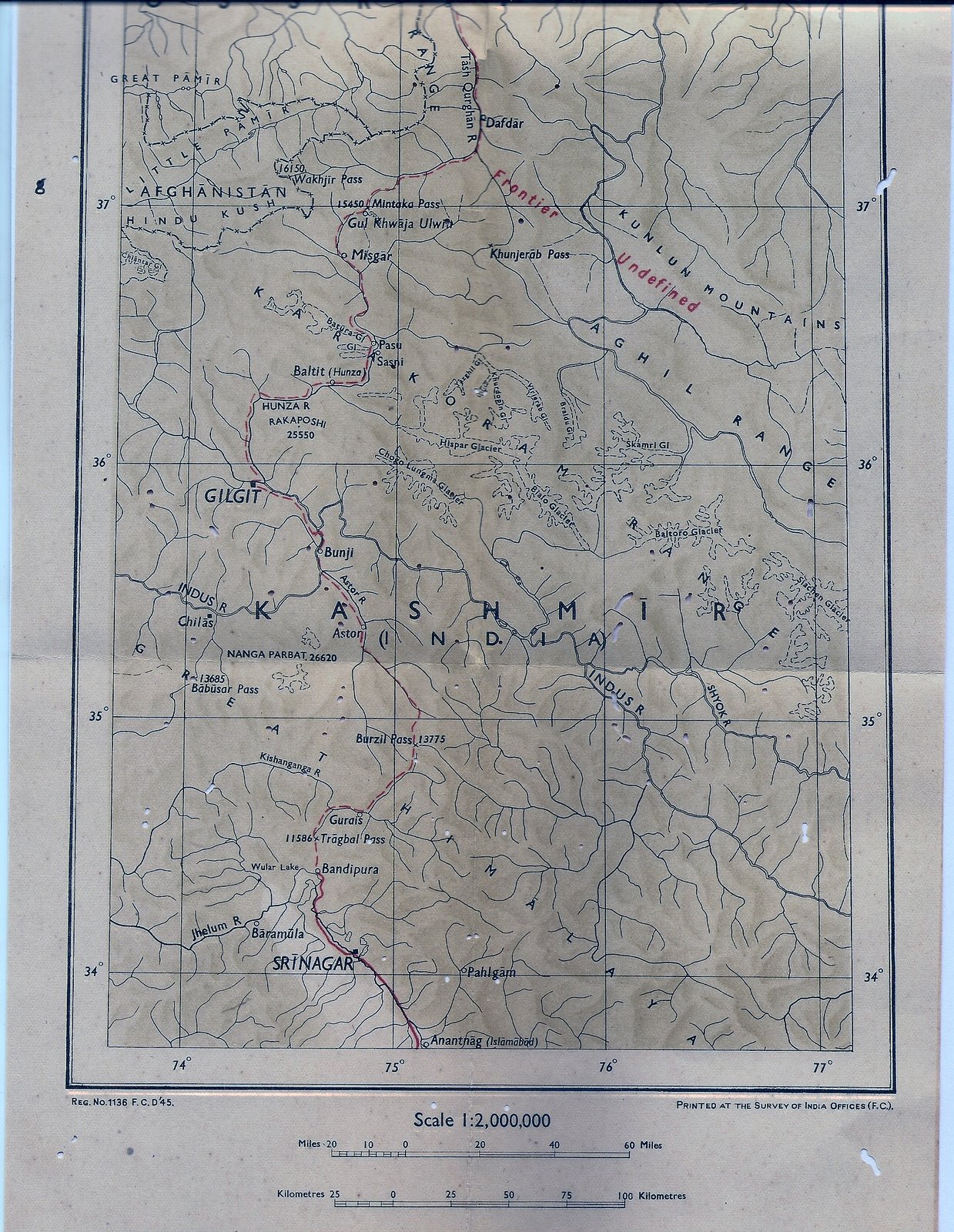
Mintaka Pass (also spelled Minteke; elevation about 4,709 m or 15,450 ft) is a high mountain passage on the northern edge of the Karakoram, providing one of the ancient routes into the Upper Hunza (Gojal) valley in what is now northern Pakistan. Together with the nearby Kilik Pass (about 4,827 m or 15,837 ft and roughly 30 km to the west), it formed a principal corridor between Central Asia and the valleys south of the high ranges.
Image gallery
5 Images



Geography and physical characteristics
The pass lies in a rugged, glaciated region close to the modern border area between Pakistan and China (Xinjiang). Approaches are steep and frequently affected by permanent snow and glaciers. Historically the two neighboring passes were chosen according to seasonal and logistical needs: Kilik offered a less glacier-bound approach, while Mintaka provided a more direct but sometimes icier route.
Historical role
For centuries Mintaka and Kilik served as part of the network of mountain tracks that linked caravans and travellers from the Tarim Basin and Central Asia into the Karakoram and Himalayan foothills. Merchants, migrants and local polities used these corridors to move goods, animals and cultural contacts into the Upper Hunza Valley and beyond. Their importance declined as alternative routes and modern border controls developed.
Distinctions and practical notes
- Kilik vs. Mintaka: Kilik Pass was traditionally preferred for heavily laden pack animals because its approach was often free of heavy glacier cover; Mintaka was more direct but could be obstructed by ice.
- Altitude and terrain: Both passes are high, exposed, and subject to sudden weather changes; travel carried significant risk in pre-modern times.
- Location reference: For regional context see Mintaka Pass and Kilik Pass.
Modern status and significance
In contemporary terms these passes have little commercial traffic. Political borders, modern highways (which favor engineered lower crossings) and the growth of alternative trade corridors reduced their former role. Today they are of interest to historians, geographers and a small number of adventure trekkers and mountaineers who study or traverse high mountain routes. The passes also illustrate how highland geography shaped historical patterns of trade and cultural exchange in Central and South Asia.
Notable facts
Mintaka and Kilik remain notable as examples of how natural passes—rather than single grand roads—enabled connections across some of the world’s highest ranges. Their long use by local peoples and long-distance traders reminds us that ancient networks adapted closely to seasonal conditions, pack-animal capabilities and changing political boundaries.
Related articles
Author
AlegsaOnline.com Mintaka Pass Leandro Alegsa
URL: https://en.alegsaonline.com/art/65312