
Ash Street, a hamlet in Babergh, Suffolk
Ash Street is a small rural hamlet in the Babergh district of Suffolk, England, recorded in the Domesday Book as 'Asce' and named for ash trees; typically a cluster of dwellings amid agricultural landscape.
Overview
Ash Street is a hamlet located in the Babergh district of eastern England's county of Suffolk. As a hamlet it is a small settlement, generally smaller than a village and with limited public services. Hamlets such as Ash Street are characteristic of Suffolk's rural pattern: dispersed farms, cottages and lanes set within farmland and hedgerows.
Image gallery
2 Images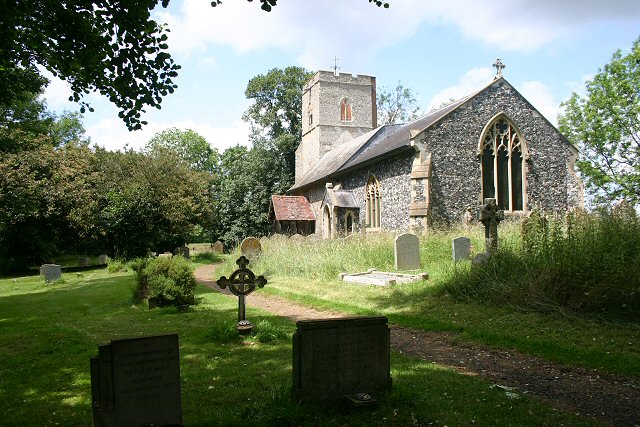

Location and administration
Administratively Ash Street lies within the local government area of Babergh. Hamlets do not always form separate civil parishes and are often grouped with nearby villages for parish governance and community services. The name and precise boundaries are usually defined by local usage, historic records and modern mapping.
History and name
The settlement appears in the Domesday Book (1086) under the name "Asce", showing that it was established by the late 11th century. The element "Ash" in English place names commonly derives from the Old English word for the ash tree (æsc), indicating the local presence of these trees when the place was named. The second element "Street" can suggest an old track or route (from Old English stræt), though in many modern names it simply denotes a linear settlement along a road.
Characteristics and landscape
Ash Street exemplifies typical Suffolk rural settlement: low-density housing, farm buildings, and surrounding arable fields or pasture. Such hamlets often lack amenities like shops or churches, relying on neighbouring villages and towns for services. Typical features include narrow country lanes, stone or brick cottages, boundary hedges and small woodlands or solitary ash trees that may have inspired the place name.
Importance and records
While small, hamlets like Ash Street are important for understanding England's agricultural history and settlement geography. References in medieval records such as the Domesday Book make them useful to researchers tracing landholding, landscape change and local place-name development. For local information, maps and civil parish records held by Suffolk and Babergh authorities provide the most detailed contemporary data.
Visiting and further information
Tags
Related articles
Author
AlegsaOnline.com Ash Street, a hamlet in Babergh, Suffolk Leandro Alegsa
URL: https://en.alegsaonline.com/art/6522
Sources
- domesdaybook.co.uk : "The Domesday Book Online - Suffolk A-B"