
Miltonvale, Kansas: small city in Cloud County
Miltonvale is a small city in Cloud County, Kansas, United States. It had 539 residents at the 2010 census. This article summarizes its location, character, history, economy, and community life.
Overview
Miltonvale is a small incorporated city in Cloud County, in the north-central part of Kansas, United States. According to the 2010 U.S. census the city had 539 residents; populations of towns this size commonly fluctuate over time. Miltonvale functions as a local center for nearby farms and residences and exemplifies many small Midwestern communities in scale and services.
Image gallery
2 Images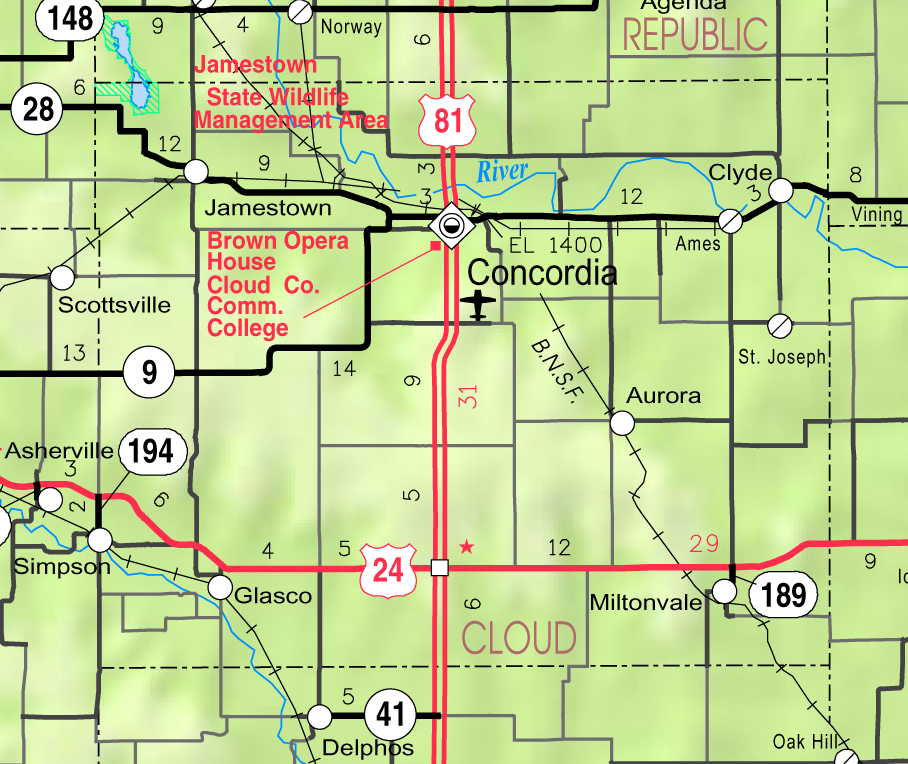

Geography and climate
Miltonvale is located on the Great Plains. The surrounding landscape is predominantly agricultural — fields of grain and pasture — with a mix of open prairie and small woodlots. The region experiences a continental climate with hot summers, cold winters, and seasonal storms, including spring thunderstorms and possible winter snow.
History and development
The community developed in the broad era of settlement and agricultural expansion that shaped much of Kansas during the late 19th and early 20th centuries. Like many small Kansas towns, its growth was tied to farming, local trade, and regional transportation routes. Over time Miltonvale transitioned from a frontier-era settlement to an established small city with civic institutions and neighborhood streets.
Economy, services, and community life
Miltonvale’s economy is centered on agriculture and businesses that serve local needs. Typical services include a city hall or municipal offices, a post office, churches, small retailers, and professional services. Public education is provided through the regional Kansas unified school district system; residents also rely on nearby larger towns for medical care and specialized shopping.
Local features and notable aspects
- Community institutions: civic organizations, places of worship, and volunteer fire or emergency services.
- Recreation: parks, seasonal festivals, and outdoor activities tied to the rural landscape.
- Historic character: small downtown areas, older residences, and agricultural heritage typical of Cloud County towns.
For visitors and researchers, Miltonvale offers a window into rural Midwestern life and the agricultural economy that remains central to much of Kansas. Further details about municipal services and community events are typically available through county-level resources or local civic offices.
Related articles
Author
AlegsaOnline.com Miltonvale, Kansas: small city in Cloud County Leandro Alegsa
URL: https://en.alegsaonline.com/art/65101