
Mieszko I of Poland: First Christian Ruler and State-builder
Mieszko I (c.935–992) united West Slavic lands around the Polans, accepted Christianity in 966, and laid foundations for the Polish state; father of Bolesław I the Brave.
Mieszko I (born c. 935; died 25 May 992) is regarded as the founder of the early Polish state. As ruler of the Polans, a West Slavic tribe, he brought together neighboring lands under a central authority, established diplomatic ties with western Christian powers, and set in motion the processes of state formation and Christianization that shaped medieval Poland.
Image gallery
10 Images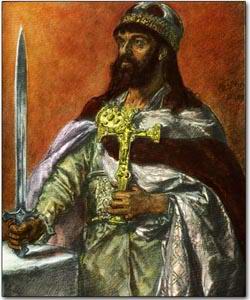


Reign and state-building
Mieszko ruled from the second half of the 10th century and expanded his control beyond his original tribal base. Through a mix of warfare, marriage alliances and diplomacy he incorporated neighboring tribes and borderlands into his domain, creating a territorial core that later rulers could build upon. He is commonly described as a duke of the Polans (Polans) and as the progenitor of the Piast ruling dynasty.
The Baptism and Christianization
In 966 Mieszko accepted baptism in a decisive political and cultural move often called the Baptism of Poland. This conversion, undertaken in part through his marriage to Dobrawa of Bohemia, aligned his realm with Latin Christendom, opened channels to the Papacy and western courts, and facilitated the introduction of clerical organization, written culture, and Christian law. The baptism was as much a diplomatic turning point as a religious one, securing a place for Mieszko’s state within the network of medieval European polities. Baptism of Poland
Foreign relations and military action
Mieszko navigated a complex neighborhood that included the German kingdom to the west, Bohemia to the south, and various Baltic and Slavic groups to the north and east. He formed alliances and fought campaigns to protect and extend his realm, balancing relations with the Holy Roman Empire and regional dukes. These actions reduced immediate threats from some neighbors and enhanced Mieszko’s political standing.
Family, succession and legacy
Mieszko’s marriage policies produced heirs who continued his work; his son Bolesław I (the Brave) became the first Polish king and further consolidated the state. Mieszko’s reign is remembered for establishing the institutional and territorial foundations for Poland, initiating its conversion to Christianity, and integrating it into medieval Europe. Details of his life and motives are reconstructed from later chronicles and archaeological evidence, so some specifics remain open to scholarly debate. 25 May 992
Why he matters
- Laid groundwork for a European polity later known as Poland.
- Introduced Christianity and church structures that shaped law and culture.
- Established a dynasty whose descendants continued state expansion.
For readers seeking a concise introduction, Mieszko I stands as a pivotal figure in Central European history: a regional leader whose political choices had long-lasting cultural and diplomatic consequences.
Related articles
Author
AlegsaOnline.com Mieszko I of Poland: First Christian Ruler and State-builder Leandro Alegsa
URL: https://en.alegsaonline.com/art/64776