
Micrometre (micron): the SI unit for small lengths
The micrometre (µm), also called the micron and spelled micrometer in American English, equals one millionth of a metre and is used for wavelengths, cells, particles and precision engineering.
Overview: A micrometre (symbol: µm) is a unit of length in the International System of Units. The alternative name micron is commonly used in everyday and scientific language. In American English the same word is often spelled micrometer. As an SI-derived unit it describes distances far smaller than those encountered in everyday life and is commonly treated as the standard metric scale for microscopic dimensions, as explained further on unit of length.
Image gallery
2 Images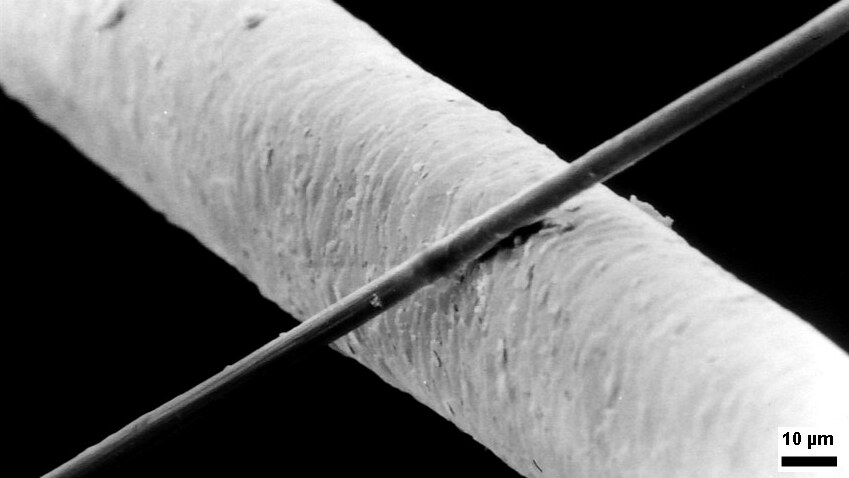

Definition and relations
By definition, one micrometre equals one millionth of a metre (1 µm = 10-6 m). It can also be expressed as 1 µm = 1,000 nanometres or, equivalently, 10,000 ångströms. The name combines the Greek prefix micro- (small) with metre, the SI base unit of length. For context, the metre is the reference standard for length in the SI system and the micrometre is a convenient derived unit for microscopic scales (metre).
History and terminology
The informal term micron predates widespread use of the formal SI name micrometre, but both are now understood. The English spelling differs: micrometre is the usual international form, while micrometer serves both as the American spelling of the unit and as the name of a precision measuring instrument (the micrometer screw gauge). Care is taken in technical writing to avoid confusion between the unit and the instrument.
Common uses and examples
The micrometre is the natural unit for many scientific and engineering contexts. Typical examples include:
- Optics and light: wavelengths of visible light lie around fractions of a micrometre, for example roughly 0.4–0.7 µm, a range discussed in overviews of the visible spectrum.
- Biology: many bacteria measure on the order of 1–10 µm and most eukaryotic cells range from a few to several tens of micrometres.
- Materials and nanotechnology: surface features, thin films and some microfabrication steps are specified in micrometres, with smaller features described in nanometres (nm) or ångströms (ångström).
- Industrial measurement: engineering tolerances, fiber diameters and particle sizes are frequently reported in micrometres; metrology instruments such as the micrometer gauge provide mechanical measurement at this scale.
Notable distinctions and usage notes
In typed text the Greek letter mu (µ) is the official symbol; when that character is unavailable it is common to write "um". Because the English word "micrometer" can mean either the unit or a measuring device, context or explicit phrasing (unit vs. instrument) is used to prevent ambiguity. For further reading on unit conventions and detailed examples see general unit references and optics summaries available from authoritative sources (micrometer spelling, length units, metre, ångström, visible spectrum).
Related articles
Author
AlegsaOnline.com Micrometre (micron): the SI unit for small lengths Leandro Alegsa
URL: https://en.alegsaonline.com/art/64602