
Melk District (Lower Austria)
Administrative district in western Lower Austria centered on the town of Melk; known for the Danube valley, Melk Abbey, agriculture, and parts of the Wachau cultural landscape.
Overview
The Melk District is an administrative district (district) in the federal state (state) of Lower Austria and forms part of the nation of Austria. Its administrative centre is the historic town of Melk, which gives the district its name. The district combines small towns, villages and agricultural countryside along a stretch of the Danube River and its tributaries.
Image gallery
1 Image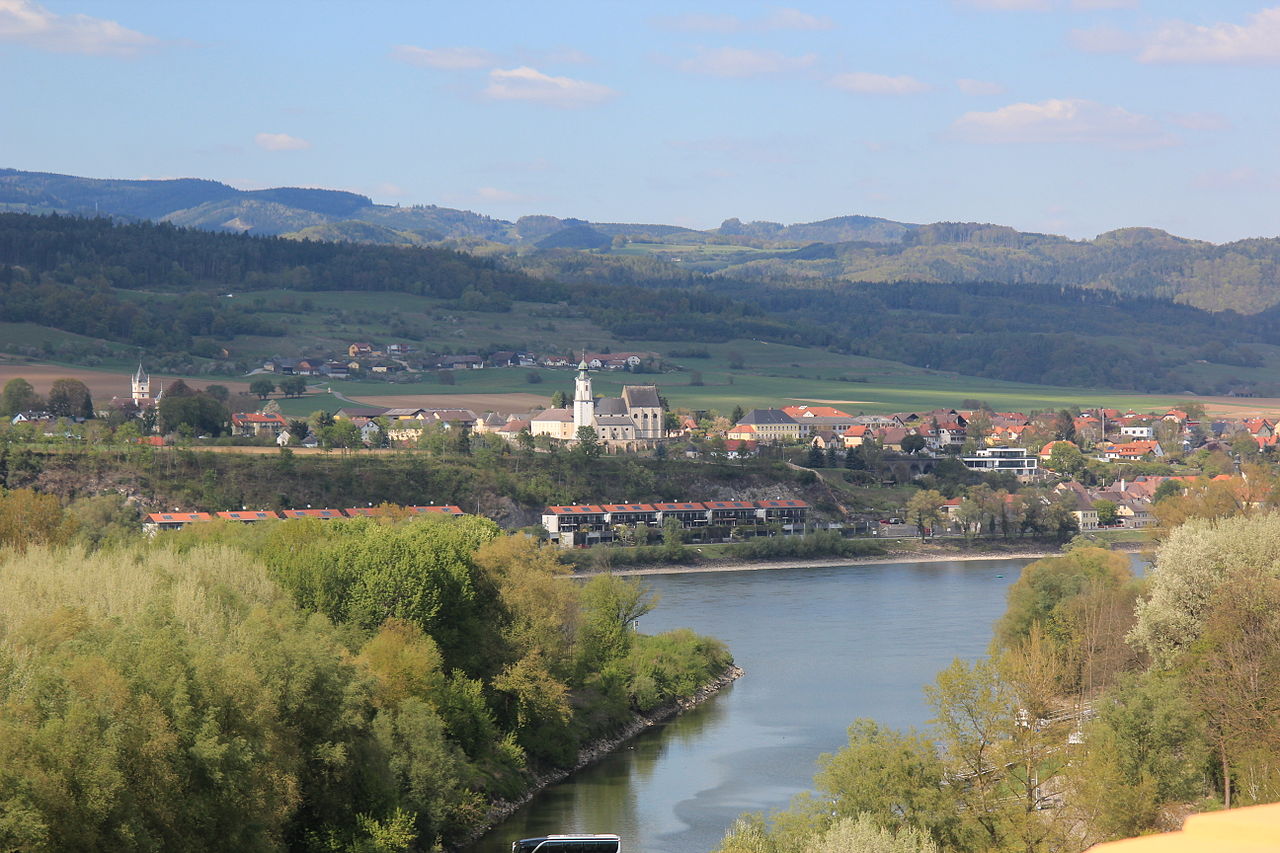
Geography and administration
Topographically the district includes river valleys, rolling hills and patches of forest. The Danube is the principal waterway; its valley has shaped settlement, transport and land use for centuries. Administratively the district is made up of numerous municipalities that range from market towns to rural communities, governed through a district authority responsible for regional planning, public services and local coordination.
Land use is mixed: cultivated fields, vineyards and orchards occupy the gentler slopes while woodland and pasture appear at higher elevations. This variety supports both agriculture and tourism as important local activities.
History and cultural significance
The area has a long human presence tied to the Danube trade route. One of the district's best-known landmarks is Melk Abbey, a Benedictine monastery with a prominent Baroque complex that overlooks the river and has attracted pilgrims and visitors for centuries. The broader Danube corridor here is culturally rich; parts of the Wachau Cultural Landscape, a UNESCO World Heritage area, lie in and around the district and reflect a long history of viticulture, monastic influence and river trade.
Economy, transport and tourism
The district's economy mixes agriculture (notably vineyards and fruit growing), small-scale manufacturing, services and a significant tourism sector. Visitors come for historic sites, river cruises, hiking and local food and wine. Transport connections include regional roads that link towns to larger urban centres, and river transport that has historical as well as touristic importance.
Notable places and distinctions
- Melk Abbey — historic Benedictine monastery and cultural landmark
- Sections of the Danube valley and vineyards associated with the Wachau landscape
- Traditional market towns and rural villages that preserve regional customs
As a district, Melk plays a role in conserving cultural heritage while supporting modern local economies. Its position on the Danube continues to define its identity, linking natural landscape, historic architecture and living rural traditions.
Related articles
Author
AlegsaOnline.com Melk District (Lower Austria) Leandro Alegsa
URL: https://en.alegsaonline.com/art/63665