
McCurtain County, Oklahoma
County in southeastern Oklahoma centered on Idabel; known for forests, rivers and lakes, Choctaw heritage, timber economy and outdoor recreation. Population recorded 34,402 in 2000.
Overview
McCurtain County occupies the far southeastern corner of southeastern Oklahoma in the U.S. state of Oklahoma. The county seat is Idabel, a small city that serves as the region's commercial and administrative center. McCurtain County combines lowland river valleys, lakes, and forested hills and has long been shaped by natural resources and outdoor recreation.
Image gallery
4 Images


Geography and natural features
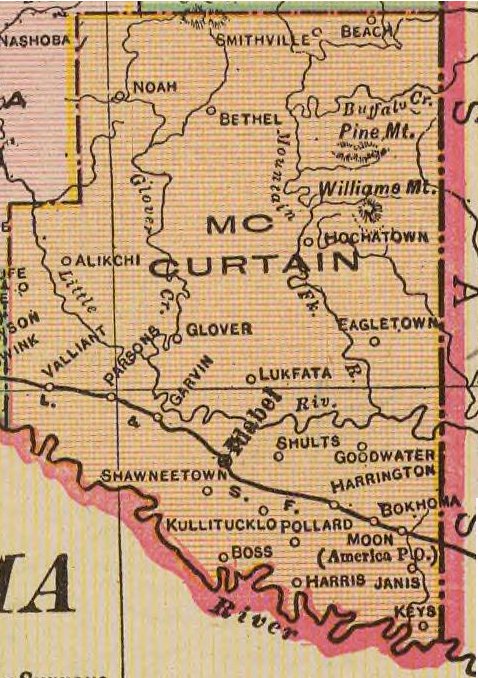
The landscape includes parts of the Ouachita foothills and broad river basins. Streams such as the Mountain Fork and Little River feed reservoirs and wooded floodplains. Large blocks of mixed pine and hardwood forest support wildlife and timber production, and several lakes provide popular fishing and boating sites.
History and culture
The area was traditionally part of Choctaw territory after the 19th-century removals and retains strong Indigenous cultural connections. The county was organized when Oklahoma became a state and carries a name that reflects that heritage. Early economic growth centered on railroads and the timber industry, which attracted sawmills and related towns.
Economy, recreation and importance
Timber and agriculture have been important economic bases, while tourism has grown around hunting, fishing, and lakeside parks. Attractions in and near the county draw anglers, campers and canoeists; protected public lands and recreational facilities make the county a regional destination for outdoor activities.
Communities and notable facts
- Idabel — county seat and service center.
- Broken Bow — gateway to lakes and state park recreation.
- Smaller towns and unincorporated communities that reflect the county's rural economy.
According to the 2000 census the county had 34,402 residents; population trends since then reflect changing local economies and the influence of tourism. McCurtain County remains notable for the mix of natural landscapes, Choctaw cultural ties, and outdoor industry that define this part of Oklahoma.
Related articles
Author
AlegsaOnline.com McCurtain County, Oklahoma Leandro Alegsa
URL: https://en.alegsaonline.com/art/63222