
May Queen
A folkloric and festival figure embodying spring's renewal, the May Queen is a crowned maiden in May Day celebrations with roots in ancient spring rites and later pageantry.
Overview
The May Queen, or Queen of May, is a traditional figure used to personify spring, fertility and the renewal of nature during May Day celebrations. Typically represented by a young woman or girl crowned with flowers, she appears in public processions, school pageants and community festivals throughout parts of Europe and areas influenced by European customs.
Image gallery
4 Images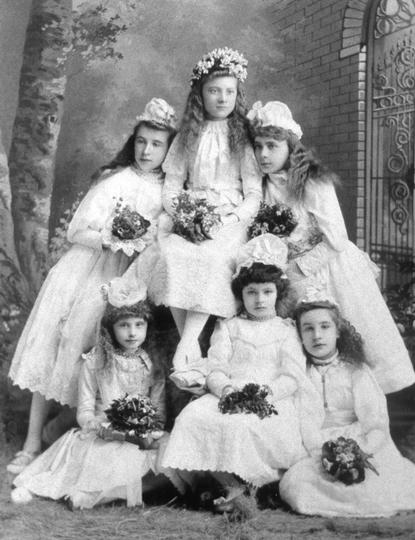



Characteristics
Common features associated with the May Queen include:
- a floral crown and white or pastel dress
- a leading role in a parade or crowning ceremony
- a symbolic link to growth, blossoms and the agricultural year
She is often accompanied by dancing, maypoles, garlands and subsidiary characters such as the May King or costumed figures representing nature.
Origins and development
The role developed from older springtime rites that celebrated the end of winter and the start of the growing season. Elements resembling the May Queen can be traced in a range of folk customs — from classical spring festivals to medieval and early modern European village ceremonies. In the 19th century the figure was popularized in civic pageants and school events, becoming a standard part of May Day observances in many communities.
Customs and examples
Typical practices include crowning the May Queen in a public ceremony, leading dances around a maypole, and performing short pageants. Schools and local societies often select a child to serve as May Queen for a day. Some regions maintain elaborate ritual processions while others present the figure in a simple ceremonial role.
Variations and notable distinctions
Local variants exist: some places elect a May King alongside the Queen; others feature complementary figures like the Green Man or Jack-in-the-Green. The term "Queen of May" also sometimes refers to Catholic May crownings of the Virgin Mary, a distinct religious devotion that shares the seasonal motif but differs in meaning and context.
For further context and regional descriptions see additional resources.
Related articles
Author
AlegsaOnline.com May Queen Leandro Alegsa
URL: https://en.alegsaonline.com/art/63079
Sources
- british-history.ac.uk : The Diary of Henry Machyn: Citizen and Merchant-Taylor of London (1550-1563)