
Ma Baker (Boney M. song)
1977 Euro-disco single by Boney M., produced by Frank Farian; a fictionalized take on outlaw Ma Barker that became a major European hit and has been widely remixed.
"Ma Baker" is a 1977 disco single recorded by the Euro-Caribbean vocal group Boney M. Released on 2 May 1977, it appears on the group's album Love for Sale and was produced by Frank Farian. The song presents a dramatized, catchy account of a female outlaw nicknamed "Ma Baker," a name adapted from the real-life criminal figure Ma Barker. With its spoken-word intro and a driving disco rhythm, it became one of Boney M.'s best-known tracks in Europe.
Image gallery
1 Image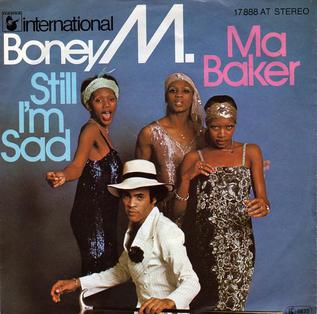
Composition and lyrics
The song combines a steady four-on-the-floor disco beat with prominent percussion, a memorable chorus and a short theatrical spoken opening that introduces the title character. Lyrically the track fictionalizes the criminal legend into a pop narrative: it places emphasis on bold, evocative lines rather than documentary detail, turning the outlaw theme into a dance-floor story. Musically it is typical of Boney M.'s late-1970s sound—studio-crafted production, layered vocal harmonies and a strong rhythmic pulse.
Release, chart performance and reception
Released as a single in spring 1977, "Ma Baker" was a major commercial success across continental Europe and reached number two on the UK singles chart. In the United States the record made only a modest commercial impression compared with its European performance. Critics and listeners praised its hook and theatrical delivery; it helped to reinforce Boney M.'s status as a leading disco act of the era.
Legacy and versions
Over the years "Ma Baker" has been remixed and sampled by various artists and producers, appearing in dance compilations and club playlists. Its blend of narrative lyric and dance arrangement has made it a frequent choice for reinterpretation. For more on the single's release details and later reissues, see contemporary discographies and databases such as record listings.
- Artist: Boney M.
- Album: Love for Sale
- Release date: 2 May 1977
- Producer: Frank Farian
While rooted in a sensationalized version of a historical criminal figure, the song is best understood as a product of its disco era: theatrical, dance-oriented and designed for broad commercial appeal rather than historical accuracy.
Related articles
Author
AlegsaOnline.com Ma Baker (Boney M. song) Leandro Alegsa
URL: https://en.alegsaonline.com/art/60233