
Maamme (Our Land) — Finland’s national anthem
Maamme ("Our Land") is the national anthem of Finland, originally a Swedish-language poem by Johan Ludvig Runeberg set to music by Fredrik Pacius; it exists in Finnish and Swedish and is used at official events.
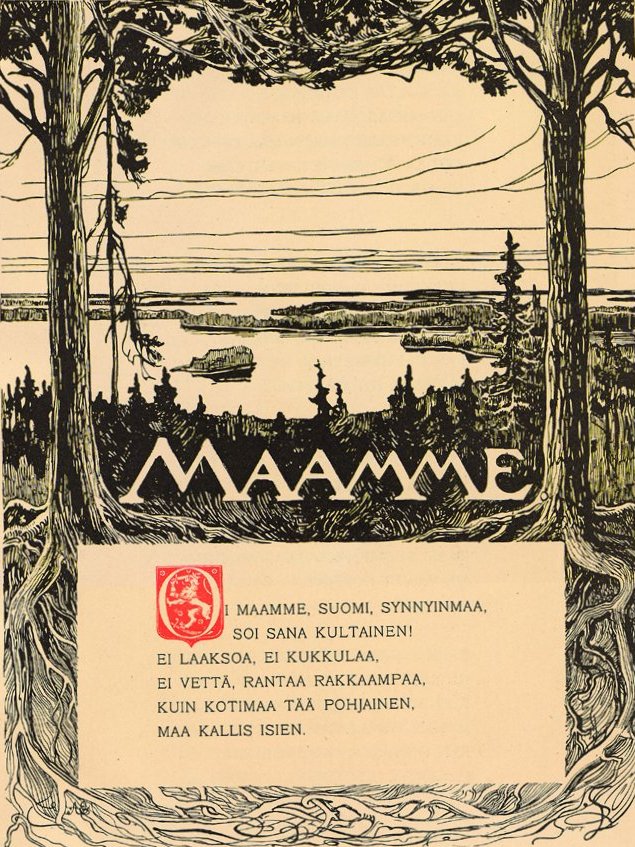
Maamme (Finnish for "Our Land") and its Swedish-language original Vårt land together serve as the national anthem of Finland. The phrase itself translates to "Our Land" in English. The tune and words appear in the two official languages of the country and the composition has been a central part of Finnish public life since the mid-19th century. The song is often simply referred to as the country's national anthem in ceremonial contexts.
Image gallery
3 Images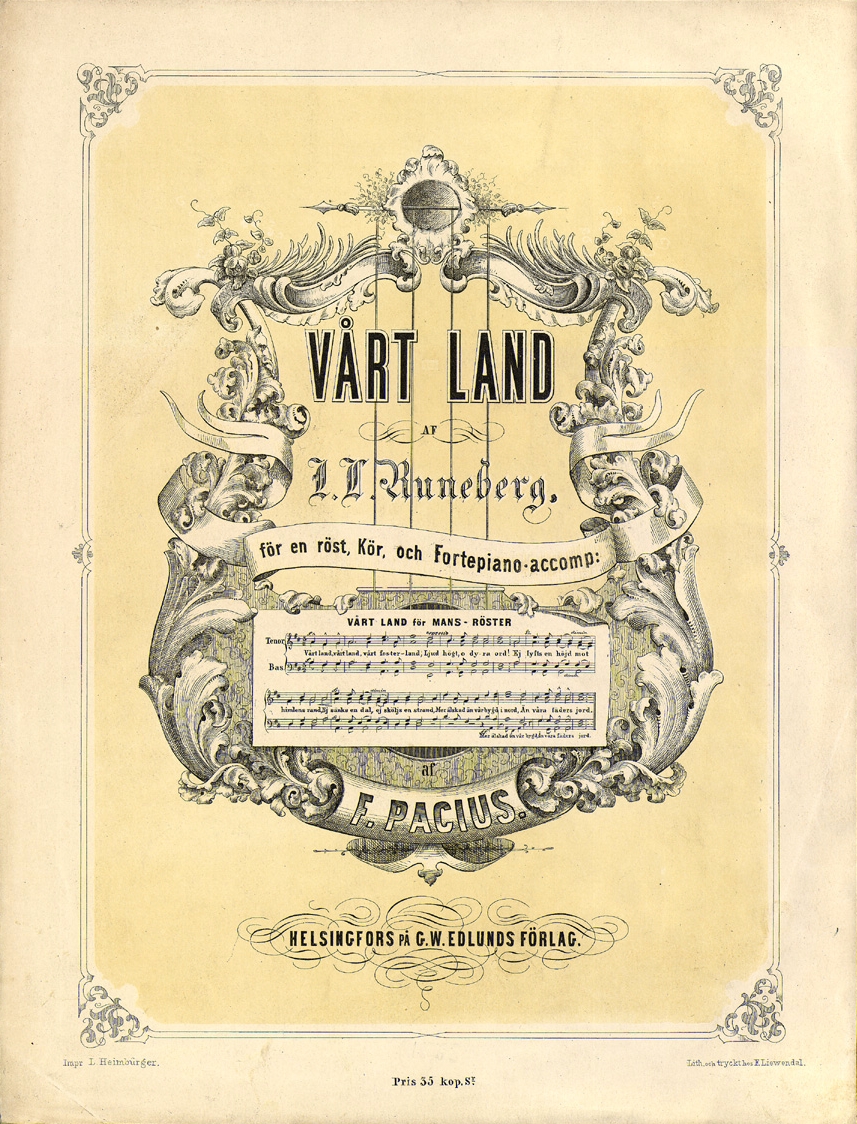

Origins and authorship
The lyrics began as a poem by the Swedish-speaking Finnish poet Johan Ludvig Runeberg while Finland was the Grand Duchy of Finland under Russian sovereignty. Written in Swedish and expressing attachment to the homeland, the poem was set to music by German-born composer Fredrik Pacius, who worked in Finland and contributed significantly to its musical life. The pairing of Runeberg's words and Pacius's melody dates from the same mid-19th-century period in which national sentiment and cultural identity were taking shape across Europe.
The same melody was later adopted in the neighboring country of Estonia, where it serves as the tune for the anthem "Mu isamaa, mu õnn ja rõõm". The shared melody highlights cultural links in the region while each country retains distinct words and uses.
Language, translation and performance
Although the original poem was in Swedish, a widely used Finnish-language version was produced by the poet-translator Paavo Cajander in the late 19th century. Both language versions coexist in Finland: the Finnish text, usually called Maamme, is most commonly sung in public, while the Swedish original is retained in Swedish-speaking communities and for bilingual occasions.
Formally the anthem contains several verses, but public performances typically present only the first verse and the refrain. Its character is solemn and stately rather than martial, which suits occasions ranging from state ceremonies to sporting events. The anthem is treated as a symbol rather than a legal instrument: it has long been observed by custom and practice but, unlike some national symbols, it was not originally established by a specific parliamentary law.
Uses, customs and notable points
- It is performed at state ceremonies, official receptions, school events and international sports matches.
- Custom dictates respectful standing during the anthem; in bilingual contexts either language may be used or both versions sung in turn.
- Its dual-language origin reflects Finland's historical Swedish-speaking minority and the development of Finnish national identity.
- The shared melody with the Estonian anthem is an uncommon case of neighboring countries using the same tune for different national texts.
Because the anthem grew out of 19th-century literary and musical culture rather than formal legislation, discussions about its text, language, or official status have occasionally arisen, but it remains the principal musical emblem of Finnish nationhood. For further background on the poem, its author and the musical setting, see entries and resources linked under the names and titles above, or consult national cultural repositories and historical overviews represented by the placeholders here: Vårt land, national anthem, Finland, Our Land, Paavo Cajander, Johan Ludvig Runeberg, Russian rule, Estonia, Mu isamaa, mu õnn ja rõõm and Fredrik Pacius.
Questions and answers
Q: What are the titles of Finland's national anthem?
A: The titles of Finland's national anthem are "Maamme" in Finnish and "Vårt land" in Swedish, both meaning "Our Land" in English.
Q: Who wrote the lyrics for Maamme?
A: The lyrics for Maamme were written by Johan Ludvig Runeberg in the mid-19th century when Finland was known as the Grand Duchy of Finland.
Q: Who composed the music for Maamme?
A: The music for Maamme was composed by German-born musician Fredrich Pacius around the same time that Johan Ludvig Runeberg wrote the lyrics.
Q: Is this same music used in any other national anthems?
A: Yes, this same music is used in Estonia's national anthem Mu isamaa, mu õnn ja rõõm.
Q: When was Maamme translated into Finnish?
A: Maamme was translated into Finnish by poet Paavo Cajander in 1889.
Related articles
Author
AlegsaOnline.com Maamme (Our Land) — Finland’s national anthem Leandro Alegsa
URL: https://en.alegsaonline.com/art/60239