
M. H. Mohamed (Sri Lankan politician)
Profile of Mohamed Haniffa Mohamed (1921–2016), Sri Lankan politician who served as Mayor of Colombo (1960–1962), Speaker of Parliament (1989–1994) and a long‑time parliamentarian and government minister.
Overview
Mohamed Haniffa Mohamed (15 June 1921 – 26 April 2016), commonly known as M. H. Mohamed, was a prominent Sri Lankan political figure whose career spanned municipal government and national politics. He is best known for serving as Mayor of Colombo from 1960 to 1962 and as the 14th Speaker of the Parliament of Sri Lanka from 1989 to 1994. Over several decades he was a long‑standing member of Parliament and held ministerial and other public responsibilities.
Image gallery
2 Images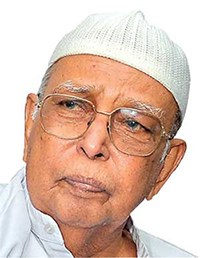

Early life and background
Born in 1921, Mohamed belonged to the Sri Lankan Moor community, a Muslim minority group in Sri Lanka. His rise from municipal politics to the national legislature is often cited as an example of how local civic leadership provided a pathway to higher office in mid‑20th century Sri Lanka. Details of his early non‑political life are less widely documented in brief summaries; biographical profiles and institutional records offer fuller timelines and context.
Municipal leadership
Mohamed achieved an early and notable milestone in becoming the first Sri Lankan Moor to serve as Mayor of Colombo, holding the office from 1960 to 1962. As mayor he was responsible for civic administration in the capital, representing Colombo in ceremonial functions and chairing municipal deliberations. His election to that post marked an important moment of minority representation in the city’s civic leadership.
Parliamentary career and speakership
Continuing his political career at the national level, Mohamed was elected to Parliament and remained an active parliamentarian for many years. He was associated with mainstream party politics and occupied ministerial posts at different times. In 1989 he was chosen as Speaker of the Parliament, a role he filled until 1994. As Speaker he presided over sittings of the legislature, managed parliamentary procedure and sought to maintain order and fairness in debates during a politically challenging period.
Significance and legacy
- First Sri Lankan Moor to serve as Mayor of Colombo, a notable point in the history of minority participation in urban governance.
- Speaker of Parliament (1989–1994), serving as the presiding officer during important legislative sessions at the end of the 20th century.
- A long‑time public servant whose career illustrates the connection between municipal leadership and national office.
Context and assessment
Mohamed’s career should be viewed in the context of Sri Lanka’s post‑independence political development, when municipal and parliamentary institutions evolved alongside changing social dynamics. Observers note his role in representing minority interests within mainstream politics and his contribution to parliamentary practice as Speaker. Evaluations of his impact are best informed by contemporary records, parliamentary debates and newspaper archives.
Further reading and sources
For an authoritative outline of his parliamentary service and formal offices see institutional biographies and archival material available through official profiles and historical summaries. A concise profile is available here, and parliamentary records and related documentation can be consulted via the parliamentary pages Parliament of Sri Lanka. These sources provide fuller lists of offices, dates and public statements from his career.
Related articles
Author
AlegsaOnline.com M. H. Mohamed (Sri Lankan politician) Leandro Alegsa
URL: https://en.alegsaonline.com/art/60184
Sources
- slelections.gov.lk : "PARLIAMENTARY GENERAL ELECTION - 02-04-2004"
- dailymirror.lk : "M.H. Mohomad passes away"