
Louisiana Territory (1805–1812)
Organized incorporated U.S. territory created from the Louisiana Purchase; existed 1805–1812, then renamed Missouri Territory. Key to westward expansion, exploration, and the reorganization of former French lands.
Overview
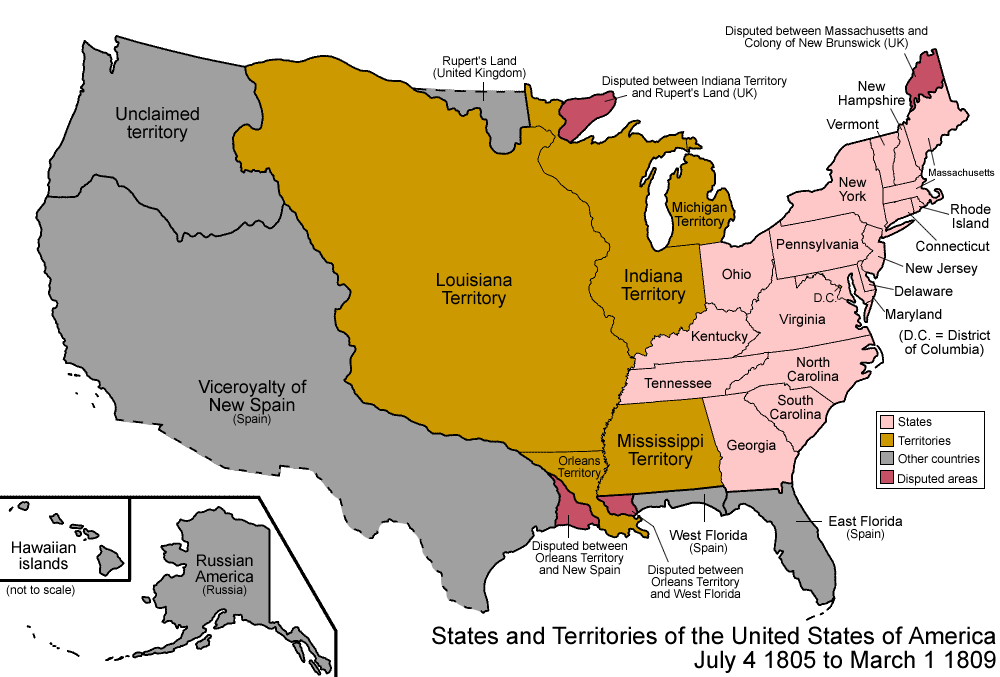
The Territory of Louisiana was an organized, incorporated territory of the United States formed from lands acquired in the Louisiana Purchase. The territorial organization dated from July 4, 1805, and continued until June 4, 1812, when the name was changed to the Missouri Territory. Its establishment brought a vast area of central North America under U.S. administration and set the stage for exploration, settlement, and later statehoods.
Image gallery
3 Images
Geography and extent
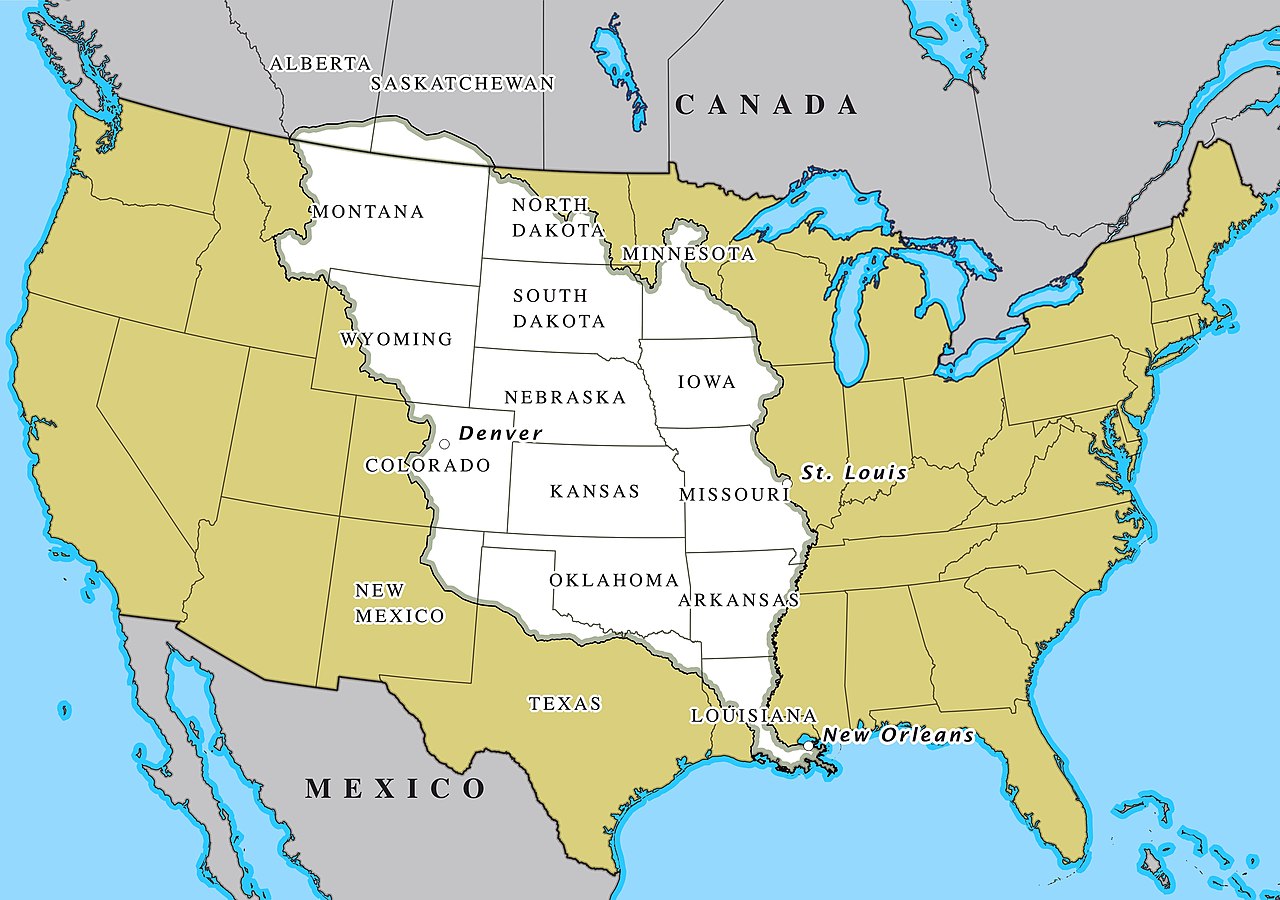
The area commonly called the Louisiana Territory comprised much of the land between the Mississippi River and the Rocky Mountains and extended from the Gulf of Mexico north toward the Canadian border. These lands had been part of colonial Louisiana (New France) and had passed between Spain and France before the United States purchased them in 1803. Boundaries were broad and imprecise on contemporary maps, encompassing river valleys, plains, and mountain frontiers inhabited by diverse Indigenous nations.
Administration and government
As an organized incorporated territory, Louisiana was governed under federal law with officials appointed by Congress or the president. Territorial administration provided a governor, judges, and a limited legislative structure while allowing gradual introduction of American legal and political institutions. St. Louis and other river towns became important administrative and commercial centers during this period.
History and significance
- Acquisition: The United States purchased the Louisiana lands from France in 1803, an event that roughly doubled the nation's size and required new administrative arrangements.
- Formation: Initially managed as a district, the area was formally organized as the Louisiana Territory on July 4, 1805, creating a separate entity from the Territory of Orleans (which later became the state of Louisiana).
- Exploration: The Lewis and Clark expedition (1804–1806) and other surveys used St. Louis as a launching point and increased geographical knowledge, routes, and contacts across the territory.
- Reorganization: When the southern portion became the state of Louisiana in 1812, the remaining organized territory was renamed the Missouri Territory on June 4, 1812.
Legacy and later developments
The period of the Louisiana Territory was brief but consequential. It established a framework for bringing large continental territories into the United States, accelerated exploration and settlement, and altered the balance among European powers and Indigenous nations. Over the following decades the territory gave rise to multiple future states and played a central role in debates over slavery, expansion, and federal authority—issues that shaped nineteenth-century American politics and development.
Distinctions and notable facts
It is important to distinguish the Territory of Louisiana (1805–1812) from the later U.S. state of Louisiana and from the broader colonial entity known as New France's Louisiana. The organized territory covered inland regions rather than the coastal, culturally distinct Territory of Orleans, which became the state of Louisiana in 1812.
Related articles
Author
AlegsaOnline.com Louisiana Territory (1805–1812) Leandro Alegsa
URL: https://en.alegsaonline.com/art/59475
Sources
- rs6.loc.gov : "An Act further providing for the government of the district of Louisiana"
- memory.loc.gov : A Century of Lawmaking for a New Nation: U.S. Congressional Documents and Debates, 1774–1875