
Madras Presidency: British colonial administration of southern India and Lakshadweep
Overview of the Madras Presidency, the British colonial administration governing much of southern India and Lakshadweep; its territorial extent, capitals (Madras/Chennai, Ooty), population patterns and historical legacy.
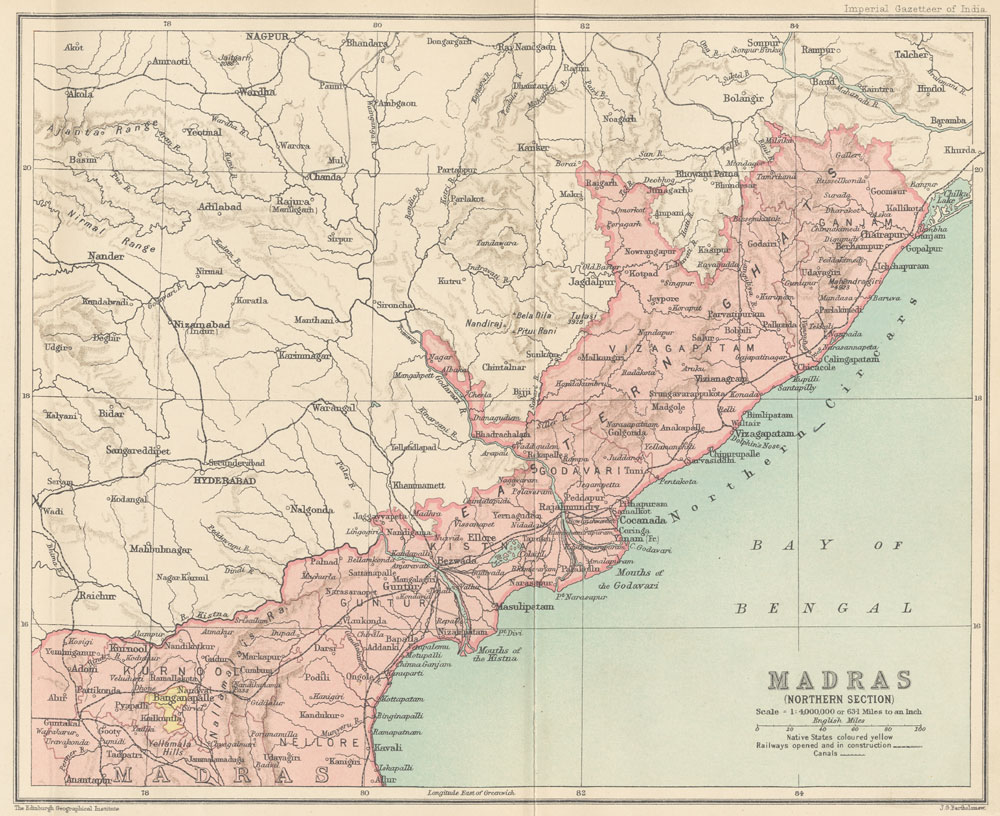
Madras Presidency was a major administrative region of British India that, at its largest, covered much of the subcontinent's southern portion. Its territory encompassed the whole of what is now Tamil Nadu and Andhra Pradesh, together with areas that today lie in parts of Odisha, Kerala, Karnataka, and Telangana, as well as the island group now administered as the union territory of Lakshadweep.
Image gallery
10 Images




Administrative centres
The Presidency's principal city was Madras (now Chennai), which served as its winter capital. During the hotter months the administration often moved to the hill station of Ootacamund (commonly called Ooty). For a limited period in the late 18th century the British also administered the island commonly known as the island of Ceylon from Madras before it was established as a separate Crown colony.
Population and languages
British authorities carried out periodic censuses of the Presidency from the early 19th century. The first comprehensive count in 1822 recorded a population of 13,476,923; the last colonial census held before Indian independence, in 1941, recorded 49,341,810 inhabitants for the Presidency.
The region was linguistically diverse. Estimates from the 19th century include the following speaker counts (from the 1871 census):
- About 14,715,000 Tamil speakers
- About 11,610,000 Telugu speakers
- About 2,324,000 Malayalam speakers
- About 1,699,000 Canarese (Kannada) speakers
- About 640,000 Oriya speakers
- About 29,400 Tulu speakers
Political and historical role
The Presidency was an important political and educational centre in southern India, and in the early 20th century it produced many prominent figures who took part in the Indian independence movement. The institutions and networks established under colonial administration also shaped regional politics in the decades that followed.
After independence
Following Indian independence in 1947, the territory that had been the Madras Presidency was reorganised as Madras State. Over time, state boundaries were adjusted on linguistic and administrative grounds. In 1969 Madras State was officially renamed Tamil Nadu during the tenure of Chief Minister C. N. Annadurai, reflecting the region's dominant Tamil-speaking identity.
Questions and answers
Q: What was Madras Presidency?
A: Madras Presidency was an administrative subdivision (presidency) of British India.
Q: What area did Madras Presidency cover at its greatest extent?
A: Madras Presidency covered most of southern India, including the whole of the Indian states of Tamil Nadu and Andhra Pradesh and parts of Odisha, Kerala, Karnataka, Telangana, and the union territory of Lakshadweep.
Q: Which city was the winter capital of Madras Presidency?
A: The city of Madras was the winter capital of Madras Presidency.
Q: Which place was the summer capital of Madras Presidency?
A: Ooty or Ootacamund was the summer capital of Madras Presidency.
Q: Which significant movement hailed from Madras in the early decades of the 20th century?
A: Many significant contributors to the Indian independence movement came from Madras in the early decades of the 20th century.
Q: What was the population of Madras Presidency according to the 1822 census?
A: The population of Madras Presidency according to the 1822 census was 13,476,923.
Q: Which languages were spoken by a majority of people in Madras Presidency according to the 1871 census?
A: According to the 1871 census, the majority of people in Madras Presidency spoke Tamil and Telugu, with 14,715,000 and 11,610,000 speakers respectively.
Related articles
Author
AlegsaOnline.com Madras Presidency: British colonial administration of southern India and Lakshadweep Leandro Alegsa
URL: https://en.alegsaonline.com/art/60519