
London Buses — organisation, fleet, routes and history
Overview of London Buses: the Transport for London brand that plans and regulates bus services across Greater London, its fleet and fares, operating model, history, and cultural significance.
Overview
London Buses is the brand used by Transport for London (TfL) to plan, regulate and promote bus services across Greater London. It defines routes, timetables, fares, vehicle standards and the visual identity of public bus services while contracts for actual operation are held by private companies. London’s bus network forms a core part of the city’s public transport system, providing high-frequency, largely flat-fare travel within the urban area.
Image gallery
4 Images


How it is organised
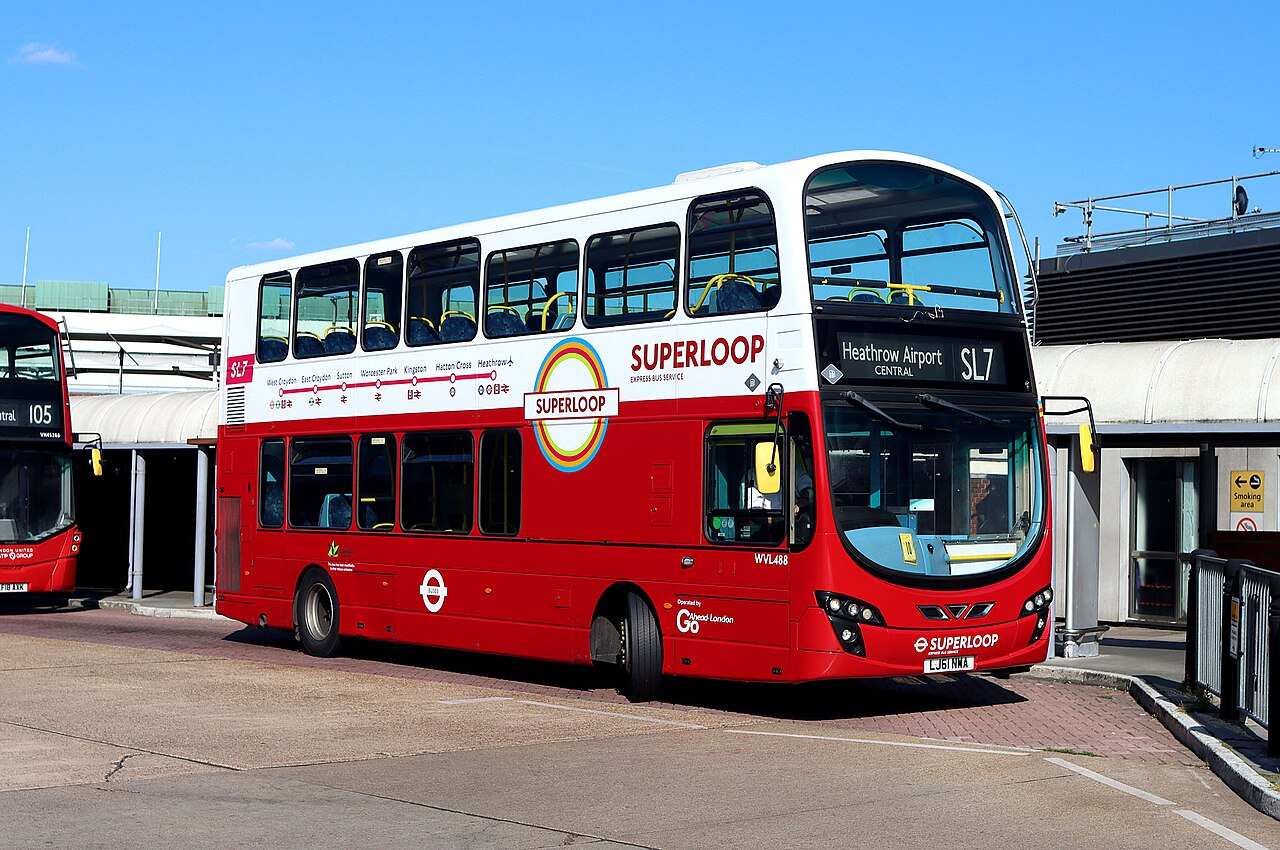
TfL establishes the network and awards timed contracts to bus operators following competitive tendering. These contracts stipulate service levels, reliability targets, accessibility requirements and often the mandatory red livery. While day-to-day driving, maintenance and staffing are provided by commercial operators, strategic control of routes, fares and standards remains with TfL.
Fleet, vehicles and features
The fleet includes single-deck and double-deck buses, and in recent years has incorporated low-floor vehicles for step-free access, dedicated wheelchair spaces, audio-visual stop announcements and increasingly low- or zero-emission drivetrains. Iconic models from the past, such as the Routemaster, have influenced design and public perception; modern designs combine that heritage with contemporary accessibility and emissions standards.
Services, fares and ticketing
London’s fares are regulated centrally, so passengers generally pay the same fare regardless of which company operates the route. Ticketing is predominantly electronic, using Oyster cards and contactless bank cards, and policies such as time-limited free transfer offers allow more flexible journeys. Night services, high-frequency day routes and limited-stop express variants form part of a layered network designed to meet different travel needs.
History and development
The organised bus network evolved from municipal and private beginnings into a coordinated city system. Over the twentieth century the network grew, became more centrally managed and later adopted a model where private operators deliver services under contract while the city authority retains planning and fare control. Recent decades have emphasised accessibility, environmental improvements and modern payment systems.
Characteristics and notable facts
- Distinctive red livery: contracts commonly require that buses operating London routes carry the traditional red finish.
- Regulated fares and integrated ticketing across operators.
- Contract-based operation: public planning, private execution.
- Ongoing transition toward low- and zero-emission vehicles and improved accessibility.
London Buses remains both a practical transport network and a cultural symbol of the city, balancing heritage and modern operational standards to serve millions of daily journeys.
Related articles
Author
AlegsaOnline.com London Buses — organisation, fleet, routes and history Leandro Alegsa
URL: https://en.alegsaonline.com/art/59016