
Little Miss Sunshine (2006 film)
2006 American independent comedy-drama road film about a dysfunctional family's cross-country trip to a children's beauty pageant, noted for its ensemble cast, screenplay and darkly comic tone.
Overview
Little Miss Sunshine is a 2006 American independent comedy-drama road film directed by Jonathan Dayton and Valerie Faris, from a screenplay by Michael Arndt. The film follows a multigenerational, fractious family who travel together in an aging van so the youngest member can compete in a children's beauty pageant. The blend of dry, often dark humor and earnest sentiment examines ambition, failure and the pressures placed on children and adults in contemporary family life.
Image gallery
8 Images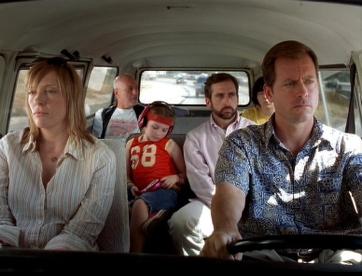







Plot and principal characters
The central narrative is a long drive that begins in Albuquerque and ends in Redondo Beach, California, with scenes that pass through states such as Arizona. The family includes a would-be motivational speaker father, a pragmatic mother, a determined young daughter who wants to perform in the pageant, a teenage son who has adopted a vow of silence, an outspoken grandfather and an uncle recently released from psychiatric treatment. The journey confronts them with mechanical failure, interpersonal clashes and moments of unexpected solidarity that gradually reshape their relationships.
Cast and roles
- Abigail Breslin as the young daughter whose ambition drives the trip.
- Alan Arkin as the outspoken grandfather, a performance that earned major awards recognition.
- Greg Kinnear, Toni Collette, Paul Dano and Steve Carell in key supporting roles that balance comedy and pathos.
Production and release
Produced outside the major studio system, the film was first shown at the Sundance Film Festival, where it drew attention and distribution interest; festival screenings helped build momentum for a wider release. Its road-movie format uses the family's Volkswagen Type 2 van as both a literal vehicle and a confined dramatic setting that forces characters to interact. Though made on a modest budget, the film became a surprise commercial success and crossed into mainstream awards conversation.
Themes and style
Little Miss Sunshine is frequently described as a tragicomedy. Themes include the cultural pressure to succeed, the ethics and spectacle of children's beauty pageants, generational conflict and the small, sometimes humiliating gestures through which family members affirm one another. Stylistically it relies on ensemble acting, concise scenes that build character through behavior rather than exposition, and the pacing of a road movie that intersperses episodic setbacks with deeper revelations.
Reception, awards and legacy
Critics praised the ensemble performances, the screenplay's mix of warmth and satirical edge, and the film's ability to handle awkward, painful moments with compassion. It received multiple awards and nominations, including recognition at Sundance and major industry prizes; its success helped launch the writer's and some actors' careers and is often cited as a notable example of 2000s independent cinema reaching a broad audience.
Cultural impact
Beyond its immediate critical and commercial achievements, the film fostered discussion about the depiction of childhood ambition and the pressures of performance culture. It remains referenced in conversations about ensemble casting, low-budget filmmaking that attains mainstream visibility, and portrayals of an American family under strain. The locations and route—departing from Albuquerque, passing through Arizona and arriving in Redondo Beach—are integral to its narrative of a fraught but ultimately redemptive journey.
Related articles
Author
AlegsaOnline.com Little Miss Sunshine (2006 film) Leandro Alegsa
URL: https://en.alegsaonline.com/art/58505