
Albuquerque, New Mexico — overview, history, and culture
Comprehensive overview of Albuquerque, New Mexico: geography, history, culture, major events, transportation and notable facts about the state's largest city and county seat.
Albuquerque—often called "Duke City" or abbreviated as "ABQ"—is the largest city in the U.S. state of New Mexico and serves as the county seat of Bernalillo County. The municipality ranks among the larger cities in the nation and had a population in the mid-2010s that placed it within the top 40 city proper populations in the United States. Albuquerque functions as the economic, cultural, and educational hub of central New Mexico and is known for its layered cultural heritage and scenic Southwestern setting.
Image gallery
10 Images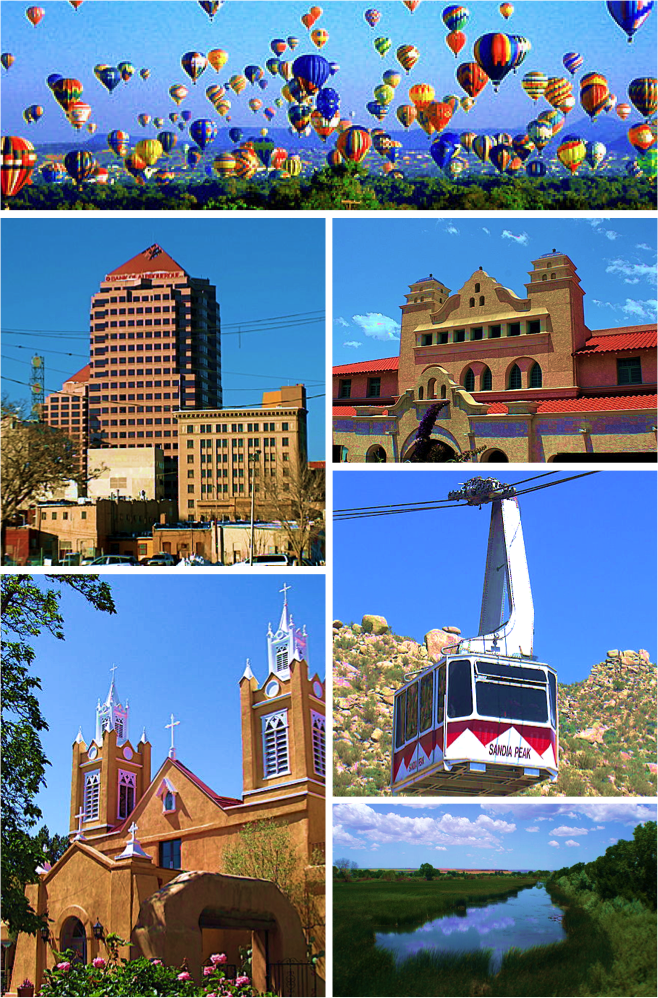



Location, landscape, and climate
Albuquerque lies in the broad valley of the Río Grande, with the Sandia and Manzano mountain ranges rising to the east and a high desert plain stretching westward. The city sits at an elevation of roughly 5,000 feet above sea level, giving it noticeably high-altitude conditions: large daily temperature swings, dry air, and plenty of sun. Its climate is generally semi-arid, with hot summers, cool winters, and a distinct monsoon season that brings summer thunderstorms. The riparian bosque along the river is an important local ecological corridor and a popular recreation area.
History and cultural influences
European colonists formally established a settlement called Alburquerque in the early 18th century, and the name evolved into the modern Albuquerque. Long before Spanish and then American presence, the region was inhabited and traveled by Puebloan and other Native American peoples. Over time the city developed through Spanish colonial, Mexican, and United States territorial periods, resulting in a distinct blend of European, Hispanic, and Indigenous traditions that remain visible in architecture, festivals, cuisine, and place names.
Culture, festivals, and popular recognition
Albuquerque is widely known for several major cultural events that draw national and international visitors. Chief among these are:
- Gathering of Nations—an annual pow-wow that is one of the largest Native American gatherings in North America.
- Albuquerque International Balloon Fiesta—a world-famous autumn event that brings hundreds of hot-air balloons and large spectator crowds.
- Historic and cultural celebrations tied to the city's Hispanic and Pueblo communities, arts festivals, and a lively local culinary scene famous for New Mexican chile.
In popular media, Albuquerque gained new visibility as the primary setting for the television drama Breaking Bad, which showcased many local landmarks and increased tourism interest in filming locations.
Transportation and urban form
The city's layout reflects its history as a crossroads. Historic east–west routes such as U.S. Route 66 ran through what is now Central Avenue, shaping commercial strips and motels. Two major interstate highways, Interstate 40 and Interstate 25, intersect near downtown at the interchange known colloquially as the "Big I," connecting Albuquerque to regional and national networks. A mix of suburban neighborhoods, older central districts, and expanding outer corridors characterizes the metropolitan area.
Economy, education, and notable features
Albuquerque's economy includes energy, healthcare, education, government, technology, and tourism. The presence of national research and defense facilities in the region helps support high-tech employment, while local universities and colleges contribute to research and cultural life. The city preserves a variety of historic sites and museums, and its food traditions—especially New Mexican cuisine—are an important part of its identity.
Visitors and residents alike encounter a city where desert landscapes meet mountain views, centuries of Indigenous and Hispanic influence coexist with modern American development, and major cultural gatherings keep community traditions active. For more detailed resources about Albuquerque's institutions, attractions, and events, consult local guides and official municipal sources: city information, county offices at the county seat, and regional cultural organizations.
Questions and answers
Q: What is Albuquerque?
A: Albuquerque is the largest city in New Mexico and the seat of Bernalillo County.
Q: What is the population of Albuquerque?
A: As of 2016, Albuquerque has a population of 559,277.
Q: What is notable about Albuquerque's population and culture?
A: Albuquerque is notable for its mix of European, Hispanic, and Native American populations and cultures.
Q: Where is Albuquerque located?
A: Albuquerque is located on the Río Grande.
Q: What major interstates meet in Albuquerque?
A: Interstate 40 and Interstate 25 meet at an interchange known as the Big I in Albuquerque.
Q: What are some events held in Albuquerque?
A: Some events held in Albuquerque include the Gathering of Nations, the largest pow-wow in North America, and the Albuquerque International Balloon Fiesta, the largest hot air balloon festival in the world.
Q: In what TV show was Albuquerque set as the location?
A: The popular TV show Breaking Bad was set in Albuquerque between 2008 and 2010.
Related articles
Author
AlegsaOnline.com Albuquerque, New Mexico — overview, history, and culture Leandro Alegsa
URL: https://en.alegsaonline.com/art/2180