
Linz-Land District, Upper Austria
Linz-Land District is an administrative district surrounding the city of Linz in the state of Upper Austria, Austria. It comprises 22 municipalities and forms a suburban, industrial and agricultural hinterland of Linz.
The Linz-Land District is an administrative district located in the federal state of Upper Austria in Austria. It surrounds the statutory city of Linz and functions largely as its suburban and rural hinterland. The district is organized for local administration, planning and coordination of services across a mix of small towns, commuter suburbs and agricultural communities.
Image gallery
1 Image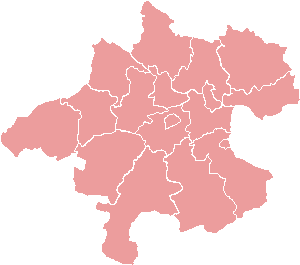
Geography and character
Terrain in the district varies from river valleys and floodplains to gentle hills and farmland. Much of the settled area serves as a commuter zone for Linz, while more distant parts retain a rural character. The Danube and several smaller streams influence local land use, with industry and housing concentrated close to main transport corridors.
Municipalities and administration
Linz-Land comprises 22 municipalities administered at the district level. These municipalities range from compact villages to larger suburban towns. The district provides services such as regional planning, road maintenance and certain social services, and it cooperates closely with municipal governments and the state authorities for wider infrastructure and economic development projects. For information on district offices and public services see regional administration.
History and development
The area's development has been shaped by its proximity to Linz. From an agricultural landscape it evolved across the 19th and 20th centuries into a zone with expanding industry, trade and residential suburbs as Linz grew into a regional economic centre. Historical ties to the city remain visible in commuting patterns and cultural exchange.
Economy, transport and importance
The district plays a supporting economic role: light manufacturing, logistics, local services and agriculture all contribute to the local economy. Good road and rail links to Linz make the district an important commuter belt; these transport connections also support regional trade and access to broader national and international networks.
Notable facts
- The district is distinct from, but closely integrated with, the statutory city of Linz.
- Its mix of settlement types — suburban, industrial and rural — reflects long-term urban expansion.
- District-level planning seeks to balance development pressure with preservation of agricultural land and local character.
Related articles
Author
AlegsaOnline.com Linz-Land District, Upper Austria Leandro Alegsa
URL: https://en.alegsaonline.com/art/58328