
Life Itself (2014 film)
Documentary film chronicling the life, career and legacy of film critic Roger Ebert, directed by Steve James; mixes interviews, archival footage and personal testimony to explore his influence and resilience.
Life Itself is a 2014 American documentary directed by Steve James that examines the life and career of film critic Roger Ebert. The film takes its title from Ebert's 2011 memoir and uses that book as a framing device while weaving interviews, archival clips and personal correspondence. It is often described as a biographical documentary and a portrait of public influence, blending moments of career triumph with accounts of illness and recovery.
Image gallery
1 Image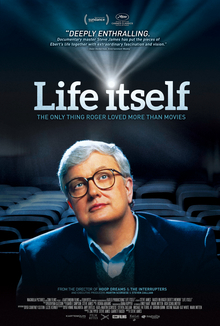
Structure and content
The documentary proceeds roughly chronologically, beginning with Ebert's early interest in journalism and film criticism, his rise to national prominence, and his partnership and friendly rivalry with fellow critic Gene Siskel. It highlights Ebert's signature writing voice and his role in bringing film criticism into mainstream conversation. Interspersed are candid interviews with colleagues, friends and filmmakers, alongside clips of television appearances and reviews.
Production and notable contributors
Steve James directs a film that privileges firsthand testimony and archival material. The documentary includes on-camera appearances and reflections by filmmakers and peers; notable participants include figures such as Martin Scorsese and Werner Herzog, among others. In interviews they reflect on Ebert's influence on filmmakers and audiences alike, while family members and friends describe his personal life and the challenges he faced after serious illness.
Release and reception
The film was released in the United States in July 2014 and played on the festival circuit earlier that year. Critics generally praised its emotional depth and thoroughness; it received strong aggregated reviews and a high score on review-aggregation sites such as Rotten Tomatoes. Reviewers noted the film's balance of celebration and candor, and its sympathetic yet unsentimental approach to documenting illness and legacy.
Significance and legacy
Life Itself functions both as a biographical account and as a meditation on the role of criticism in public life. It underscores Ebert's reach — from local newspaper columns to national television — and his continued influence after receiving honors such as the Pulitzer for distinguished criticism. By preserving interviews and footage, the documentary also serves as an accessible introduction for viewers new to Ebert's work.
Further reading and context
Related articles
Author
AlegsaOnline.com Life Itself (2014 film) Leandro Alegsa
URL: https://en.alegsaonline.com/art/57887