
Legal code (codification of law)
A legal code is a systematically organized, written collection of laws. This article explains what codes are, how they are structured and used, their history, and how they differ from other sources of law.
A legal code is a systematic, written collection of laws that governs a particular jurisdiction or subject area. To codify law means to arrange rules and principles in a coherent, accessible text rather than leaving them scattered in isolated statutes or judicial decisions. Codes are most commonly drafted and enacted by legislatures legislatures, sometimes following work by commissions or legal experts.
Image gallery
1 Image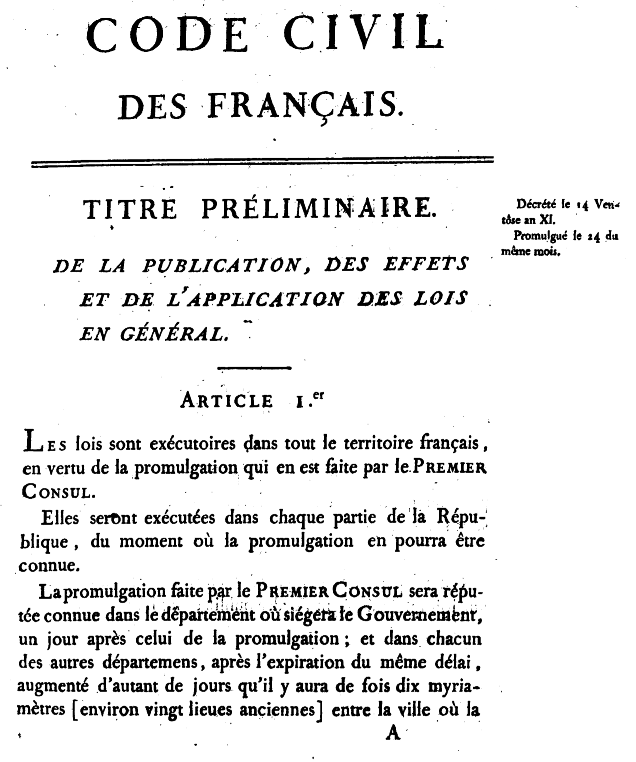
Characteristics and structure
Codes tend to be organized by topic and divided into books, titles, chapters and articles or sections. Typical parts of a code include:
- Definitions and general provisions that set scope and interpretation rules;
- Substantive rules governing rights, duties, procedures, or penalties;
- Transitional and final provisions that manage change from older laws.
Common types of codes include civil codes (private law), penal codes (criminal law), commercial codes, and procedural codes. A code seeks clarity, internal coherence and predictability.
History and development
The practice of compiling laws into codes has ancient roots: examples often cited include Babylonian collections and later compilations in Roman law. Major modern milestones include comprehensive codifications in European legal traditions, notably the Roman-derived codifications culminating in 19th-century civil codes. Over time different legal systems adopted codification to varying degrees.
Uses, examples and importance
Codes serve several practical functions: they make the law more accessible to officials and the public, provide a framework for courts and administrators, and reduce fragmentation among statutes. Well-known examples are national civil codes and penal codes that consolidate private-law rules or criminal prohibitions respectively. In many jurisdictions, codes are the primary reference for legal education and practice.
Distinctions and limitations
Legal codes are characteristic of civil law systems, where the written code is central. In common law systems, legislation and judicial precedent both play substantial roles and codification may be partial. Advantages of codification include clarity and stability; limitations include potential rigidity and the need for interpretation and amendment to address new situations. Courts, agencies and subsequent statutes continue to shape how a code operates in practice.
Related articles
Author
AlegsaOnline.com Legal code (codification of law) Leandro Alegsa
URL: https://en.alegsaonline.com/art/56973