
LeBreton Flats — central Ottawa redevelopment site
LeBreton Flats is a 21-hectare parcel of centrally located land in Ottawa, long noted for its industrial past, Great Fire of 1900, mid-20th-century clearance and ongoing redevelopment efforts.
Overview
LeBreton Flats is a roughly 21-hectare (about 52-acre) area beside the Ottawa River in the heart of Canada’s capital city. Located a short distance from Parliament Hill and downtown commercial districts, the Flats occupy a prominent urban site that has remained largely open or underused for many decades despite its central location. For maps and municipal context see official map resources.
Image gallery
8 Images




Physical characteristics
The terrain is a flat riverfront plain formed by historic river channels and sediment deposits. It is bounded by major roadways and rail corridors, and its proximity to the river historically made it suitable for sawmills, rail yards and other industrial uses. Current land-use discussions emphasize waterfront access, new public parks and mixed-use neighbourhoods. For planning documents and technical reports consult planning resources.
History
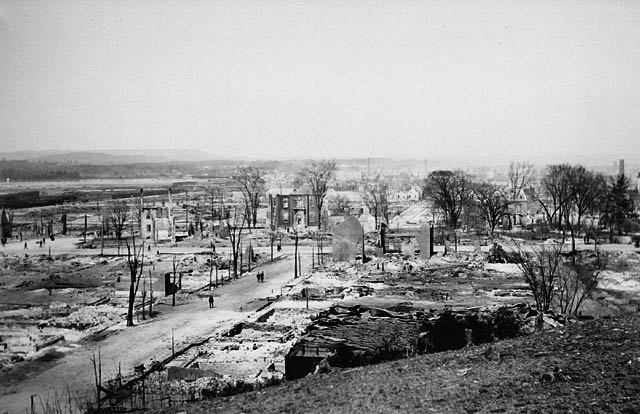
The Flats were settled and industrialized in the 19th century, with sawmills and worker housing clustered along the river. A significant turning point occurred when a major conflagration—the Great Fire of 1900—destroyed much of the built environment on the site, altering its development trajectory. In the mid-20th century large portions of the area were cleared by government action and rail-related removals, leaving open land that would be the subject of repeated proposals for decades. For historical archives and background see historical collections.
Redevelopment and recent use
From the late 20th century onward, municipal, provincial and federal authorities, together with private partners, have advanced multiple redevelopment schemes. Proposals have included residential neighbourhoods, commercial space, cultural institutions and substantial public parks. Parts of the Flats have been occupied by cultural facilities and temporary uses while longer-term plans were negotiated. Readers can follow current projects and public consultations at project updates.
Importance and notable facts
- The site represents one of the largest undeveloped urban parcels in Canada’s national capital region, making it strategically important for housing, recreation and cultural programming.
- Its long vacancy and redevelopment complexity reflect competing priorities: heritage, environmental remediation, transportation and Indigenous and community interests.
- Because of those overlapping concerns, development of LeBreton Flats illustrates broader issues in urban planning and federal–municipal collaboration. For stakeholder resources see public engagement materials.
LeBreton Flats remains a closely watched example of postindustrial land reuse. While parts of the site have been repurposed, large-scale transformation continues in phases, guided by planning studies, community input and government approvals that seek to balance new construction with public open space and shoreline restoration.
Related articles
Author
AlegsaOnline.com LeBreton Flats — central Ottawa redevelopment site Leandro Alegsa
URL: https://en.alegsaonline.com/art/56844
Sources
- nationalpost.com : "Field of broken dreams: The inside story of how Ottawa's $4B landmark development deal fell to pieces - National Post"