
Leaf spring (vehicle suspension)
A leaf spring is a long, layered spring made of steel or composite leaves. It has been a fundamental vehicle suspension element for centuries and remains common in heavy and utility vehicles.
Overview
A leaf spring is a simple, load-bearing suspension component made from one or more slender, curved strips called "leaves." These leaves are stacked and clamped together to form a single spring assembly that supports the vehicle chassis, absorbs road shocks, and helps control axle motion. Leaf springs were among the earliest practical springs used on wagons and early automobiles and are still widely used where robustness and load capacity are priorities.
Image gallery
10 Images



Design and components
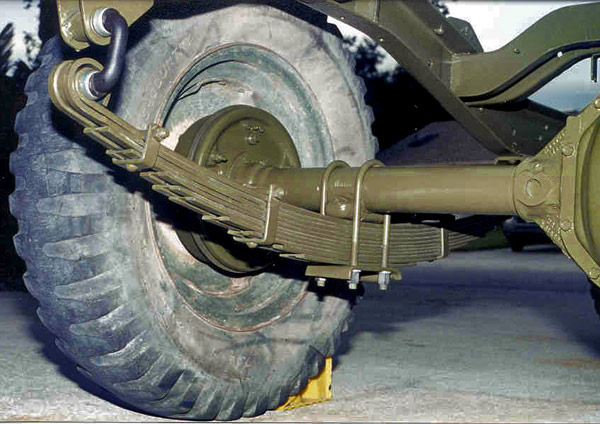
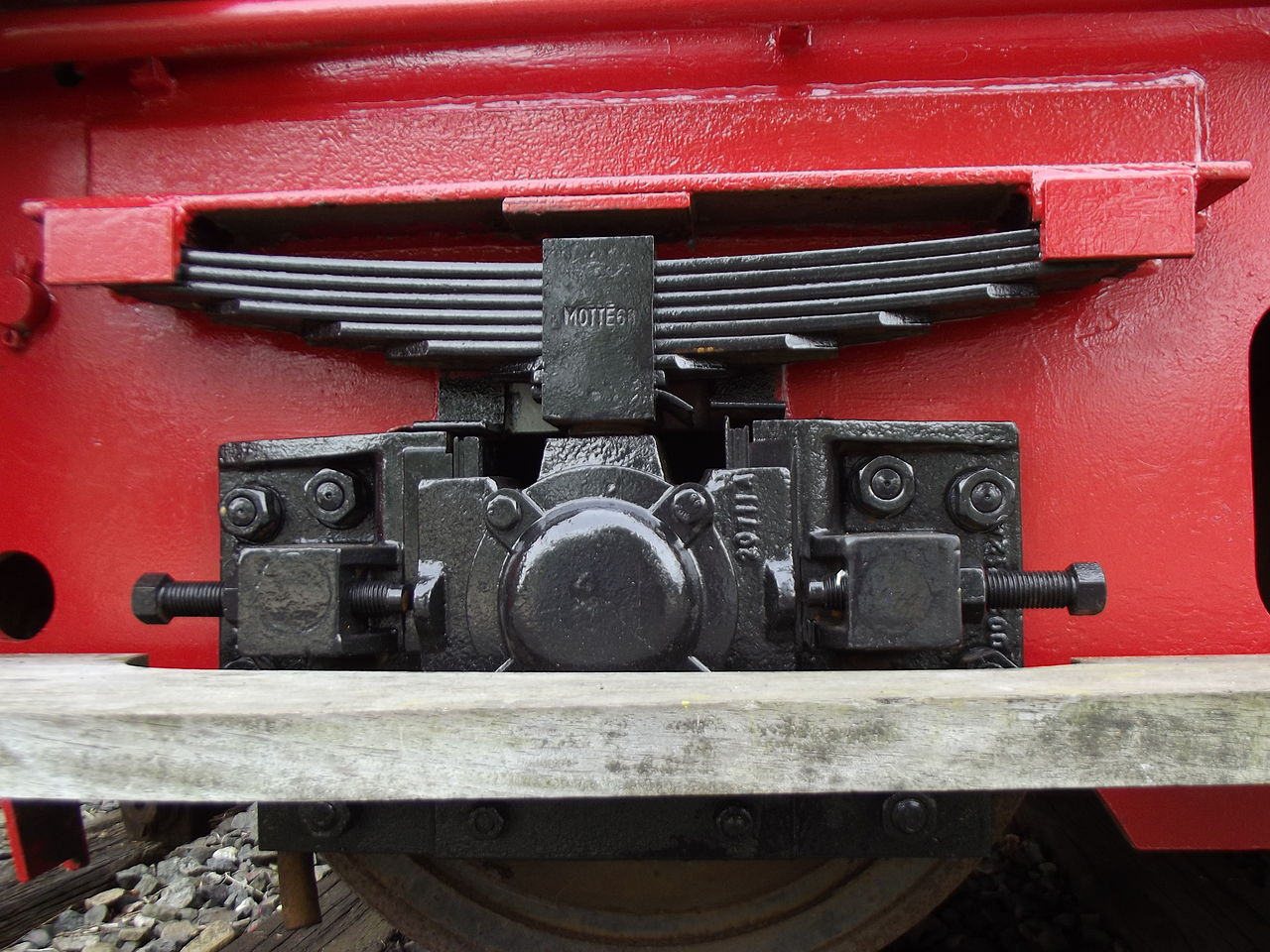
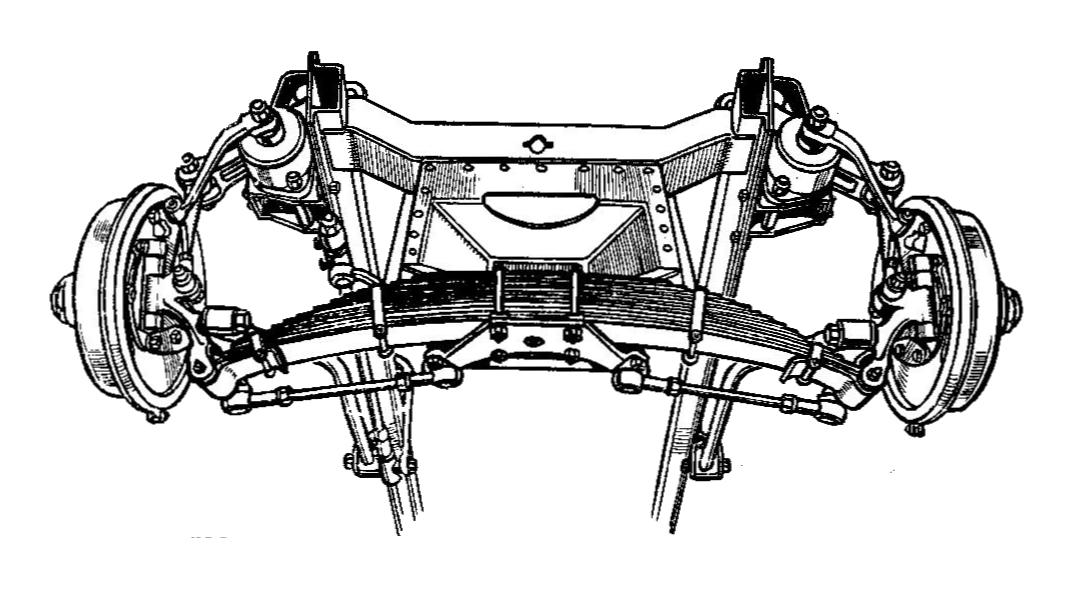
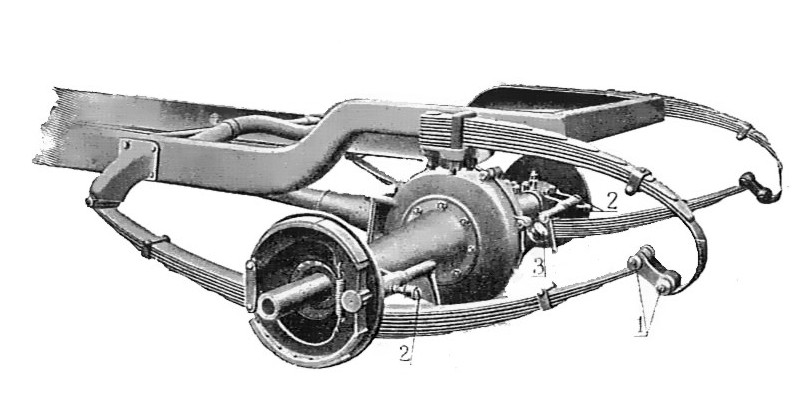
The basic leaf-spring assembly consists of a series of leaves of progressively shorter length, a center bolt or clip that aligns the leaves, end eyes or mounting points, and often shackles or hangers that allow the spring to change length as it flexes. Common components include:
- Leaves: individual metal or composite strips that take bending loads.
- Center bolt/clip: keeps the leaves aligned.
- Eye mounts and shackles: attach the spring to the frame and permit articulation.
- Bushings and U-bolts: reduce wear and fasten the spring to the axle.
Types and variations
Leaf springs vary by shape and construction. Common forms are semi-elliptic (the classic curved arrangement used on many cars and trucks), quarter-elliptic (one end fixed, the other free), multi-leaf (several leaves stacked), mono-leaf (single thicker leaf), and parabolic or tapered leaves designed to give a more progressive spring rate. Modern materials include traditional spring steel and fiber-reinforced composites, the latter offering reduced weight and corrosion resistance.
History and development
Leaf springs date back centuries in carriage and wagon design and were adopted for early motor vehicles because of their simplicity and ability to carry heavy loads. Throughout the 20th century they were standard on many automobiles, but lighter coil springs, torsion bars and independent suspension systems became more common for passenger cars. Nonetheless, leaf springs evolved with improved steel alloys and parabolic designs and later composite versions to meet changing performance needs.
Uses, advantages and limitations
Leaf springs remain popular on commercial trucks, vans, some SUVs, trailers and many types of agricultural and military equipment because they combine suspension and axle location in one unit and tolerate heavy loads. Advantages include simplicity, durability, and straightforward load distribution. Drawbacks are greater unsprung weight, less refined ride quality compared with coil or air systems, and potential interleaf friction that can cause noise or wear.
Maintenance and notable facts
Inspection for cracked leaves, excessive sag, corroded mounting points and worn bushings is important for safety. Replacing individual leaves or entire packs and ensuring U-bolts are properly torqued are common service tasks. Parabolic and composite leaf springs offer lighter weight and improved comfort in some modern applications, but traditional steel multi-leaf packs remain prevalent where cost and load capacity dominate design choices.
Related articles
Author
AlegsaOnline.com Leaf spring (vehicle suspension) Leandro Alegsa
URL: https://en.alegsaonline.com/art/56766