
LD50 (Median Lethal Dose)
LD50, or median lethal dose, is the amount of a substance expected to kill 50% of a tested population. It is a measure of acute toxicity with important uses, limitations, and ethical considerations.
The term LD50 stands for "lethal dose, 50%" and denotes the dose of a substance estimated to kill half of a defined population under specified conditions. It is normally expressed as mass of substance per unit body weight (for example, mg/kg) and applies to acute exposures—single or short-term doses—not to chronic or long-term effects.
Image gallery
1 Image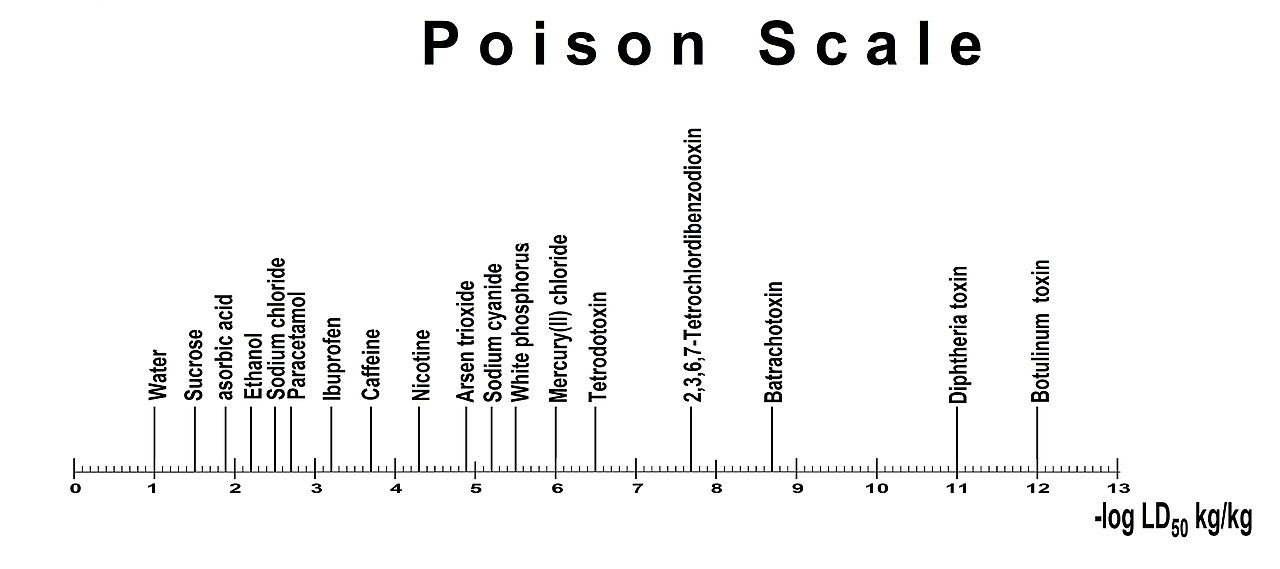
How LD50 is determined
LD50 values are derived from dose–response experiments or models that estimate the dose producing a 50% mortality rate in the study group. Experimental determination traditionally involved graded dosing of a test population and recording deaths over a set period. Modern estimates often use statistical methods such as probit or logistic regression applied to observed survival data. LD50 depends on several factors: the species tested, the route of exposure (oral, dermal, inhalation), the formulation and purity of the substance, and the observation interval after dosing.
History, regulatory use and controversy
The concept of a median lethal dose was introduced in the early 20th century and became a standard metric in toxicology and regulatory classification of chemicals and pesticides. Over time it has been the basis for acute-toxicity labelling and hazard categories. However, LD50 testing on animals attracted ethical criticism and scientific concern about interspecies relevance and variability. Beginning in recent decades, regulatory bodies and scientific organizations have promoted alternatives and reduced reliance on traditional animal LD50 tests.
Uses, limitations and related measures
- Uses: LD50 is used as a comparative indicator of acute toxicity and to inform hazard classification, emergency response, and risk communication.
- Limitations: It provides no information about sublethal effects, chronic toxicity, carcinogenicity, reproductive harm, or dose–time relationships. Results vary by species and experimental conditions and cannot be directly translated to human risk without additional data.
- Related measures: LC50 (median lethal concentration) applies to airborne or aquatic exposures; ED50 denotes an effective dose for a specified nonlethal effect; the therapeutic index and margin of safety compare toxic and effective doses.
Alternatives and modern trends
Because of ethical and scientific concerns, many laboratories and regulators now favor non-animal approaches where feasible. These include in vitro cell and tissue assays, computational models such as quantitative structure–activity relationships (QSARs), and integrated testing strategies that combine multiple data sources. Regulatory agencies have begun to accept validated alternative methods for certain endpoints, reducing the need for classical LD50 animal tests.
In practice, LD50 remains a historical and sometimes still-used descriptor of acute hazard, but it is one of many metrics experts consult when assessing chemical safety. Interpreting any LD50 value requires attention to the context of the test conditions, species differences, and complementary toxicological information.
Related articles
Author
AlegsaOnline.com LD50 (Median Lethal Dose) Leandro Alegsa
URL: https://en.alegsaonline.com/art/56498
Sources
- ccohs.ca : What is an LD50 and LC50
- rds-online.org.uk : LD50 test ban welcomed
- agn.client.shareholder.com : "Allergan Receives FDA Approval for First-of-Its-Kind, Fully in vitro, Cell-Based Assay for BOTOX® and BOTOX® Cosmetic (onabotulinumtoxinA)"
- washingtonpost.com : "In U.S., Few Alternatives To Testing On Animals"
- erowid.org : Alcohol Chemistry
- physchem.ox.ac.uk : Safety (MSDS) data for nicotine
- ptcl.chem.ox.ac.uk : Safety (MSDS) data for sodium chloride
- sciencedirect.com : Inhalation, parenteral and oral LD50 values of Δ9-tetrahydrocannabinol in Fischer rats
- druglibrary.org : What is the lethal dose of marijuana?