
Larry Coryell — American Jazz Guitarist and Pioneer of Jazz Fusion
Larry Coryell (1943–2017) was an influential American jazz guitarist often called the 'Godfather of Fusion'. He led The Eleventh House, recorded solo and duo albums, and blended jazz, rock and acoustic styles.
Overview
Larry Coryell (April 2, 1943 – February 19, 2017) was an American guitarist whose work helped define the jazz-rock fusion movement. Over a career that began in the mid-1960s and spanned five decades, Coryell combined elements of jazz improvisation with rock energy, blues feeling and acoustic sensitivity. He was frequently referred to as the "Godfather of Fusion" for his role in bringing electric guitar-centered approaches into modern jazz contexts.
Image gallery
2 Images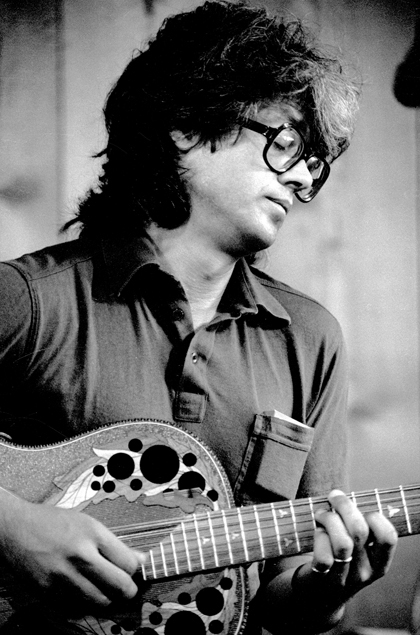

Early life and education
Coryell was born in Galveston, Texas, and spent part of his childhood in the Pacific Northwest. He was raised in Richland, Washington and pursued higher education in the region, studying at the University of Washington. These formative years exposed him to a variety of musical traditions and led to his move into professional performance in the 1960s.
Career and musical style
Coryell's professional career began around 1965. He developed a style that blended bebop-influenced lines, rock-driven rhythms, and a strong melodic sense. While he was comfortable in electric fusion settings, he also recorded extensively on acoustic guitar, exploring fingerstyle, classical-inflected passages and folk-tinged textures. His improvisations often featured rapid single-note runs, harmonic experimentation and a willingness to cross stylistic boundaries.
Groups, projects and recordings
In the early 1970s Coryell led a project known as Foreplay, working closely with keyboardist Mike Mandel; during this period he released a number of albums under his own name, including Barefoot Boy, Offering and The Real Great Escape. In 1973 he formed the band The Eleventh House, which became one of the more prominent ensembles associated with jazz fusion, combining complex jazz harmonies with rock instrumentation.
- The Eleventh House — electric jazz-fusion ensemble formed in 1973
- Foreplay (with Mike Mandel) — early 1970s duo/project
- Solo and duo recordings — a mix of electric, acoustic and compositional work
Technique, instruments and approach
Coryell was equally at home on hollow-body electrics and steel-string acoustics. He used a wide tonal palette and employed effects and amplification to expand the guitar's role in ensemble settings. Compositionally, he wrote tunes ranging from concise songs to extended improvisations, and he frequently blended written material with open sections intended for exploration. His approach was notable for its openness to other genres and for encouraging other guitarists to view jazz as compatible with rock and world influences.
Legacy and later years
Across a long and prolific career, Coryell recorded, performed and taught, influencing generations of guitarists who followed the fusion path. He continued to record and perform in different configurations until late in life, moving fluidly between electric fusion bands and more intimate acoustic or duet settings. Coryell died on February 19, 2017 in his hotel room in New York City from cardiac arrest, aged 73. His early roots and personal history remain part of his story: he was born in Galveston and raised in the Pacific Northwest before becoming a central figure in modern guitar-based jazz.
Today, Coryell is remembered both for landmark performances and for his role in opening jazz to electric, rock-influenced possibilities. His recordings continue to be studied by players interested in improvisation, cross-genre composition and the expanded role of guitar in jazz.
Related articles
Author
AlegsaOnline.com Larry Coryell — American Jazz Guitarist and Pioneer of Jazz Fusion Leandro Alegsa
URL: https://en.alegsaonline.com/art/56068
Sources
- allmusic.com : "Larry Coryell | Biography"
- concertvault.com : "Larry Coryell SUNY New Paltz New Paltz, NY Mar 17, 1973"