
Myanmar kyat
The kyat is the official currency of Myanmar, abbreviated MMK and symbolized K. It is divided into 100 pya and issued by the Central Bank of Myanmar; its value and availability have varied over time.
The kyat is the official currency used across Myanmar (country overview). Its ISO code is MMK and its conventional symbol is K or Ks. The primary subunit is the pya: 100 pya equal one kyat, though small pya denominations are uncommon in everyday transactions because of long-term inflation.
Image gallery
10 Images
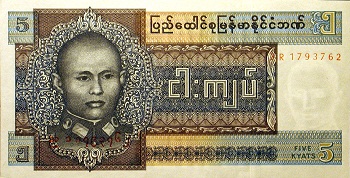


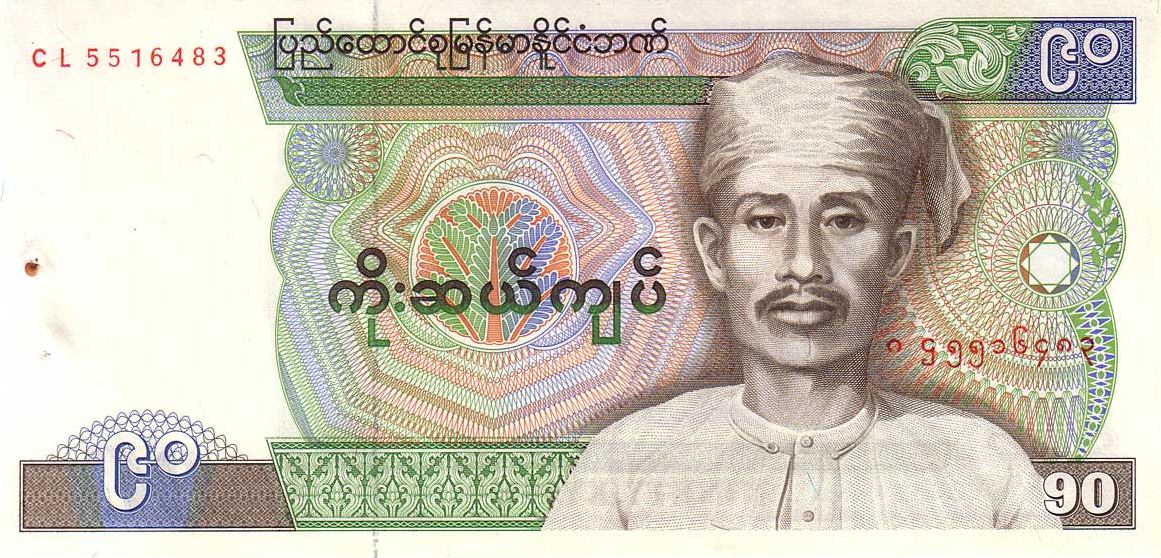


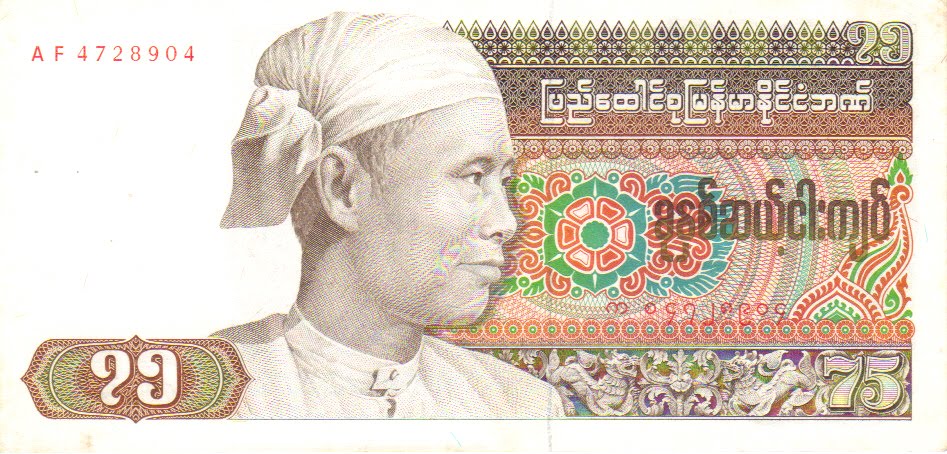
Characteristics and denominations
Banknotes and coins are issued by the nation's central monetary authority. Banknotes are produced in multiple denominations to serve routine commerce and larger transactions, while coins cover lower values; in practice, lower-value coins and pya units circulate less frequently. Modern notes include security features and national imagery reflecting historical figures, cultural motifs and landmarks.
History and development
The kyat replaced earlier colonial-era currency systems following Burma's move to self-governance in the 20th century. Since then the currency has undergone reforms and redesigns tied to economic policy, monetary modernization and changing political circumstances. The Central Bank of Myanmar oversees issuance, monetary policy and banking regulation.
Usage, value and exchange
The kyat is the medium of exchange for daily life inside Myanmar: wages, markets, services and local trade are typically settled in kyat. Its exchange rate against foreign currencies has fluctuated; official and informal (parallel) market rates have at times differed significantly, reflecting economic conditions and capital controls. For current quotations and conversion tools consult recent exchange rate sources rather than historical summaries.
Notable points
- The subunit pya is officially defined but rarely used for most retail transactions.
- Cash remains important in Myanmar's largely cash-based economy despite gradual expansion of banking and digital payment services.
- Collectors value older and special-issue notes and coins for their historical and artistic features.
Because monetary conditions and policy decisions can change, descriptions of purchasing power, official exchange rates or currency controls should be checked against up-to-date reports from financial institutions and reputable sources.
Author
AlegsaOnline.com Myanmar kyat Leandro Alegsa
URL: https://en.alegsaonline.com/art/54747