
Küssnacht (Küssnacht am Rigi) — Swiss municipality and district
Küssnacht is a municipality and district in the canton of Schwyz, Switzerland. Located on Lake Lucerne at the foot of Rigi, it is known for William Tell legend sites, the Klausjagen procession, and lakeside tourism.
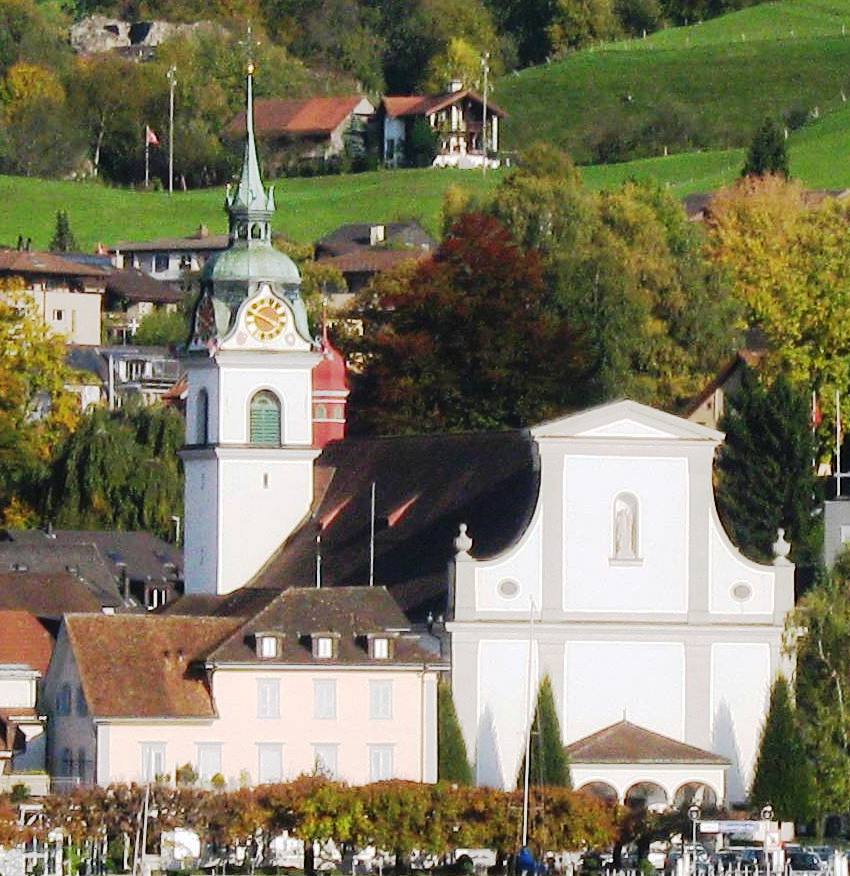
Küssnacht (officially since 2004: Küssnacht) is a lakeside community in the canton of Schwyz. It functions as a local municipality, the administrative centre of the district, and historically developed as a small village on the northern shore of Lake Lucerne. The town lies beneath the Rigi massif and forms part of the cultural and natural landscape of central Switzerland.
Image gallery
10 Images




Geography and subdivisions
Küssnacht occupies shoreline and upland terrain at the foot of Mount Rigi. The municipality includes several settlements, the lakeshore and surrounding hills, giving it varied scenery—from water-based recreation to hiking routes. It is located within the canton of Schwyz and sits close to neighbouring cantons, making it a crossroads between lakeside and alpine landscapes.
History and legend
The area has a long local history of settlement and trade. Küssnacht is also associated with Swiss national legends: a narrow lane known as the Hohle Gasse and a nearby monument commemorate the traditional story of William Tell ambushing a local official. While the legend is part of cultural memory rather than strict history, it shapes the town’s identity and visitor interest.
Culture, events and tourism
Küssnacht hosts distinctive local traditions, most famously the annual Klausjagen procession held on the eve of St. Nicholas, which draws spectators for its music, illuminated decorations and folk parade. The municipality is a base for boat excursions on Lake Lucerne, hiking on Rigi, and shorter cultural visits to monuments and historic lanes.
Economy and transport
The local economy combines tourism, small-scale industry, commerce and agriculture. Good regional road and rail connections make Küssnacht accessible for day-trippers from nearby urban centres. Services oriented to visitors and residents both play an important role.
Notable facts and administration
- Küssnacht serves as the capital of its district and has the administrative functions associated with that role.
- Local attractions focus on lakeside scenery, alpine access and folklore-related sites, appealing to both Swiss and international visitors.
- Its official name change to simply "Küssnacht" in 2004 reflects modern administrative usage.
For practical details, maps and civic services see the municipality’s resources and regional guides linked from official portals and tourism pages.
Related articles
Author
AlegsaOnline.com Küssnacht (Küssnacht am Rigi) — Swiss municipality and district Leandro Alegsa
URL: https://en.alegsaonline.com/art/54698
Sources
- bfs.admin.ch : "Arealstatistik Standard - Gemeinden nach 4 Hauptbereichen"
- bfs.admin.ch : "Ständige Wohnbevölkerung nach Staatsangehörigkeitskategorie Geschlecht und Gemeinde; Provisorische Jahresergebnisse; 2018"