
Kōfu — Capital of Yamanashi Prefecture, Japan
Kōfu is the capital of Yamanashi Prefecture, Japan. Located in the Kōfu Basin, it is known for its historical links to Takeda Shingen, fruit and wine production, mountain scenery and regional transport links.
Kōfu is the capital city of Kōfu and serves as the administrative and commercial center of Yamanashi Prefecture in Japan. The city lies in the Kōfu Basin, a lowland surrounded by mountain ranges, and has long functioned as a regional hub for government, trade and transport. It was designated a special city in 2000, a status reflecting its size and administrative responsibilities.
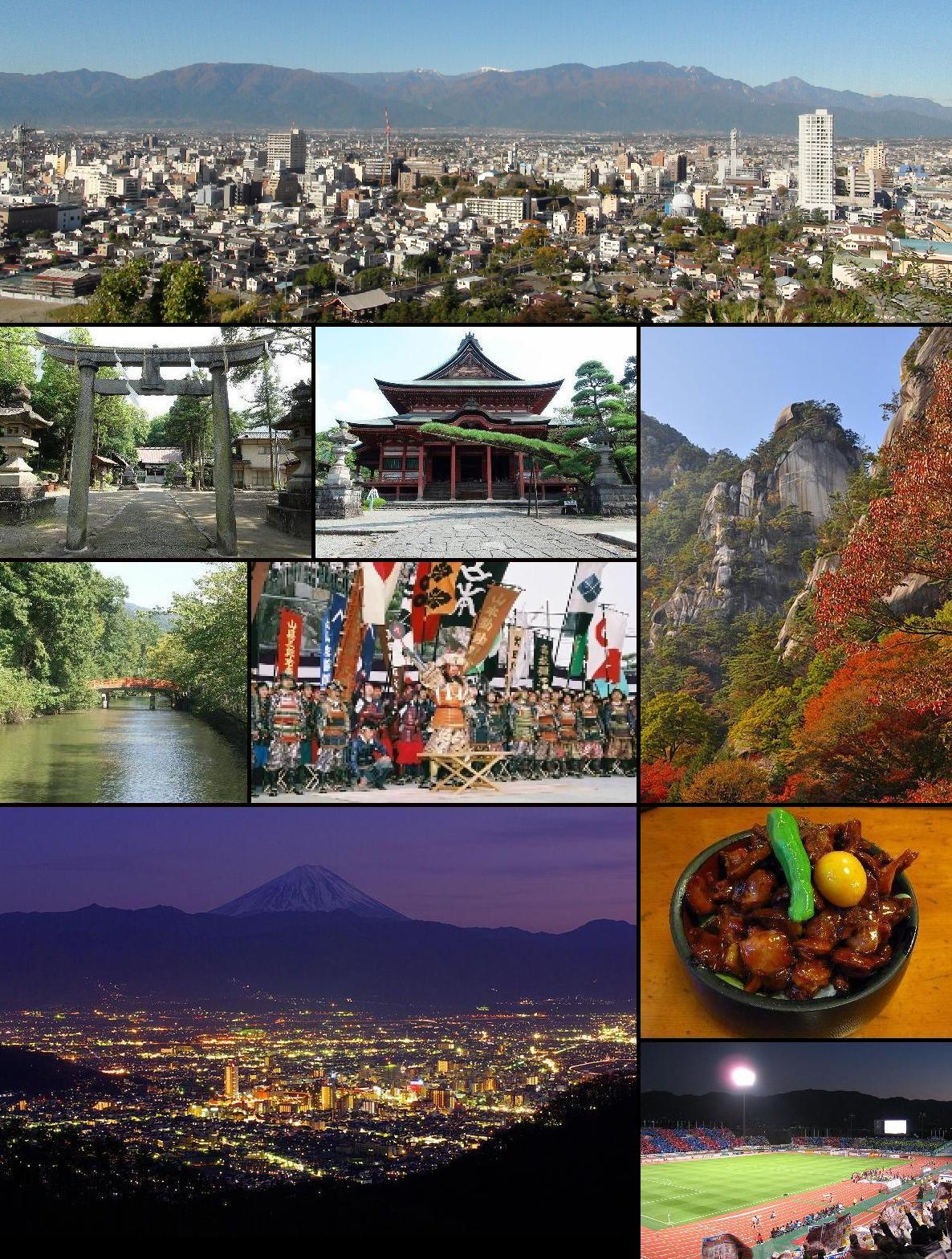
Geography and climate. The basin setting shapes local climate and landscape: clear days can offer views of nearby high peaks and sometimes Mount Fuji, while the surrounding mountains affect weather patterns. Summers are generally warm and sunny, and winters are cooler with crisp air; rivers and irrigated fields in and around the basin support local agriculture.
Image gallery
10 Images


History and heritage
Kōfu occupies much of the historic province often called Kai in premodern sources, and it is closely associated with the Sengoku-period warlord Takeda Shingen. Remains of feudal-era fortifications and the stone foundations of Kōfu (Maizuru) Castle mark the city's samurai-era past. Each year the city recalls this heritage through public events and displays that attract residents and visitors.
Economy, culture and produce
The city's economy combines public administration, retail, light manufacturing and food processing with a strong agricultural hinterland. Yamanashi Prefecture is widely known for fruit cultivation — especially grapes and peaches — and Kōfu acts as a base for wineries, fruit markets and agritourism. Local festivals, craft traditions and culinary specialties reflect seasonal produce and regional history.
Attractions and transport
- Historic sites and museums that interpret regional history and figures associated with the area.
- Annual festivals and cultural events that celebrate harvests and samurai-era pageantry.
- Outdoor recreation: the surrounding ranges provide hiking and scenic viewpoints, and the city is a gateway for excursions into nearby mountains.
- Transport links: regional rail and road connections link Kōfu with other parts of central Japan and with the Tokyo area, making it accessible for day trips and longer stays.
As both an administrative capital and a center of fruit and wine production, Kōfu combines urban services with a landscape shaped by agriculture and mountain scenery, offering cultural heritage, local produce and outdoor access in central Honshū.
Related articles
Author
AlegsaOnline.com Kōfu — Capital of Yamanashi Prefecture, Japan Leandro Alegsa
URL: https://en.alegsaonline.com/art/54094
Sources
- hindawi.com : "Japan's Evolving Nested Municipal Hierarchy: The Race for Local Power in the 2000s,"
- hindawi.com : Table 3
- cgjsf.org : Consolidation of Local Governments in Japan and Effects on Sister City Relationships