
Arduino — open-source microcontroller platform
Arduino is an open-source electronics platform combining simple hardware and software to make interactive projects and prototypes accessible to hobbyists, students, artists, and engineers.
Arduino is an open-source electronics platform designed to simplify the process of creating interactive devices. It pairs a small, low-cost microcontroller circuit board with a user-friendly programming environment so people without deep electronics or embedded systems training can build sensors, controllers, displays and other devices. Arduino boards are known for accessible pin layouts, standardized power and communication options, and a large ecosystem of community-created libraries and add-on modules.
Image gallery
10 Images

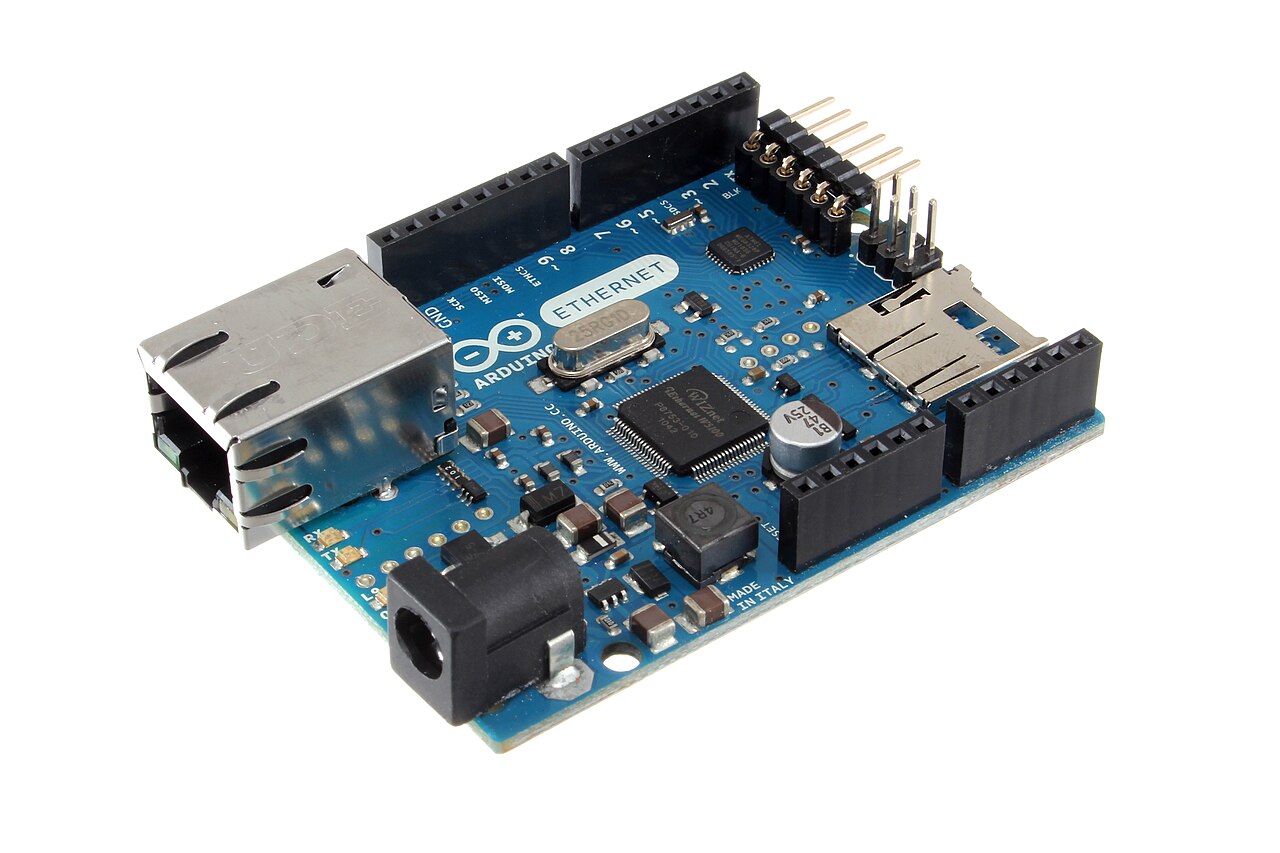


Components and how it works
At its core an Arduino system consists of two parts: the hardware board and the development software. The board contains a microcontroller, power regulation, input/output pins and serial interfaces. Many boards follow common form factors and expose digital and analog pins for connecting switches, LEDs, motors, sensors and communication modules. Boards are commonly programmed from a desktop or laptop using the Arduino integrated development environment (IDE) or compatible tools.
- Typical hardware elements: microcontroller, digital I/O, analog inputs, power jack/USB, clock/crystal, and voltage regulator.
- Software: the Arduino IDE and libraries let users write sketches (small programs) in a simplified C/C++ dialect and upload them over USB or other bootloader methods; see Arduino software.
History and development
Arduino originated in the mid-2000s as a teaching tool, created to give students a straightforward way to prototype physical computing projects. The platform emphasized openness: hardware reference designs and software were released under permissive licenses, enabling clones, variants and a broad third‑party ecosystem. Over time the project grew beyond classrooms into hobbyist, maker, research and commercial domains.
Uses and examples
Arduino is widely used for prototyping and learning. Common applications include interactive art, robotics, home automation, data logging, wearable electronics and proof-of-concept devices. Its approachable nature makes it popular in education and community workshops: beginners can construct simple circuits and upload a program to flash LEDs or read sensor values within minutes.
- Educational projects and STEM curricula.
- Prototyping and rapid iteration for product design.
- Hobbyist and maker projects (robots, drones, musical instruments).
- Installations and interactive art that respond to users or environment.
Variants, ecosystem and notable facts
There are many official and compatible Arduino models—such as compact Nano-style boards, the widely used Uno form, and larger Mega variants—plus add-on "shields" that stack to provide Wi-Fi, motor control, displays and other features. The platform’s open-source approach encouraged a large community that contributes tutorials, libraries and hardware designs. For hardware details and official board information see Arduino hardware. By the early 2010s the platform had already achieved widespread adoption in education and maker communities, and it continues to be a common choice for simple embedded projects and rapid prototyping.
Related articles
Author
AlegsaOnline.com Arduino — open-source microcontroller platform Leandro Alegsa
URL: https://en.alegsaonline.com/art/5385
Sources
- adafruit.com : "How many Arduinos are "in the wild?" About 300,000"
- spectrum.ieee.org : "The Making of Arduino"
- smartprj.com : smartprj.com