
Kim Yong-ju (1920–2021)
North Korean political figure, younger brother of Kim Il-sung, senior Workers' Party official in the 1960s–70s, later a ceremonial parliament official; died in 2021.
Overview
Kim Yong-ju, Korean: 김영주, (1920–2021) was a North Korean politician and a younger brother of Kim Il-sung. He was active in the leadership of the ruling Workers' Party of Korea during the 1960s and early 1970s and later held a largely symbolic position in the state legislature. His life illustrates both the influence of Kim family members in the early decades of the regime and the internal struggles that shaped its dynastic succession.
Image gallery
1 Image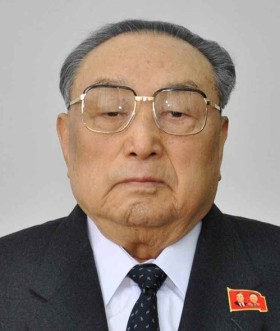
Career and roles
During the formative years of the Democratic People's Republic of Korea, Kim Yong-ju served in senior party institutions and the central apparatus that managed personnel and organization. In that era many high-level responsibilities were concentrated in the party rather than the nominal government, and individuals close to the ruling family were often placed in key posts. Contemporary reports describe him as a prominent cadre in the party establishment through the 1960s.
Political setback and marginalization
In the early 1970s Kim Yong-ju's political standing changed as a result of factional competition within the ruling elite. A contest over succession and influence culminated with the rise of Kim Jong-il, son of Kim Il-sung, who gradually consolidated authority. By the mid-1970s Kim Yong-ju had been sidelined from the central levers of power and did not play a leading role in policymaking thereafter. The reordering that accompanied the transfer of real power to a new generation is often cited as a key moment in North Korea's shift toward dynastic succession.
Later life and ceremonial office
From the late 1990s Kim Yong-ju reappeared in an honorary capacity within the state's formal institutions. He was named an Honorary Vice President of the Presidium of the Supreme People's Assembly, North Korea's parliament, a role that carried ceremonial prestige but little direct authority. His presence in that position reflected a practice of assigning veteran figures to representative or advisory posts while keeping operational control with the top leadership.
Death and legacy
State media announced Kim Yong-ju's death on December 15, 2021. Observers note his career as illustrative of two broad themes in the DPRK's political history: the early prominence of revolutionary-era figures and the later centralization of power within a hereditary line. His experiences also highlight how intra-elite competition and institutional design shaped the country's political evolution under Kim Il-sung and his successors, including Kim Jong-il.
Notable facts and distinctions
- He was a member of the Kim family and one of the few close relatives to hold senior party positions in the regime's early decades.
- Although influential in the 1960s, he was overtaken by the process that elevated the next generation of leadership.
- His later appointment to a ceremonial legislative post exemplifies how North Korea blends reverence for revolutionary figures with strict control over political power.
For further background on the political institutions in which he served, see resources on North Korea and the party-state structures that shaped governance in the DPRK.
Related articles
Author
AlegsaOnline.com Kim Yong-ju (1920–2021) Leandro Alegsa
URL: https://en.alegsaonline.com/art/53478
Sources
- dailynk.com : "My First Trials Begin"