
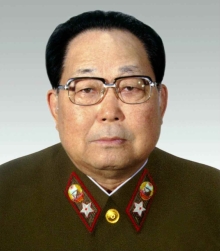
Kim Yong-chun — North Korean military leader and politician
Kim Yong-chun (1936–2018) was a senior North Korean military officer and government official who served as Vice Marshal, Vice Chairman of the National Defense Commission and Minister of People's Armed Forces.
Overview
Kim Yong-chun (4 March 1936 – 16 August 2018) was a prominent figure in the Democratic People's Republic of Korea's military and political structure. He reached one of the highest military ranks, known as Chasu (Vice Marshal), and held senior posts in the country's defense and security institutions. During his career he combined military command with positions in state bodies that linked the armed forces to the nation's political leadership.
Image gallery
7 Images


Military career and ranks
Kim spent the majority of his public life within the Korean People's Army and the defence establishment. He rose through the military hierarchy to become Vice Marshal, a rank reserved for the most senior commanders. That status placed him among the small circle of officers trusted to advise and implement military policy at the national level.
Political roles and offices
In addition to his military rank, Kim held several top government positions. Notable offices he occupied include:
- Vice Chairman of the National Defense Commission, the central state body overseeing armed forces and security policy.
- Minister of People's Armed Forces, the government agency responsible for administration and affairs of the Korean People's Army.
- A member of the Workers' Party of Korea with a modest party portfolio that complemented his military duties.
Significance and influence
Throughout his career, Kim Yong-chun functioned as a bridge between military command and political leadership. Figures in his position were instrumental in shaping defense priorities, supervising personnel matters, and maintaining the loyalty of the armed forces to the central leadership. While his party role was described as limited in scope, his weight derived primarily from his standing in the military hierarchy.
Death and legacy
Kim died in Pyongyang on 16 August 2018 from a heart attack at the age of 82. His passing was reported by state media and noted by observers of North Korean affairs as the loss of a long-serving military official. Assessments of his legacy emphasize his role in sustaining the institutional linkages between the party, the state and the military over decades.
Further reading and context
For concise biographical summaries and reports about his later years, see domestic and international notices and profiles available through general reference sources and news outlets. These provide context on how senior military officers function within the DPRK system and how positions such as Vice Chairman of the National Defense Commission and Minister of People's Armed Forces relate to the country's power structure. Profile and background and contemporary news reports offer additional details and timelines.
Related articles
Author
AlegsaOnline.com Kim Yong-chun — North Korean military leader and politician Leandro Alegsa
URL: https://en.alegsaonline.com/art/53477
Sources
- tongilnews.com : <추가>북, 총리에 김영일, 국방위 부위원장에 김영춘 선임
- english.chosun.com : "Top 4 N. Korean Military Officials Fall Victim to Shakeup"
- nknews.org : "KPA Marshal Kim Yong Chun dead at 82"