
Keytar — a portable, guitar-style keyboard instrument
A keytar is a lightweight keyboard designed to be worn with a strap and played like a guitar. It combines keyboard sound control with stage mobility and became widely associated with 1980s pop and electronic music.
Overview
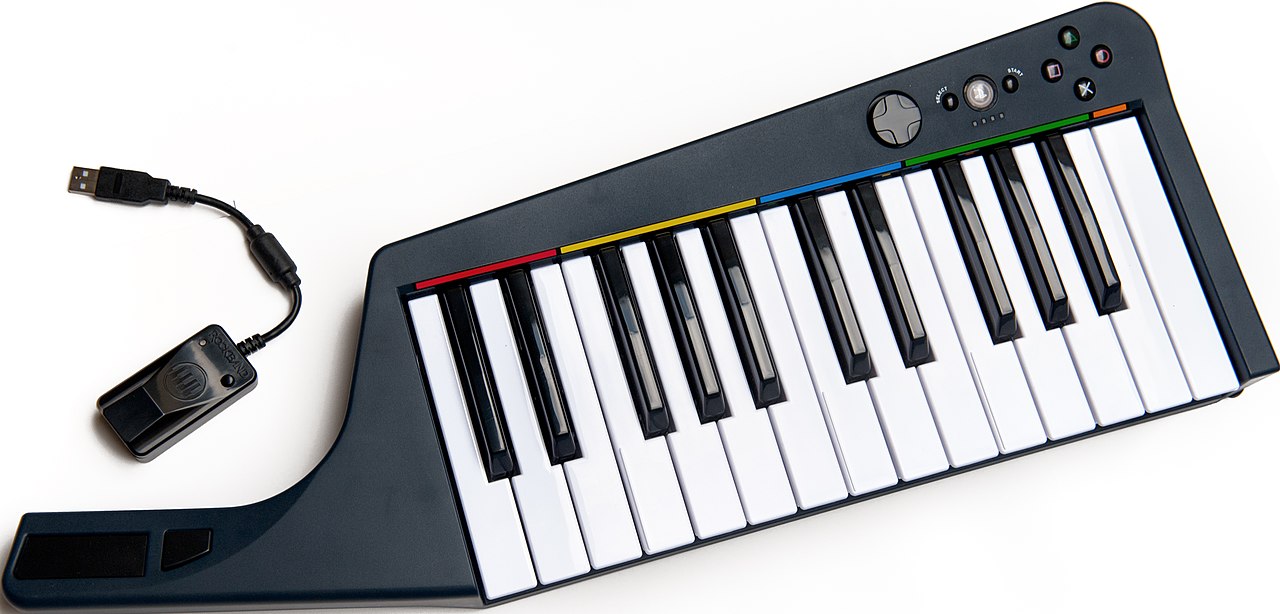
A musical instrument commonly called a keytar is a portable keyboard that is worn with a shoulder strap and played while standing or moving on stage. It looks similar in outline to a small electric guitar but replaces strings and frets with a row of piano-style keys. The design emphasizes mobility, allowing keyboardists the freedom to perform away from a static instrument stand while retaining the expressive possibilities of a keyboard.
Image gallery
10 Images




Design and main components
Keytars typically combine a keyboard section and a neck or control panel that points away from the body. Common elements include:
- Keyboard: a compact set of keys that may be velocity-sensitive and span several octaves.
- Neck controls: pitch-bend, modulation, ribbon controllers, or assignable switches placed on the neck so the player can shape sound with one hand.
- Sound source or interface: some keytars contain built-in synthesis or sample sounds; modern models often function primarily as MIDI controllers to drive external sound modules or software.
- Power and connectivity: battery operation is common for stage mobility; MIDI, USB, or audio outputs connect the instrument to other equipment.
History and development
Prototypes and experimental portable keyboards appeared in the 1970s, and commercial models reached wider audiences around the late 1970s and early 1980s. One of the earliest widely recognized mass-produced examples appeared in 1980 and helped establish the instrument’s visual identity. The keytar found a natural home in electronic, pop and rock performances where visual showmanship complemented synthesized sounds.
Uses and cultural impact
Performers have used keytars to combine melodic lead playing with stage mobility. The instrument became strongly associated with 1980s popular music and music videos, but it has remained in use across genres that value both synthesizer timbres and live performance movement. In contemporary contexts, keytars serve both as self-contained sound instruments and as MIDI controllers for virtual instruments during live shows.
Variants and notable distinctions
Keytars range from basic controllers to models with extensive onboard voices. Some important distinctions are whether the instrument contains an internal sound engine or acts solely as a controller, and which performance controls are presented on the neck. Unlike a guitar, a keytar does not have strings and derives its pitch and timbre from electronic circuitry or digital sound sources, but it borrows the worn, strap-mounted posture and stage-focused ergonomics of a guitar-like instrument.
Further reading and resources
For general definitions and historical overviews, see entries on related instruments such as the guitar and the keyboard. For model-specific information, manufacturer literature and user reviews provide details about features, connectivity and performance techniques.
Related articles
Author
AlegsaOnline.com Keytar — a portable, guitar-style keyboard instrument Leandro Alegsa
URL: https://en.alegsaonline.com/art/53144