
Ken Kesey: Author, Merry Prankster, and 1960s Counterculture Figure
Overview of Ken Kesey, American novelist best known for One Flew Over the Cuckoo’s Nest, founder of the Merry Pranksters, and a central figure in 1960s psychedelic and literary culture.
Overview
Ken Kesey (1935–2001) was an American novelist and cultural figure whose work and life helped shape aspects of the 1960s counterculture. He wrote fiction that combined sharp social observation with vivid, often subversive storytelling, and became widely known beyond literary circles through public events, a travelling collective, and association with the early psychedelic scene.
Image gallery
3 Images

Early life and education
Kenneth Elton Kesey was born in La Junta, Colorado; his family later moved to La Junta and then to Springfield, Oregon, where he grew up. He studied at the University of Oregon and later attended Stanford University on a creative writing fellowship, where he developed friendships with other writers and worked on material that would become his best-known fiction.
Major works and themes
Kesey is best remembered for One Flew Over the Cuckoo's Nest, a novel inspired in part by his time working at a veterans' hospital and by observations of institutional power and individual resistance. He also wrote Sometimes a Great Notion and shorter pieces that explore family life, community, and rebellion. Recurring themes include freedom versus control, the nature of sanity, and the tensions between conformity and individuality.
The Merry Pranksters and public life
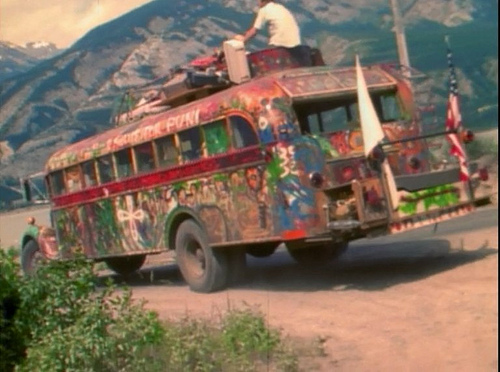
Beyond books, Kesey became a public figure through the Merry Pranksters, a loose collective that staged public happenings, travelled in a painted bus, and experimented with communal living and psychedelic drugs. Their exploits were chronicled by observers and journalists and helped popularize the cultural image of 1960s psychedelia. Kesey had also taken part in government-sponsored research into hallucinogens as a young man, an experience that shaped his later outlook.
Legacy and notable facts
- Kesey's novels influenced theater and film adaptations; his work remains studied for its social critique and narrative force.
- Tom Wolfe's account of the Pranksters brought Kesey wider notoriety and linked his activities to broader social movements of the era.
- Kesey spent much of his life in the American Northwest and remained a controversial but important figure connecting postwar literary traditions to the popular culture of the 1960s.
For readers seeking primary texts and biographical detail, look to Kesey's novels, contemporary reportage, and later retrospectives that place his writing and public life in historical context. Further resources and bibliographies can be found via library and archival collections devoted to mid-20th-century American literature and countercultural history. More on Kesey · Works · One Flew Over the Cuckoo's Nest · Birthplace · Early home
Related articles
Author
AlegsaOnline.com Ken Kesey: Author, Merry Prankster, and 1960s Counterculture Figure Leandro Alegsa
URL: https://en.alegsaonline.com/art/52821