
Kazuo Sakamaki
Japanese naval officer (1918–1999) who commanded a midget submarine during the attack on Pearl Harbor and became the first Japanese prisoner of war captured by U.S. forces.
Kazuo Sakamaki (November 8, 1918 – November 29, 1999) was an officer of the Imperial Japanese Navy who took part in the December 1941 attack on Pearl Harbor as a commander of a midget submarine. He is widely known for being the first Japanese serviceman taken prisoner by United States forces during World War II and for the personal and historical attention his capture attracted.
Image gallery
3 Images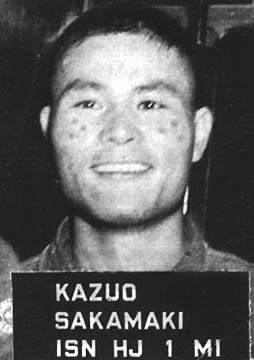


Early life and naval career
Sakamaki was born in Japan in 1918 and trained as a naval officer in the years leading up to the Pacific War. Like many young officers of his generation, he specialized in submarine operations, a branch that the Imperial Japanese Navy emphasized for covert attacks and reconnaissance. By late 1941 he was assigned to one of the small two-man "midget" submarines developed to penetrate harbors and strike anchored ships.
Pearl Harbor mission and capture
During the surprise attack on Pearl Harbor, midget submarines were launched from larger mother submarines with orders to infiltrate the harbor. Sakamaki's craft failed to return to its mother ship after the mission. Disabled and unable to maneuver, the vessel washed ashore and its crew was taken into custody. Sakamaki's detention made him the first recorded Japanese prisoner of war held by the United States in the Pacific conflict, an event that drew immediate attention from military authorities and the press.
Imprisonment and wartime treatment
As a POW, Sakamaki was interrogated and held under U.S. military custody for the remainder of the war. His capture provided both intelligence value and a propaganda symbol for the United States early in the Pacific campaign. Information from midget submarine crews and the recovered craft informed Allied understanding of Japanese harbor-attack tactics and the technical limitations of such submarines.
Later life and legacy
After the war Sakamaki was repatriated to Japan. He lived for many decades following his wartime experience and was occasionally referenced in histories of Pearl Harbor and submarine warfare. His case remains notable for illustrating the human dimension of that conflict: the experience of individual servicemen, the use of new naval technologies, and the immediate consequences when those technologies failed.
Notable facts
- Kazuo Sakamaki is remembered chiefly as the first Japanese prisoner of war captured by U.S. forces in the Pacific.
- His participation involved one of the Imperial Japanese Navy's Ko-hyoteki-style midget submarine operations during the Pearl Harbor attack.
- The capture highlighted both the daring and limitations of midget-submarine tactics and influenced subsequent Allied responses.
For broader historical context on prisoners and wartime operations, see Prisoner of war sources and studies on the Pacific conflict during World War II.
Related articles
Author
AlegsaOnline.com Kazuo Sakamaki Leandro Alegsa
URL: https://en.alegsaonline.com/art/52645