
Kansas House of Representatives
Lower chamber of the Kansas State Legislature. A 125-member body elected to two-year terms, meeting in Topeka to draft and pass state laws, approve budgets, and represent Kansas districts.
Overview
The Kansas House of Representatives is the lower chamber of the Kansas State Legislature. It works alongside the Kansas Senate to create and revise state law. The House is composed of 125 members who represent individual legislative districts across the state and meet during legislative sessions in Topeka at the State Capitol. The chamber's partisan balance has typically favored the Republican Party in recent terms; for example, one recent composition listed 84 Republicans and 41 Democrats. The House operates as a representative assembly with members elected for short terms to keep them closely accountable to voters.
Image gallery
1 Image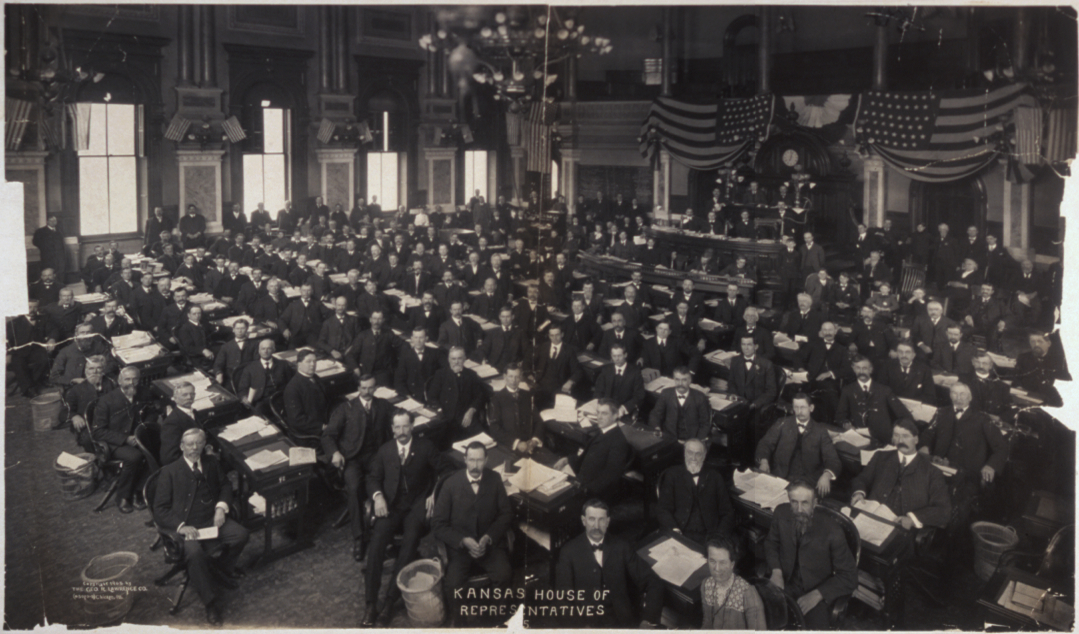
Structure and membership
Members of the Kansas House are elected from single-member districts and serve staggered two-year terms, meaning the entire chamber is up for election every two years. Leadership roles inside the House include the Speaker, majority and minority leaders, whips, and committee chairs. A system of standing and special committees handles detailed review of bills, amendments, and oversight of state agencies before measures reach the floor for debate.
Key characteristics
- Size: 125 representatives elected statewide by district.
- Term length: two years, with frequent elections to reflect voter preferences.
- Leadership: presiding officer (Speaker) plus party leaders and committee chairs.
- Meeting place: State Capitol in Topeka, where members convene for regular sessions.
Powers and functions
The House introduces, debates, and votes on bills that affect state law, taxes, the budget, education, transportation and other public policy areas. It shares lawmaking authority with the Senate, must pass appropriations and revenue measures, and participates in oversight of executive branch programs and agencies. Committees play a central role in reviewing proposed legislation, holding hearings, and recommending action to the full chamber.
History and development
The Kansas House traces its origins to the state's admission to the Union in 1861 and has evolved in procedures, committee structure, and technology while retaining its core role as a popular representative body. Over time the House has adapted rules and schedules to meet changing policy demands, growth in population, and modern legislative needs.
Notable distinctions and practical importance
As the lower house, the Kansas House is typically larger and has shorter terms than the Kansas Senate, which influences its responsiveness and political dynamics. The House often initiates budgetary and revenue legislation and serves as a barometer of local political sentiment. For further information about its role as the lower chamber see lower chamber, the companion upper body at Kansas Senate, and sources on party composition such as Republican members and Democratic members. Session location and Capitol details are available at Topeka.
Related articles
Author
AlegsaOnline.com Kansas House of Representatives Leandro Alegsa
URL: https://en.alegsaonline.com/art/52167