
Kanjani∞: Japanese pop group from Kansai region
Kanjani∞ (Kanjani Eight) is a Japanese male pop group formed in 2002 in the Kansai region. Known for mixing pop, rock and comedy, they perform concerts, record albums and appear on television variety programs.
Overview
Kanjani∞ (often written Kanjani Eight) is a Japanese male idol group formed in 2002 and originating in the Kansai area. Created within the talent agency system, the group grew out of regional junior units and developed a distinct identity by combining music with comedy and stage performance. Their professional debut followed in 2004 and since then they have been active on record charts, in live concerts and on television.
Image gallery
3 Images
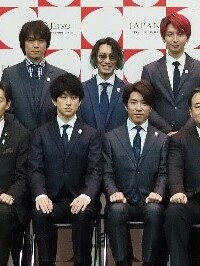
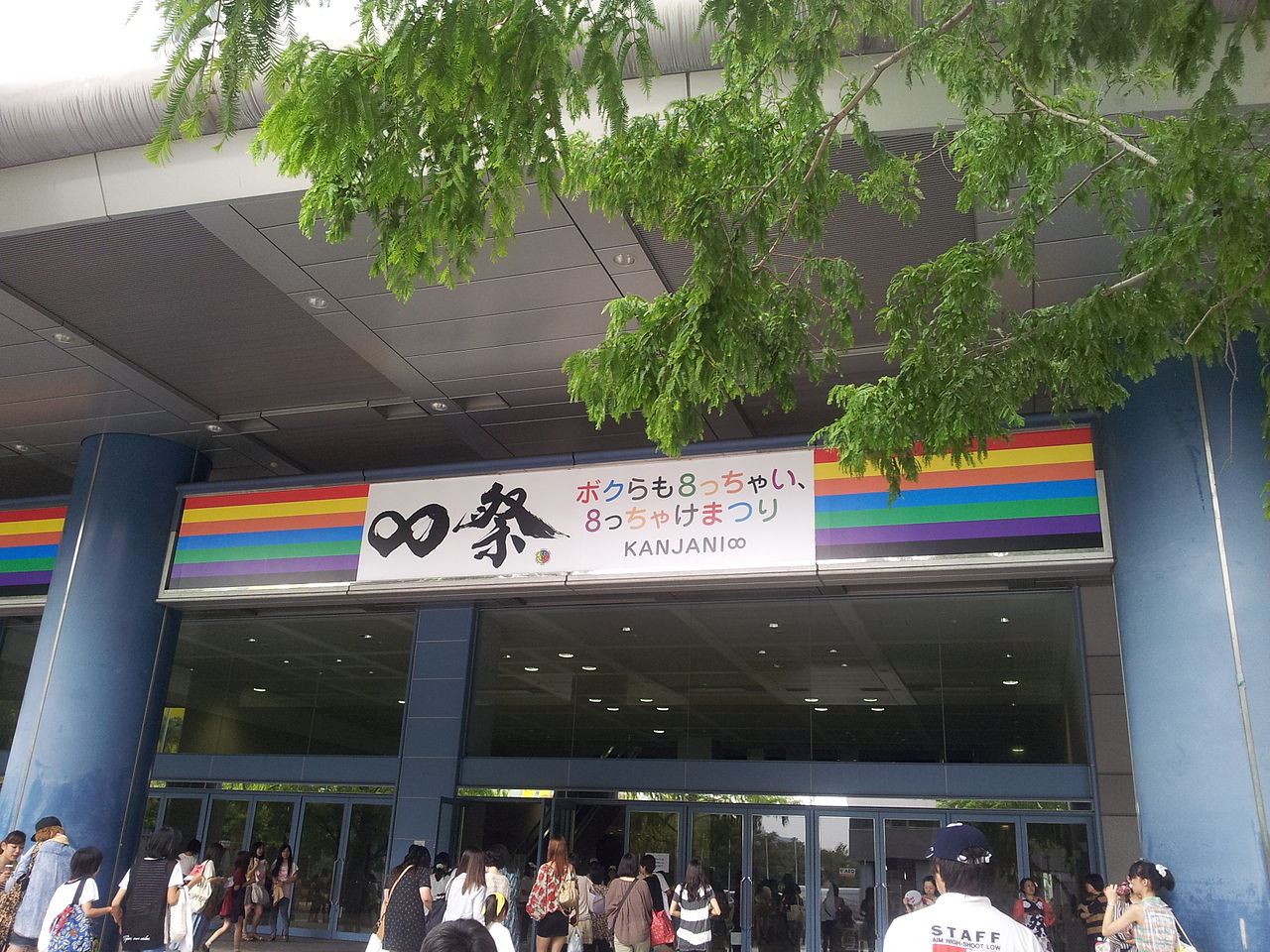
Characteristics and style
The band mixes contemporary J-pop with elements of rock and traditional Japanese pop stylings, and often incorporates humor, skits and theatrical staging into concerts. Typical characteristics include:
- Multifaceted shows: live performances that blend songs with variety segments and staged comedy.
- Regional identity: an origin and image closely tied to Kansai, which informs their language use and comedic style.
- Varied repertoire: singles, album tracks and solo activities that range from upbeat pop to ballads and theatrical pieces.
History and development
Formed from a pool of young performers in the early 2000s, the group’s initial years involved regional concerts, television appearances and gradual expansion into the national market. Their first commercial releases appeared in the mid-2000s; afterwards they established a steady pattern of recording, touring and television work that broadened their fanbase across Japan.
Activities and significance
Beyond studio recordings, Kanjani∞ are known for stadium and arena tours, regularly releasing singles and albums, and participating in variety programs and stage productions. Their combination of music and comedy helped them stand out among contemporaries and contributed to a reputation as entertainers as well as singers. For official information and updates, see the group's representation via agency pages and catalog listings at discography resources.
Notable facts and further reading
Lineup and activity have evolved over time, reflecting the normal changes experienced by long-running pop groups. Fans and researchers can consult fan sites and media coverage for detailed timelines, concert histories and member profiles: general background articles are available at fan or news summaries and retrospective pieces at music history overviews. Their blend of regional humor and mainstream pop makes them a distinctive example of a modern Japanese idol act.
Members
- Yokoyama Yū (real name: Yokoyama Kimitaka 横山裕, b. May 9, 1981)
Yoko, as he is called by band members and fans, is the most talkative member of Kanjani⚭ along with Shingo. Therefore, it is often assumed that he is the leader of the band, but Kanjani⚭ do not have a leader. He owes the name Yū to Johnny Kitagawa personally, as he considered "Kimitaka" to be relatively "uncool". Some also refer to him as Peter Pan, as he seems the most bubbly and childish despite being the oldest member. He has starred in a number of doramas. For example, he also played an important role in the live-action film adaptation (Dorama) of Yūkan Club.
- Murakami Shingo (村上信五, b. January 26, 1982)
His nickname Hina, which was derived from actress Hinagata Akiko as he was once said to resemble her, has become common within the Johnny's organization and fandom. Along with Yoko, he keeps the band together. Hina also hosts two radio shows due to his talkativeness, one being Recomen along with Yoko and the other being his own, Murakami Shingo no Jyukan! Kanjani Tsushin.
- Maruyama Ryūhei (丸山隆平, b. November 26, 1983).
Maru, who is considered the funniest member of the band, plays bass in Kanjani8. He prefers to express his humor together with Subaru. His favorite word is "Paaaan!", to which he makes a hand gesture where the hand is just suddenly extended to the side.
- Yasuda Shōta (安田章大, b. September 11, 1984).
Yasu is the guitarist of the band. He writes the lyrics and composes for the subgroups SanKyodai and SubaruBAND. He likes to keep a low profile.
- Ōkura Tadayoshi (大倉忠義, *6 May 1985)
Ōkura, also known as Tacchon, is the drummer of Kanjani8. He was originally part of the Juniors Unit MAO. He learned to play drums in a month after he was offered the drummer's spot in Kanjani. He also acts reserved and often appears serious. Because he was often teased about his name, he was given many nicknames such as "Hotel Ōkura", "Tatsuyoshi", or "Johnny Ōkura".
Retired members
- Uchi Hiroki (内博貴, b. September 10, 1986, also suspended member of Johnny's Band NEWS).
Uchi, as the youngest member, was suspended from both NEWS and Kanjani⚭ in July 2005 for being photographed drunk as a minor at the time. He is said to be built close to water and, according to various members, has an Oedipus complex. He has countless nicknames, such as "Honey Toast" (from Subaru), "Hiyo(ko)", Piroki, Prince of Eito, Shakkun (from Ryo), or Pinku, as the color pink symbolizes him. In 2007, he was allowed to resume his activity with the musical PlayZone, and was given "trainee" status with Johnnys. In 2008, he got the lead role in the mini-dorama "Isshun no Kaze ni Nare".
· Shibutani Subaru (渋谷すばる, b. September 22, 1981).
Subaru sings a majority of the songs. He stands out from the rest with his Enka-style vocals. He also plays the guitar. He doesn't like to talk about his past. He has a skull tattoo, which he tries to cover up during TV appearances, as it's not proper for an idol to have one.
· Nishikido Ryō (錦戸亮, b. November 3, 1984, also a member of Johnny's Band NEWS).
Ryō, who also plays guitar, is famous for his sharp tongue. Since he joined Johnny's, he has become very popular.
Biography
Most of the members of Kanjani⚭ joined Johnny's Entertainment as Kansai Junior's around 1996-1997. They became part of the "Golden Era" of Juniors. Led by Hideaki Takizawa (Tackey & Tsubasa), the Juniors generation at the time was already winning over many fans, which also benefited the Kanjani⚭ members.
After Uchi Hiroki joined Johnny's Entertainment in 1999, a new Kansai junior unit called V West was formed. The band consisted of Uchi Hiroki (vocals), Yasuda Shōta (guitar), Maruyama Ryūhei (bass), Mizuno Kiyohito (guitar) and Imayama Toru (drums). V West had a regular television show called Weekly V West, which aired on Kansai TV. The band was also popular enough to hold their own concert. However, Imayama Toru and Mizuno Kiyohito left V West and Johnny's Entertainment.
Ōkura Tadayoshi, the eighth Kanjani⚭ member, had actually wanted to become a V West member as well. However, as he was more interested in dancing, he declined the offer. When Johnny Kitagawa was looking for an eighth member for Kanjani⚭ and the position of drummer was not yet filled, Ōkura decided to learn it and so Kanjani⚭ were formed in 2000.
2001 to 2003
In 2001, the Kansai Juniors' activities drastically decreased as they failed to gain as much popularity as was hoped. The musical Another, performed in 2001, finally delivered the success they had longed for. Since then, Kanjani⚭, supported by Kansai Juniors, performed a play every summer until 2006. However, it took two more years for their shows to sell out.
After Another, the most famous Kansai Juniors got the opportunity to host their own show. Weekly V West was reborn as J°Kansai (JCube Kansai). J°Kansai aired on Channel 8 of Kansai TV, and the producers thought it would be a nice hook to get an eight-piece band on the show. From then on, Kanjani⚭ were part of the stand-up line-up.
The "comeback" ended with a Christmas concert, another event Kanjani8 held every year until 2005 at the Osaka Shochiku-za Theater.
Although Kanjani⚭ were still considered a new unit, surprisingly two members, Uchi Hiroki and Nishikido Ryō became new Johnny's Unit NEWS. From then on, the two had to master their activities in two bands.
2004 to 2005
Kanjani⚭, their activities were highly concentrated in the Kansai region. The Osaka Shochiku-za Theater became something of a home venue for them, where they were able to build a loyal following.
Kanjani⚭ first performed at the once-a-year Yagura Dance Bon Odori Festival at Osaka-jo Hall in 2004, when Yokoyama and Murakami learned that they would be debuting in the enka genre. The other band members only learned about it later through a newspaper article.
On August 25, 2004, the Kansai region-only limited single Naniwa Iroha Bushi was released. The song was a hit and, although sales were limited to the Kansai region only, made it to number 8 on the Oricon singles chart. Therefore, the single was released nationwide on September 22, 2004 and stormed to the number one spot on the charts, also becoming the first Enka single to do so in seventeen years.
The nationwide release marked the official debut of the two-year-old band. Kanjani⚭ held their first concert Kansha ni Eight in Tokyo in Tokyo on November 11, 2004.
On December 15, 2004, their first mini-album Kansha ni Eight was released. The 2004 Christmas concert was recorded and released the following year as their first concert DVD (Excite!! ).
In 2004, Kanjani⚭ also appeared with KAT-TUN in the musical DREAM BOY, which starred Takizawa Hideaki. The two bands also played a leading role in this musical, especially in 2005 and 2006.
Kanjani⚭'s singles continued to sell well despite comparatively little promotion. Her second single Osaka Rainy Blues, which was released on March 2, 2005, reached sales of over 160,000 copies after its first week.
However, on September 14, their single Sukiyanen, Osaka! only made it to #2, as it was no match for Ayumi Hamasaki's release.
In 2005, they had a big concert in Osaka-jo Hall Zenyasai for the first time. Unfortunately, they couldn't perform this event completely because Uchi Hiroki had been suspended from Johnny's.
Related articles
Author
AlegsaOnline.com Kanjani∞: Japanese pop group from Kansai region Leandro Alegsa
URL: https://en.alegsaonline.com/art/52114