
Kabaddi: overview, rules, history and variations of the South Asian contact sport
Kabaddi is a contact team sport originating in South Asia in which players alternate raids to tag opponents and return safely. This article explains rules, equipment, field, history, scoring, and common variations.
Overview
Kabaddi is a physical, strategic team sport that developed in rural communities of South Asia and is now played internationally. Two teams occupy opposite halves of a rectangular court and take turns sending a single attacker, called a raider, into the opponent's area. The raider's purpose is to tag one or more defenders and return to their own half without being tackled. Traditionally the raider continuously chants the word "kabaddi" (or a local equivalent) to demonstrate that they have not taken a breath during the raid; in organized competition this is monitored by officials and signals. The sport combines elements of wrestling, tag, and breath control and is prized for its blend of strength, speed, agility and teamwork.
Image gallery
9 Images






Rules and basic play
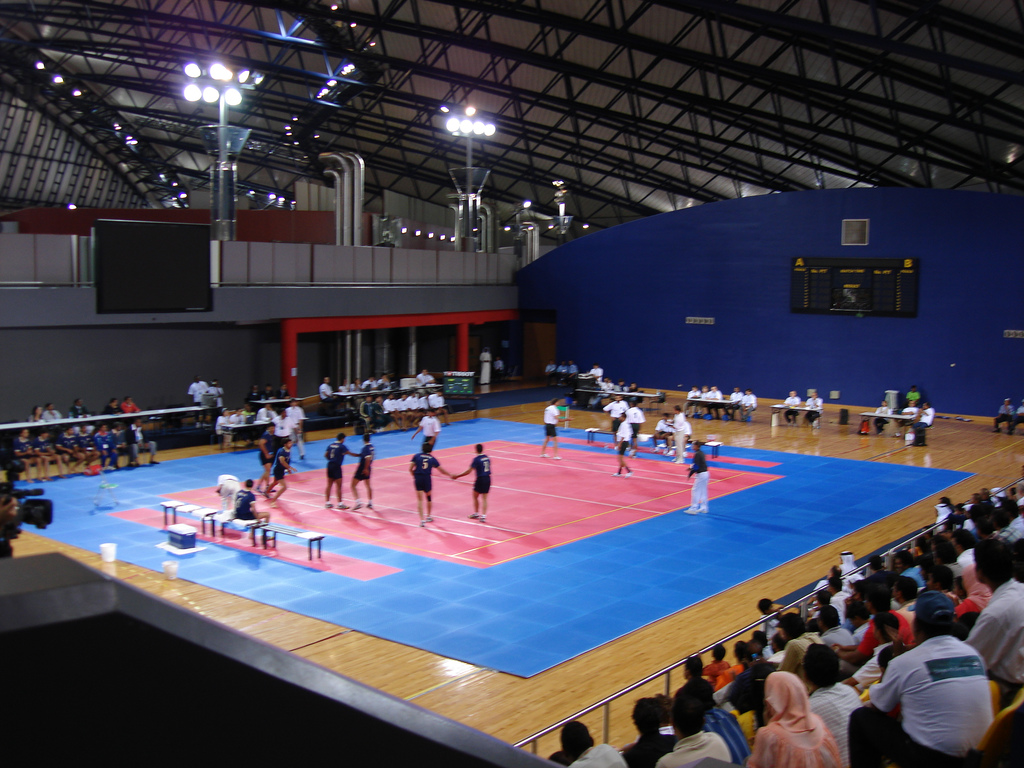
A typical match in the internationally recognized standard style is played between teams of seven players on the court, with a number of substitutes available. A raid begins when a raider crosses into the opposing half and attempts to touch or wrest control of defenders. The raid ends when the raider returns to their own half, is tackled and held by defenders, or otherwise commits a rule violation.
- The raider is expected to continually chant to indicate sustained breath control; if they take a separate breath or fail to maintain the chant, the raid is forfeited.
- Defenders attempt to stop the raider from returning by surrounding, tackling and immobilizing them; the defenders score points by successfully preventing the raid.
- There are marked lines on the court such as the central line, the bonus line and the lobby area; touching certain lines or crossing them under specified conditions can affect scoring or the status of the players.
- Players declared "out" are briefly removed; they can be revived and return when their team scores in later raids.
Field, timing and officials
The standardized court for international men's standard-style kabaddi is a fixed rectangular surface; there are slightly smaller dimensions for women's competition. Matches are typically played in two halves separated by a short interval. Timekeeping, scorekeeping and rule enforcement are carried out by a team of match officials that includes a central referee, assisting umpires, and scorers. In most formal competitions the set of on-field and table officials is clearly defined to ensure consistent application of fouls, outs and point awards.
Scoring and player status
Points are awarded for several outcomes: when a raider successfully returns after touching one or more opponents, for defenders who stop a raid, for successful bonus plays when the raider crosses a designated bonus line, and for clearing the entire opposing team. When every player on a side is declared out, the opposing team earns an extra reward often called a "lona" or all-out bonus. Individual raids may result in multiple points depending on the number of opponents touched and specific match rules. Substitutions and player revival rules vary by competition but are designed to keep play fast and tactical.
History and development
Kabaddi has deep roots in the Indian subcontinent, evolving from folk games and physical contests played in villages and schools. Over the 20th century the sport became more codified: regional associations and national bodies developed standardized rules and organized tournaments. Kabaddi later achieved an international profile through continental competitions and exhibitions that introduced it beyond its traditional heartlands. Modern professional leagues and televised tournaments have increased its visibility and introduced innovations in coaching, player fitness and tactics.
Variations, cultural significance and modern growth
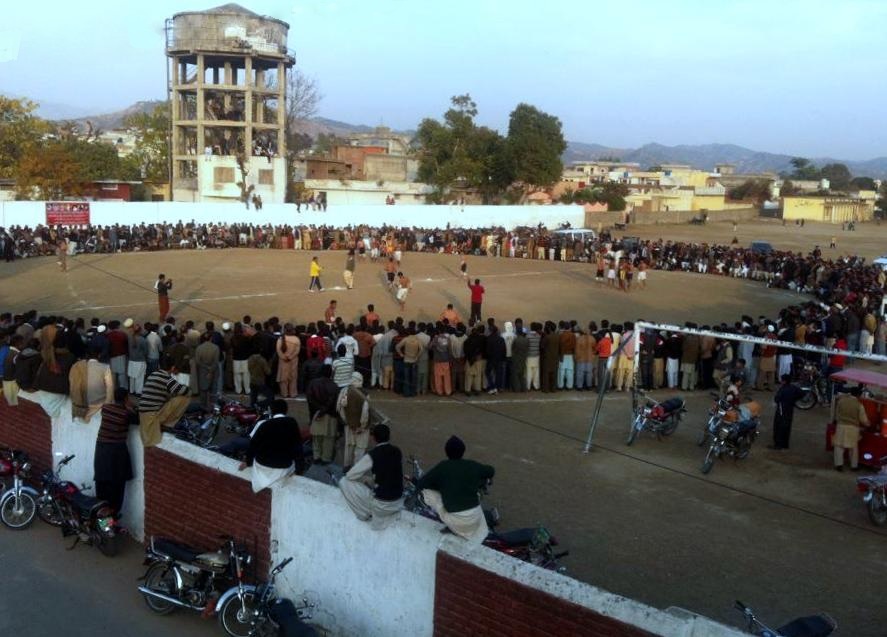
There are multiple styles of kabaddi. The standard rectangular court style is used in international play; circle style, freestyle and other regional variants persist in local cultures. Kabaddi carries cultural significance in many communities where it is associated with festivals, youth development and traditional sporting values. In recent decades professional leagues, international championships and inclusion in multi-sport events have boosted participation and spectator interest. Coaching now emphasizes conditioning, coordinated defensive formations, planned raids and specialized roles such as corner defenders and all-round raiders.
Notable distinctions and practical considerations
Unlike many ball sports, kabaddi requires no equipment beyond marked boundaries and a playing surface, which contributes to its accessibility. Key tactical distinctions are its breath-control element, the one-on-many dynamics during raids, and the cyclical "revival" of players after scoring, which makes momentum swings common. Governance, officiating standards and court dimensions are defined by national and international federations; players and teams preparing for organized competition should consult current rulebooks and match regulations. For more details on officiating roles and match timing consult the listed resources on match structure and the role of umpires and timekeepers, such as explanations of the umpires and the standard match timing used in modern competitions.
Note: This article summarizes widely known aspects of kabaddi and its organized forms while avoiding disputed historical specifics. For rule clarifications and tournament regulations consult the current manuals published by relevant governing bodies.
Questions and answers
Q: What is Kabaddi?
A: Kabaddi is a team sport from South Asia where two teams take turns sending a "raider" into the other half to win points by tackling members of the opposing team.
Q: How big is the field for men and women?
A: The field for men is 10m x 13m, and 8m x 12m for women.
Q: What do players have to chant during a raid?
A: During a raid, players must hold their breath and chant the word "Kabaddi".
Q: What are bonus points called in Kabaddi?
A: Bonus points are called "lona" in Kabaddi.
Q: How long does each match last?
A: Each match lasts 20 minutes with a five-minute break at halftime when teams switch sides.
Q: Who founded the modernised version of kabaddi? A: The modernised version of kabaddi was founded in Maharashtra.
Q: When did India first demonstrate kabaddi at an international level? A: India first demonstrated kabaddi at an international level at the 1937 Olympics.
Related articles
Author
AlegsaOnline.com Kabaddi: overview, rules, history and variations of the South Asian contact sport Leandro Alegsa
URL: https://en.alegsaonline.com/art/51841
Sources
- commons.wikimedia.org : Kabaddi