
Aromatic Polyamides (Aramids): Structure, Properties, and Applications
Overview of aromatic polyamides (aramids): their molecular structure, para vs meta types, synthesis, mechanical and thermal properties, and applications in protective gear, composites, ropes, and heat-resistant materials.
Aramid refers to a class of synthetic polymers characterized by aromatic rings linked through amide (–CONH–) groups. The word is a contraction of "aromatic polyamide." These materials were developed to combine high tensile strength, thermal resistance and chemical stability in fiber and resin forms.
Image gallery
5 Images
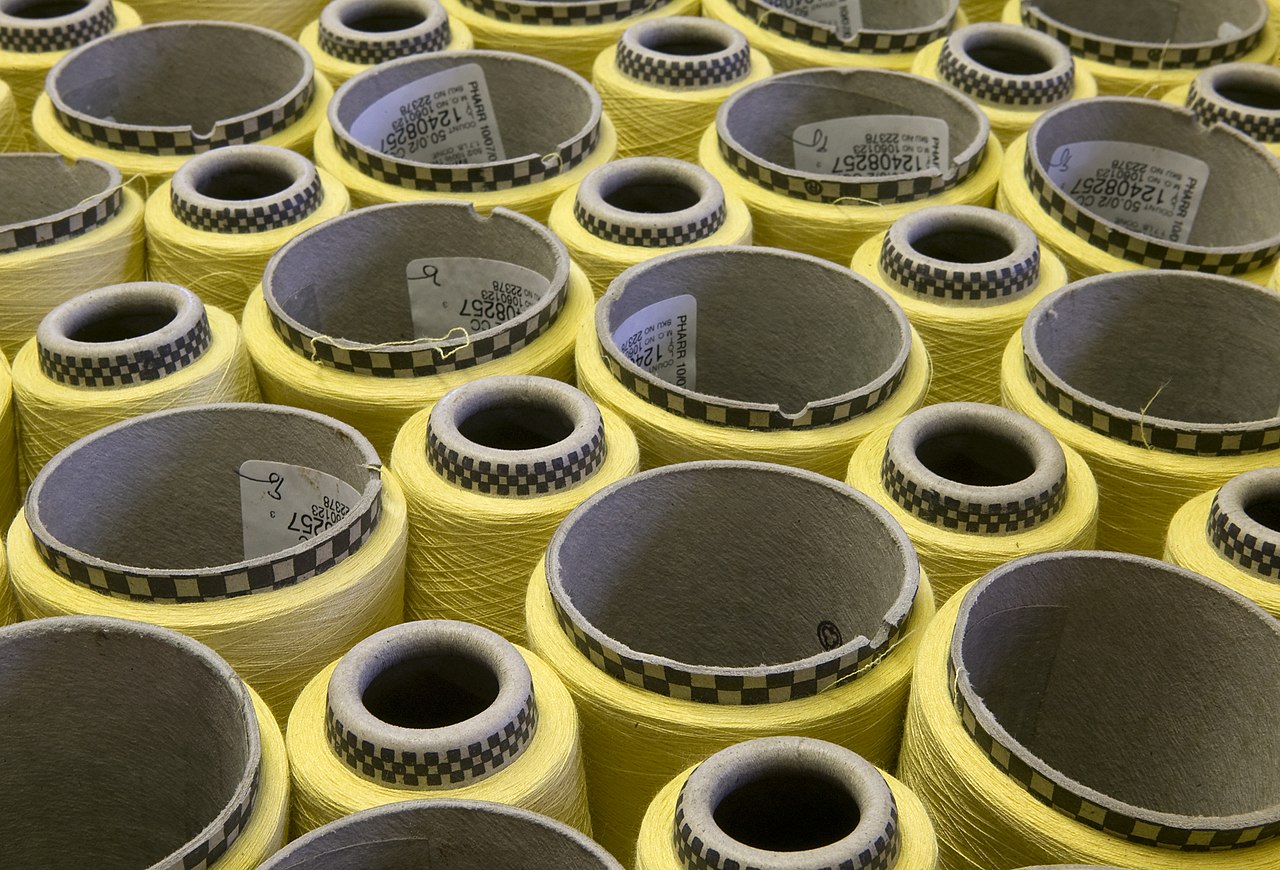


Structure and physical properties
At the molecular level, aramids consist of repeating aromatic units joined by amide bonds. Because of these rigid, planar aromatic segments and the strong hydrogen-bonding capacity of amide links, aramid chains pack tightly and align to form highly oriented, high-strength fibers. The presence of amide bonds also gives aramids a superficial resemblance to biological proteins, which are built from peptide (amide) linkages; however, proteins have irregular side chains and a backbone based on α-carbon atoms, while aramids are fully synthetic and dominated by aromatic rings, producing very different mechanical and thermal behavior.
Typical properties of aramid fibers and materials include:
- High tensile strength and modulus (stiffness) relative to their weight
- Good resistance to heat and thermal degradation; aramids generally do not melt but decompose at elevated temperatures
- Excellent abrasion resistance and dimensional stability
- Resistance to many organic solvents; limited resistance to strong acids or bases
Major classes
Aramids are often grouped into two main types based on the position of the amide link on the aromatic ring:
- Para-aramids — chains are more linear, allowing close packing and high crystallinity; para-aramids are used where maximum tensile strength and stiffness are required.
- Meta-aramids — the polymer backbone is less linear, which can improve resistance to heat and flame and increase flexibility in some applications.
Synthesis
Aramid polymers are produced by step-growth (condensation) polymerization, typically combining aromatic diamines with diacid chlorides or related derivatives. Reaction conditions and monomer choice determine chain regularity, molecular weight and the balance of mechanical versus thermal properties in the final material.
Applications
Because of their combination of light weight and performance, aramids are used in a variety of technical and safety-critical roles, for example:
- Personal protective equipment (bulletproof and stab-resistant vests, helmets)
- High-performance ropes and cables
- Composites for aerospace and automotive components
- Heat-resistant clothing and insulation
- Friction materials and reinforcement for tires and belts
Handling and environmental notes
Aramid fibers are generally chemically stable, but machining, cutting or grinding can release fine fibrils that may irritate skin, eyes or lungs; appropriate protective measures and dust control are recommended. Like many high-performance polymers, aramids are not readily biodegradable, and end-of-life disposal or recycling requires specific strategies.
Tags
Related articles
Author
AlegsaOnline.com Aromatic Polyamides (Aramids): Structure, Properties, and Applications Leandro Alegsa
URL: https://en.alegsaonline.com/art/5177