
Joe Frazier
Joe Frazier (1944–2011) was an American heavyweight boxer, Olympic gold medalist and world champion best known for his fights with Muhammad Ali and his powerful left hook.
Overview
Joseph "Joe" Frazier was an American boxer who rose from humble beginnings to become world heavyweight champion. After winning an Olympic gold medal in 1964, he turned professional and claimed the world title in 1968. Frazier is widely remembered for his pressure-fighting style and his series of high-profile matches against Muhammad Ali.
Image gallery
10 Images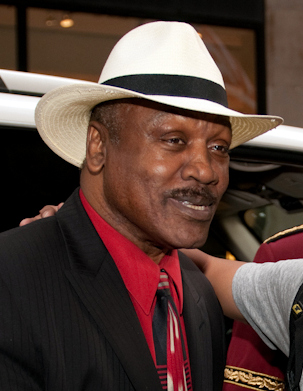



Early life and beginnings
Born in Beaufort, Beaufort, South Carolina, Frazier moved north as a young man and settled in Philadelphia. In Philadelphia he trained in local gyms and developed a compact, relentless approach that relied on constant forward movement, intense body punching and a signature left hook. His amateur success culminated in a gold medal at the 1964 Summer Olympics, a springboard to his professional career.
Style and characteristics
Frazier fought from a crouched stance, using head movement, tight defense and short, powerful punches. His left hook — often cited as one of the most effective in heavyweight history — was a defining weapon. Though not the tallest heavyweight, his stamina, determination and ability to cut off the ring allowed him to win against larger opponents.
Notable fights and career highlights
He won the vacant world heavyweight title by defeating Buster Mathis and defended that crown through several bouts before losing it to George Foreman in a fight that ended with a decisive knockout. The series with Muhammad Ali produced three of the era's most famous fights: their first meeting in 1971 (widely billed as the "Fight of the Century"), a rematch, and the brutal 1975 encounter known as the "Thrilla in Manila." These matches cemented Frazier's place in boxing history.
- Olympic gold medalist (1964) — amateur highlight and major credential.
- World heavyweight champion (won the vacant title in 1968).
- Key rivalries: memorable trilogy with Ali; notable loss to Foreman.
Later life, legacy and death
After retiring from active competition, Frazier remained involved in boxing as a trainer and public figure, running gyms and mentoring younger fighters. He was honored by boxing institutions and remembered for his courage in and out of the ring. In his final years he lived in Philadelphia, where he died of liver cancer in 2011. His life and career continue to be studied by fans and historians for their impact on heavyweight boxing.
Frazier's story intersects with broader themes of sport, race and culture in mid-20th-century America. Details of his career, training methods and the controversies surrounding some of his most famous fights are discussed in many biographies and documentaries; for further reading and reference see resources on his professional record, Olympic performance and later honors provided by major sports archives and the boxing hall of fame (career overview, Philadelphia connection, hometown, early life, training, biography).
Selected further angles worth exploring include his influence on fighting technique, the sociopolitical context of his most public bouts, and the lasting cultural image of his left hook — an emblem of his attacking spirit and resilience.
Related articles
Author
AlegsaOnline.com Joe Frazier Leandro Alegsa
URL: https://en.alegsaonline.com/art/50440
Sources
- usatoday.com : "Former heavyweight champ Joe Frazier dies of cancer at 67"