
Jeannie Rousseau — French resistance agent (codename AMNIARIX)
Jeannie Rousseau (1919–2017) was a French intelligence agent in occupied France whose reports on German rocket programs contributed to the Allied bombing of Peenemünde and delays to V‑1/V‑2 attacks.
Overview
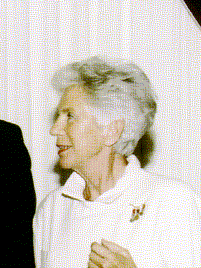
Jeannie Rousseau, Viscomtesse de Clarens (1 April 1919 – 23 August 2017), was a French intelligence operative who worked inside occupied France during World War II. Operating under the codename AMNIARIX, she provided Allied intelligence with detailed information about German weapons programs, in particular the emerging V‑1 and V‑2 rocket projects. Her reporting reached London and is credited with helping to shape Allied countermeasures, including actions against the Peenemünde research facilities.
Image gallery
2 Images
Early life and recruitment
Rousseau was born in Saint-Brieuc, in the region of Brittany. Before the war she had a cosmopolitan education and spoke several languages, attributes that later proved valuable for clandestine work. After the German occupation of France, she was recruited into the French resistance network led by Georges Lamarque, known as the "Druids". Members of that network collected technical and military intelligence and passed it to the United Kingdom via secure channels.
Espionage activities and impact
Working as a courier and intelligence source, Rousseau developed contacts among German scientists, technicians and administrators. She used conversational skills and careful tradecraft to elicit technical details about rocket tests, facilities, production priorities and the organization behind the weapons programs. These intelligence reports were written up and transmitted to London; historians and contemporary accounts attribute to her contributions that helped the Allies identify Peenemünde as a strategic target and to better understand the threat posed by V‑1 flying bombs and V‑2 rockets. The information she relayed contributed to planning and operations that delayed production and deployment of those weapons, reducing civilian and military casualties in areas targeted by the rockets.
Capture, imprisonment and survival
Rousseau was arrested by German security forces on more than one occasion. She endured interrogation and was deported to several concentration camps, surviving conditions that killed many other resistance members. Despite these ordeals, she maintained a degree of secrecy about her network that protected colleagues and sources. After liberation she returned to France and lived a life that included public remembrance of the resistance but also a degree of privacy about wartime trauma.
Legacy, recognition and later life
After the war Rousseau received recognition for her role in the resistance and for the strategic value of the intelligence she supplied. Her wartime codename, the network she served with, and the link between her reports and Allied operations have been the subject of books and documentary accounts. She died on 23 August 2017 in Montaigu, aged 98.
Notable facts
- Codename: AMNIARIX, used in Allied intelligence files.
- Network association: member of Georges Lamarque's "Druids" resistance group.
- Operational focus: technical and scientific intelligence on German rocket programs (V‑1 and V‑2).
- Experienced multiple arrests and imprisonment in concentration camps but survived the war.
- Her reporting is linked to Allied efforts against Peenemünde and to actions that mitigated the impact of Germany's early guided-weapon campaigns.
For further reading and archival references, consult specialized histories of the French resistance and intelligence operations during World War II as well as biographies that document the lives of operatives like Rousseau.
Related articles
Author
AlegsaOnline.com Jeannie Rousseau — French resistance agent (codename AMNIARIX) Leandro Alegsa
URL: https://en.alegsaonline.com/art/49789
Sources
- lefigaro.fr : "Décès de l'ancienne résistante Jeannie de Clarens"
- memoiredeguerre.pagesperso-orange.fr : "Jeannie de CLARENS née Rousseau"
- cia.gov : Honoring Two World War II Heroes
- rtl.be : "Résistante très active, elle avait transmis de précieux renseignements sur les bombes V1 et V2 allemandes: Jeannie de Clarens est décédée"