
Jan van Eyck — Early Netherlandish Painter and Innovator in Oil
Jan van Eyck (before c.1395–1441) was a leading Early Netherlandish painter whose refined oil technique, meticulous realism and court service in Bruges shaped Northern Renaissance art.
Overview
Jan van Eyck (before c. 1395 – before 9 July 1441) was a court painter active in the Burgundian Netherlands and based in Bruges. He is widely regarded as one of the most important Northern European artists of the early 15th century. Van Eyck's work is noted for its minute detail, subtle lighting, and a level of surface realism that marked a departure from earlier medieval conventions.
Image gallery
10 Images


Style and technique
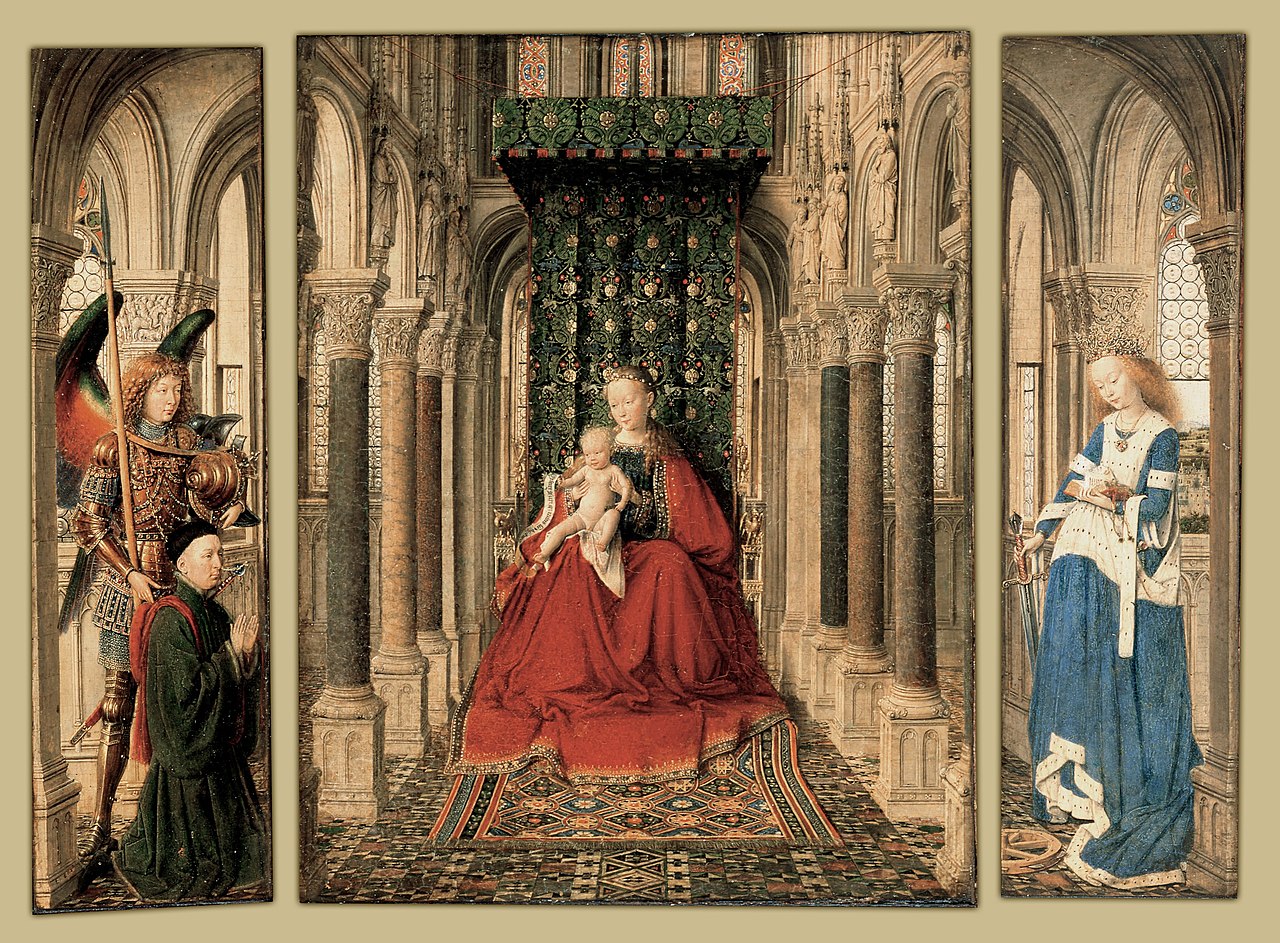
Van Eyck is often associated with refinements in the use of oil paint: precise glazing, thin layers, and careful manipulation of light to achieve translucency and texture. His panels show an attentive handling of reflective surfaces, fabrics, skin tones and landscape details. He frequently incorporated written inscriptions and a personal motto, commonly rendered as ALS ICH KAN ("As I can"), which functioned as a signature of artistic authorship.
Life and career
Though details of his early life remain uncertain, Jan worked alongside or took over projects begun by his older brother Hubert van Eyck. By the 1420s he was attached to the Burgundian court, serving dukes as painter and in various courtly duties that sometimes included diplomatic errands. His professional base in Bruges placed him at the crossroads of trade and patronage, where merchants and nobles commissioned portraits, devotional panels and altarpieces.
Major works
- Ghent Altarpiece (Adoration of the Mystic Lamb) – begun by Hubert and completed by Jan; a complex polyptych central to Northern art history.
- The Arnolfini Portrait – famous for its mirror reflection, symbols and interior detail; often cited for its documentary realism.
- Madonna of Chancellor Rolin and a small number of signed panels and portraits – demonstrate religious and civic commissions and stylistic range.
Legacy and significance
Van Eyck's naturalism and technical handling of oil had a profound impact on contemporaries and successors in the Low Countries, including Rogier van der Weyden and Hans Memling. His focus on observation, texture and individualized portraiture helped define the Early Netherlandish school and established visual approaches that contrasted with contemporary Italian developments in perspective and classicism.
Notable facts and scholarly context
Only a relatively small corpus of paintings is securely attributed to Jan van Eyck, and attribution remains an active area of research. Art historians emphasize his manipulation of surface effects, symbolic detail and inscriptions as keys to understanding his practice. The combination of court service, technical innovation and artistic presence in Bruges make Jan van Eyck a central figure in the transition from medieval to Renaissance art in Northern Europe.
Related articles
Author
AlegsaOnline.com Jan van Eyck — Early Netherlandish Painter and Innovator in Oil Leandro Alegsa
URL: https://en.alegsaonline.com/art/49383