
Jackanory (BBC children's television series)
Jackanory is a BBC children's television programme designed to encourage reading. It ran from 1965 to 1996 with thousands of short-story readings and occasional dramatised episodes.
Jackanory was a British children's television programme devised to make books and storytelling more appealing to young viewers. Broadcast by the BBC, it presented actors, writers and other performers reading or narrating stories directly to camera. The basic aim was simple and educational: to stimulate children's interest in reading by bringing children's fiction, folk tales and picture books into the home in short, accessible segments.
Image gallery
2 Images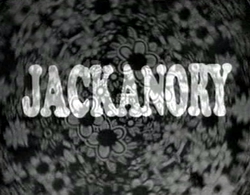

Format and presentation
The programme usually featured a single reader seated in an armchair, addressing the audience while reading from a book over a sequence of short episodes. A typical story was serialised across five weekday instalments, each around fifteen minutes long, allowing a full picture book or early chapter-book to be conveyed over a week. Illustrations or specially commissioned stills were sometimes shown to accompany the narration, helping to visualise scenes and characters for younger viewers.
- Single-reader format: a performer reads directly to camera.
- Serialisation: most books ran in five daily parts, Monday to Friday.
- Illustration: occasional still drawings accompanied the text.
History and development
First transmitted in December 1965, Jackanory developed into one of the BBC's longest-running children's series. Its inaugural reading was the fairy tale Cap-o'-Rushes, and over the decades the programme presented hundreds of stories drawn from contemporary children's literature, traditional folk tales and classic authors. Across its original run, which extended into the mid-1990s, the series produced around 3,500 episodes. A small revival was attempted in 2006 with a brief return of the format.
Notable moments include readings of works by established children's authors and a range of contributors from the acting profession. The final broadcast in the series' long initial run featured A. A. Milne's The House at Pooh Corner, read by Alan Bennett, bringing the show's first era to a close in 1996. The programme's contributors ranged from emerging readers to experienced stage and screen performers, giving each story a distinctive voice.
Variations and special programmes
Although the single-reader serial was the programme's hallmark, Jackanory sometimes experimented with other formats. A notable variant was Jackanory Playhouse, a strand of fully dramatised, cast productions presented as half-hour episodes. These entries were produced as short costume dramas or plays rather than straight readings and extended the series' approach to storytelling by presenting dialogues and visual action.
Illustrations for many Jackanory episodes were created by well-known artists, whose work helped shape the visual identity of the series. The illustrator Quentin Blake was among those associated with the show, providing characteristic drawings for several broadcasts; his contributions emphasised the link between text and image and reinforced the programme's literary focus (Quentin Blake).
Legacy and cultural significance
Jackanory is remembered for its plainspoken, unadorned celebration of books and storytelling. It became a cultural touchstone in the UK for parents, teachers and children, used as both entertainment and a resource to encourage literacy. The series demonstrated how television could support reading rather than replace it by directing young viewers to the printed books behind the readings. Over time, Jackanory influenced later educational and story-based television programming and retained a fond place in public memory for its intimate, reader-focused approach.
Early and final episodes featured named performers such as Lee Montague, who read the opening tale, and the series frequently showcased works by authors like A. A. Milne. Its long run and occasional reinventions illustrate the enduring appeal of storytelling in accessible formats, a principle that remains relevant in discussions about children's media and literacy today.
For more information about archival broadcasts, formats and contributors, consult resources held by the broadcaster and related educational collections that document children's television history.
Questions and answers
Q: What is Jackanory?
A: Jackanory is a long-running BBC children's television series made to interest children in reading.
Q: When did the show begin?
A: The show began on 13 December 1965.
Q: When did the show end?
A: The show continued to be broadcast until 1996.
Q: How many episodes were made?
A: They made around 3,500 episodes in its 30-year run.
Q: Who read the final story of the show?
A: The final story, The House at Pooh Corner by A. A. Milne, was read by Alan Bennett.
Q: When did the show return?
A: The show returned on 27 November 2006 for two stories.
Q: What was the show's format?
A: The show's format had an actor read from children's novels or folk tales, usually while seated in an armchair. From time to time the scene being read would be illustrated by a specially made still drawing. They were often done by Quentin Blake.
Related articles
Author
AlegsaOnline.com Jackanory (BBC children's television series) Leandro Alegsa
URL: https://en.alegsaonline.com/art/48932