
İstiklâl Marşı — Turkey’s National Anthem: origins, meaning, and legacy
Overview of İstiklâl Marşı (The Independence March): authorship, adoption in 1921, themes of patriotism and sacrifice, musical setting, official use in Turkey and the Turkish Republic of Northern Cyprus.
Overview
İstiklâl Marşı, commonly translated as "The Independence March," is the national anthem of Turkey. Adopted by the Grand National Assembly on 12 March 1921, it predates the formal proclamation of the Republic and arose from the spirit and struggles of the Turkish War of Independence. The poem was written to encourage and honor those fighting for national freedom and has since been enshrined in public life as a symbol of national unity and resilience. The anthem is treated as an official emblem and is performed at state functions, school ceremonies and other public occasions; for a basic reference see national anthem resources.
Image gallery
2 Images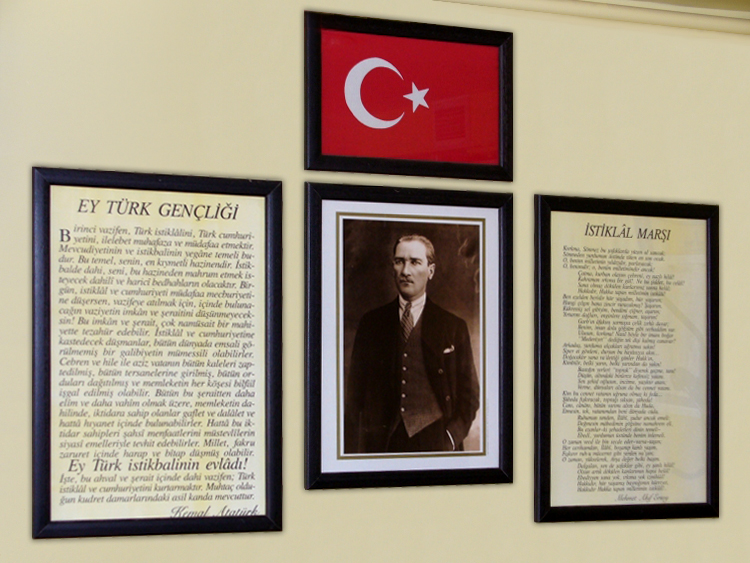

Text, themes and authorship
The lyrics were composed by Mehmet Âkif Ersoy, a prominent Turkish poet, writer and parliamentarian of the early 20th century. His text emphasizes devotion to the homeland, readiness to sacrifice, unshaken faith and the sanctity of the national flag. Rather than a neutral civic hymn, the poem is framed as a stirring exhortation suited to the wartime period in which it was created. Mehmet Âkif declined the monetary prize offered after a public competition to select the words, and his stance enhanced the poem’s moral and patriotic standing.
Music and arrangement
Music for the anthem has been associated primarily with Osman Zeki Üngör, a leading composer and conductor of his era, whose tune became the basis for the official march. In later years, formal orchestral and band arrangements were developed to standardize performance practice; a well-known harmonization by Edgar Manas provided an enduring concert and ceremonial setting. The anthem is normally performed in Turkish and in a single authoritative arrangement for official events.
History of adoption and official use
The poem was chosen through a competition organized during the national struggle and was formally declared the national anthem by the parliamentary assembly in March 1921. Its adoption while wars were still ongoing linked the text closely to the independence movement and to the founding generation of the new state. The anthem is codified in practice and tradition as the song to be played at government ceremonies, military events and patriotic commemorations. It is also used as the national anthem of the Turkish Republic of Northern Cyprus, following that entity’s constitution in 1983.
Importance and notable facts
- The anthem is widely taught and sung in schools and is a common element of national holidays and memorials.
- Its author, Mehmet Âkif, is remembered as a moral voice of his age and for refusing the prize money associated with the anthem’s selection.
- The musical version most often heard today rests on early-20th-century composition and later orchestral standardization, reflecting a blend of martial march style and solemn hymnody.
- For contextual background about the country and national symbols see Turkey information and for the flag referenced in the anthem see flag details.
İstiklâl Marşı remains one of the central cultural and political emblems of modern Turkey: a concise fusion of poetic exhortation and musical form that commemorates the struggles of independence and expresses enduring themes of loyalty, courage and national dignity.
Related articles
Author
AlegsaOnline.com İstiklâl Marşı — Turkey’s National Anthem: origins, meaning, and legacy Leandro Alegsa
URL: https://en.alegsaonline.com/art/48542