
Iqbal Park (Lahore): history, features and national significance
Public urban park in Lahore, Pakistan, known for the Lahore Resolution of 1940 and the Minar-e-Pakistan monument; a site of history, civic events and public recreation.
Overview
Iqbal Park is a large public green space in the city of Lahore, Pakistan. It occupies a prominent position in the city's historic precincts and is best known as the place where leaders of the All-India Muslim community gathered in 1940 to adopt what is commonly called the Lahore Resolution. The park bears the name of the poet-philosopher Allama Muhammad Iqbal, who is widely regarded as a spiritual inspiration for the Pakistan movement.
Image gallery
10 Images




History and political importance
During the period of British India the site was known as Minto Park. In March 1940 it hosted the annual session of the All-India Muslim League; between 21 and 24 March the delegates passed the Lahore Resolution, which articulated the demand for separate homelands for Muslims in the subcontinent and later became linked with the creation of an independent Pakistan in 1947. The park remains an important civic memorial where the political development of modern South Asia is commemorated.
Key features and monuments
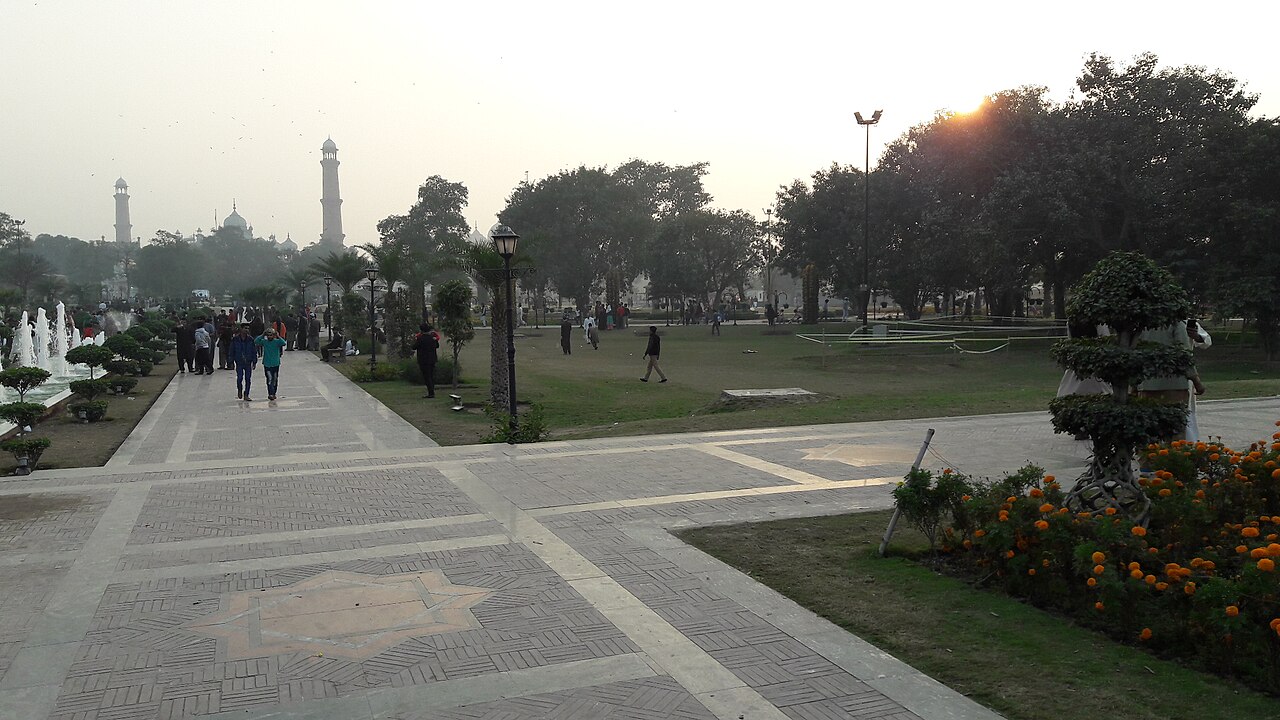
The most visible monument within the park is the Minar-e-Pakistan, a tall commemorative tower that marks the spot associated with the Lahore Resolution. The structure is an architectural focal point and a frequent destination for visitors, ceremonial events and national observances. Other elements of the site include landscaped lawns, walking paths, and viewpoints that connect the park to nearby historic buildings.
Uses and public role
Iqbal Park functions as an urban recreational area, a venue for political gatherings, and a site for cultural and national celebrations. Locals and tourists alike visit the Minar and the surrounding lawns for leisure, photography and to attend official ceremonies held on national holidays. Conservation and maintenance efforts are periodically undertaken to preserve the park's appearance and to accommodate large public events.
Location and surroundings
The park sits in a historic part of Lahore, within walking distance of several notable landmarks. Its setting contributes to the concentration of cultural tourism in the area and makes it a focal point for visitors exploring the city's heritage. Information about visiting hours, guided tours and access is typically available through municipal and tourism resources.
Notable facts and distinctions
- The site is linked to the Lahore Resolution and the wider political movement that culminated in independence in 1947; this connection is symbolized by the Minar-e-Pakistan (Minar-e-Pakistan).
- Its former name, Minto Park, reflects the colonial-era designation and underscores the layered history of the location (British India).
- The park commemorates Allama Iqbal and his intellectual legacy (Allama Iqbal), while continuing to serve everyday community and ceremonial functions in Lahore, Pakistan.
- Readers seeking more detailed archival or visitor information may consult official resources and historical accounts of the 1940 session and subsequent developments (Lahore Resolution).
Related articles
Author
AlegsaOnline.com Iqbal Park (Lahore): history, features and national significance Leandro Alegsa
URL: https://en.alegsaonline.com/art/48076