
Lahore Resolution (1940) — the Pakistan Resolution
The Lahore Resolution, adopted by the All-India Muslim League in March 1940, called for autonomy for Muslim-majority regions in British India and later became the political foundation of the Pakistan movement.
The Lahore Resolution, commonly called the Pakistan Resolution, was adopted by the All-India Muslim League during its annual session in Lahore on 23 March 1940. Drafted by the League’s working committee in the days immediately before the session, the resolution articulated a formal demand that Muslim-majority areas in British India be constituted into autonomous units. It is widely regarded as a turning point in the political development that led to the creation of Pakistan in 1947 and is commemorated annually in Pakistan on 23 March.
Image gallery
6 Images


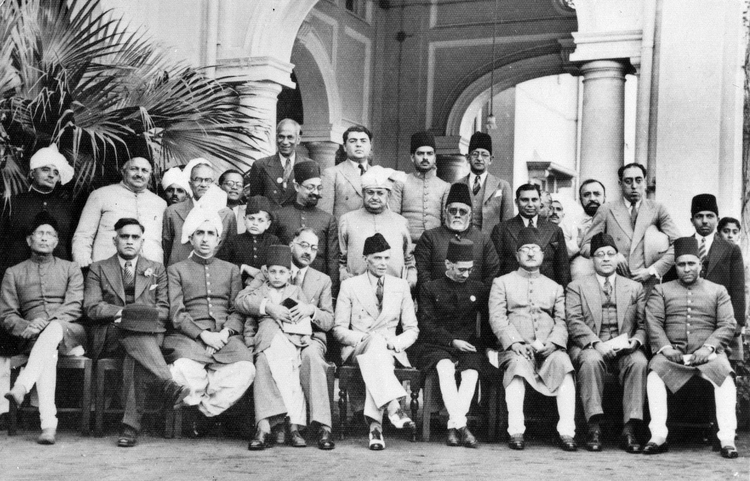
Text, aims and interpretation
The resolution did not use a single, unequivocal phrase for a sovereign nation under the name Pakistan; rather, it called for the grouping of Muslim-majority provinces into "independent states" or autonomous units where Muslims would be politically and administratively secure. Over time the practical and popular interpretation of the resolution gravitated toward the idea of a single Muslim homeland. Historians note that the language reflected both the immediate political context and a strategy to win broader acceptance among different regional leaders.
Drafting and presentation
The resolution was prepared by a 25-member working committee of the All-India Muslim League and presented at Minto Park (now Iqbal Park) in Lahore. The formal session at which it was adopted is often linked with the place by name; the assembly site later became the location of the Minar-e-Pakistan monument. The draft was delivered to the League membership by Maulvi A.K. Fazlul Huq on committee instructions, and it reflected contributions from political leaders across several provinces.
Historical context and development
The resolution must be seen against the background of communal politics in British India, the distinct political demands of Muslim leaders, and the failure of prior constitutional arrangements to satisfy those demands. Between 1940 and 1947 the Muslim League’s platform hardened; campaign activity, negotiations with the British government and other Indian political parties, and evolving public opinion all shaped how the resolution’s aims were pursued and realized. The demand for separate Muslim-majority units influenced the eventual partition of British India into two dominions.
Legacy, commemoration and significance
The Lahore Resolution occupies an important place in Pakistani national memory. Its adoption is marked each year, and the site of the declaration is memorialized by the Minar-e-Pakistan monument in Iqbal Park. The resolution is often cited in political histories as the formal start of the League’s commitment to separate Muslim political identity and self-determination, a development with lasting consequences for the subcontinent’s map and for communal relations.
Notable facts and distinctions
- The session and resolution are commonly known by two names: the Lahore Resolution and the Pakistan Resolution, reflecting both their place of adoption and their later interpretation.
- The document was adopted by delegates from many provinces and reflected regional interests as well as a common political aim.
- The site of the resolution’s adoption, Minto Park, was later renamed Iqbal Park; a monument there commemorates the event and is a focal point for official ceremonies.
For further background on the organisation that moved the resolution and on the session at Lahore, see the pages of the All-India Muslim League and the Lahore session entry at Lahore. For discussions of the resolution’s language and its application to provincial demands, sources on British Indian provinces and constitutional history are useful; see summaries of the major provinces in that era (provincial context) and studies of the Pakistan movement (Pakistan movement). The memorial at the adoption site is described at Minar-e-Pakistan.
Questions and answers
Q: What is the Lahore Resolution?
A: The Lahore Resolution, also known as the Pakistan Resolution, was a political resolution drafted between 22nd and 24th March 1940 by the 25-member Working Committee of the All-India Muslim League. It called for greater autonomy of Muslim majority states such as Punjab Bengal Sindh, NWFP within British India. It is seen today as a call for a separate Muslim state, Pakistan.
Q: Who drafted the Lahore Resolution?
A: The Lahore Resolution was drafted by the 25-member Working Committee of the All-India Muslim League.
Q: When was it adopted?
A: The resolution was formally adopted by the Muslim League membership at its general session on 23 March 1940 held at Lahore.
Q: Where did it take place?
A: The resolution was presented at Minto Park (now renamed 'Iqbal Park'), in Lahore, by Maulvi A.K. Fazlul Huq on instructions from the Working Committee.
Q: What structure stands in remembrance to this event today?
A: Today, there is a Minar-e-Pakistan structure that stands in Greater Iqbal Park in Lahore to commemorate this event and its importance to Pakistani history and culture.
Q: How long had fair ideas of Muslims separation been floating around before this resolution took place?
A: Fair ideas of Muslims separation had been floating around Indian political atmosphere prior to this resolution taking place.
Related articles
Author
AlegsaOnline.com Lahore Resolution (1940) — the Pakistan Resolution Leandro Alegsa
URL: https://en.alegsaonline.com/art/55426