
Iqaluit — capital city of Nunavut, Canada
Iqaluit (ᐃᖃᓗᐃᑦ) is the largest community and capital of Nunavut, located on Baffin Island. It is a northern administrative, cultural, and transportation hub with strong Inuit heritage.
Overview
Iqaluit (Inuktitut: ᐃᖃᓗᐃᑦ) is the capital and largest community of Nunavut in northern Canada. Situated on the shore of Frobisher Bay on Baffin Island, it functions as the territorial capital and a regional centre for government services, education, health care, and commerce. The community has a predominantly Inuit population and is widely recognized for its role in contemporary Arctic governance and culture.
Image gallery
10 Images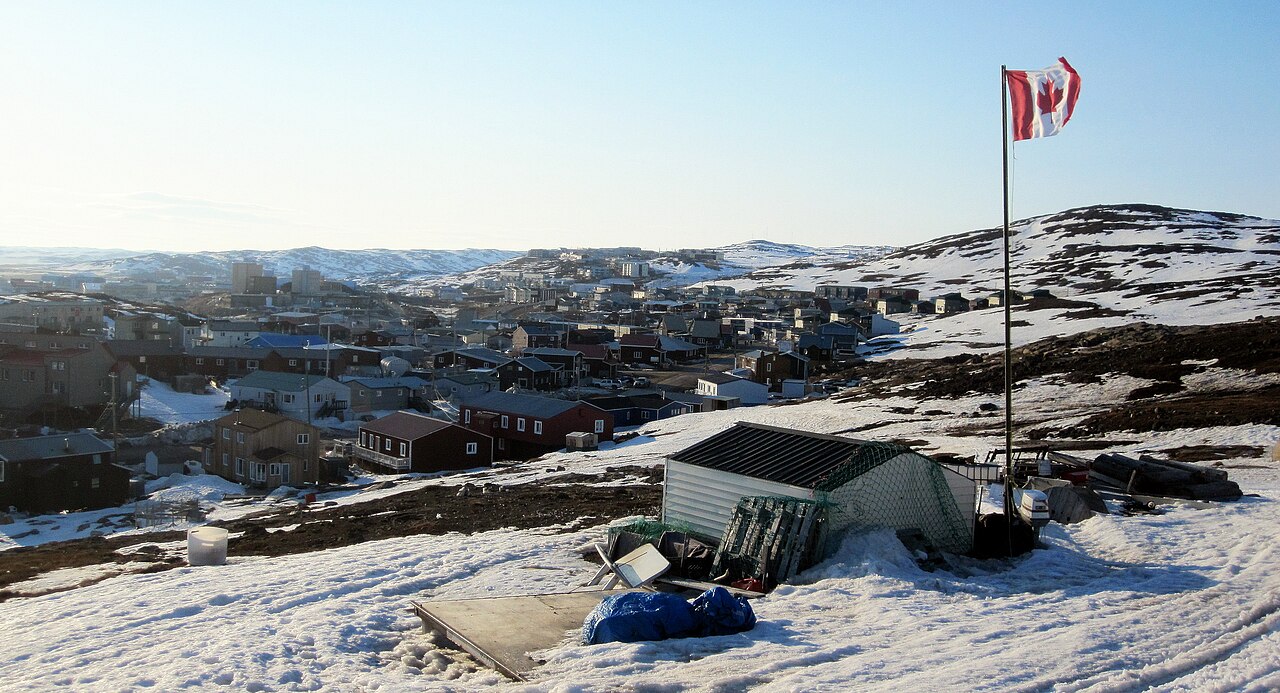



Geography and climate
Iqaluit lies on a sheltered bay with rocky terrain and tundra vegetation. Its climate is Arctic maritime: long, cold winters and short, cool summers. Sea ice influences seasonal travel and local food sources. Unlike more northerly Arctic settlements, Iqaluit is south of the Arctic Circle and therefore does not experience true polar day or polar night, but daylight varies greatly between seasons.
History and development
The area has been used by Inuit for millennia. In the 20th century a small settlement expanded around an airstrip and federal activity; the town was known for many years as Frobisher Bay and officially adopted the traditional name Iqaluit in the late 20th century. When Nunavut was established in 1999, Iqaluit became its territorial seat, hosting the legislature and major administrative offices.
Economy, culture, and society
Iqaluit's economy is driven by public administration, construction, services, arts and crafts, and a growing tourism sector. Inuit culture is visible in language, art, and community life; Inuktitut and English are commonly spoken. Traditional hunting and fishing continue alongside modern employment. High living costs, limited housing, and the need for infrastructure improvement are ongoing local challenges.
Transportation and connections
- Iqaluit is accessible primarily by air year-round; a deep-water port and seasonal sealift connect it to other communities during ice-free months.
- There are no road links to southern Canada, so goods and people move mostly by plane or ship.
Iqaluit serves as both a practical hub for Arctic administration and a cultural centre where contemporary Inuit identity and northern governance intersect. For further information about the territory, see Nunavut and broader context for Canada.
Related articles
Author
AlegsaOnline.com Iqaluit — capital city of Nunavut, Canada Leandro Alegsa
URL: https://en.alegsaonline.com/art/48074
Sources
- city.iqaluit.nu.ca : "MAYOR MADELEINE REDFERN"
- city.iqaluit.nu.ca : "Council Members"
- www1.elections.nu.ca : Results for the constituency of Iqaluit-Manirajak
- www1.elections.nu.ca : Results for the constituency of Iqaluit-Niaqunnguu
- www1.elections.nu.ca : Results for the constituency of Iqaluit-Sinaa
- www1.elections.nu.ca : Results for the constituency of Iqaluit-Tasiluk
- city.iqaluit.nu.ca : "Welcome to the City of Iqaluit"
- city.iqaluit.nu.ca : "About Iqaluit: History"
- climate.weatheroffice.ec.gc.ca : Environment Canada
- commons.wikimedia.org : Iqaluit