
International Mathematical Olympiad
Annual international competition for pre-university students featuring six proof-based problems over two days; teams of six, national selection, and awards for top performers.
Overview
The International Mathematical Olympiad (IMO) is the oldest and most prestigious annual mathematics competition for secondary-school students. Each participating country may send a team of up to six contestants; eligibility normally requires that competitors are not enrolled in a university program and are below a specified age. The problems are proof-based and designed to test creativity, problem-solving and deep understanding rather than routine calculation. For more information see the contest information page: IMO details and rules on eligibility: eligibility guidelines.
Image gallery
2 Images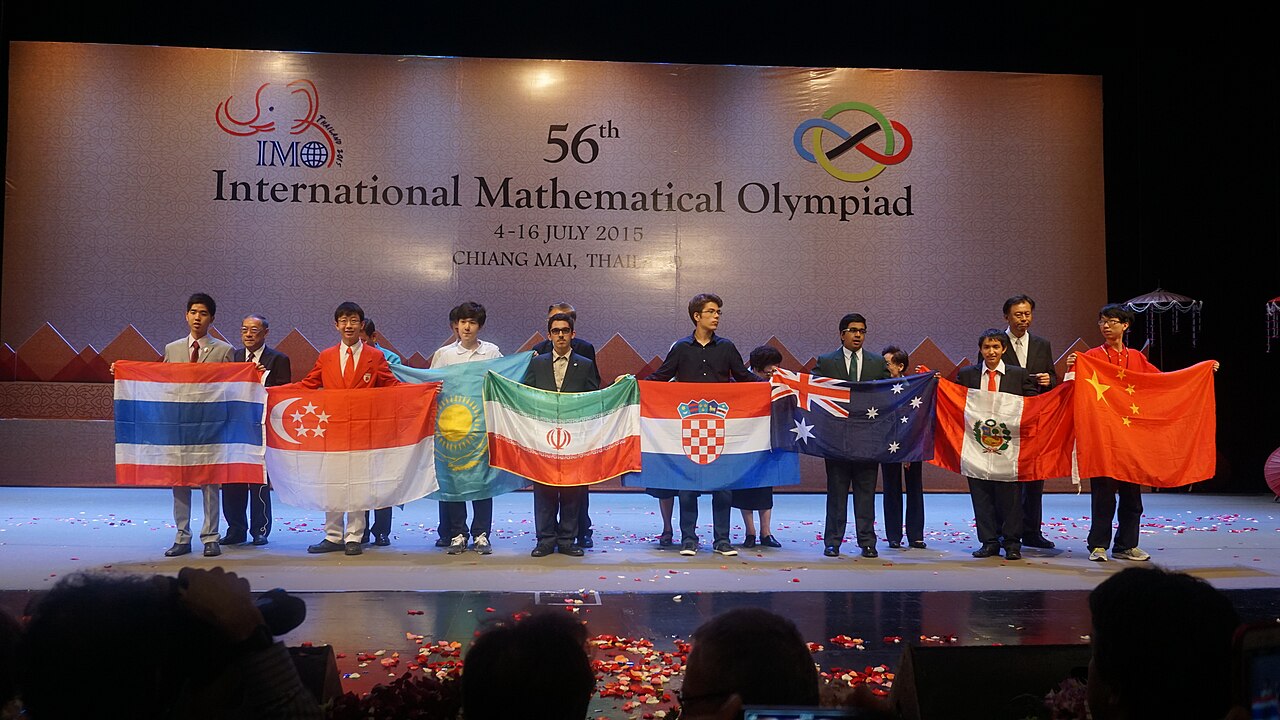

Format and subject matter
The contest consists of six problems presented over two consecutive days, with three problems each day and several hours devoted to writing solutions. Each problem is marked independently and solutions require rigorous justification. Typical subject areas are:
- Algebra
- Number theory
- Combinatorics
- Euclidean geometry
History and development
The IMO began in the mid-20th century as a regional competition and rapidly grew into a global event. Over decades it expanded from a handful of countries to a contest with broad international participation. The contest is organized annually by a host country and overseen by an international jury and scientific committee drawn from the participating nations.
Organization and selection
Most countries select their teams through national competitions, training programs and selection camps. Each national team is accompanied by leaders and deputy leaders who serve on the jury and coordinate translations and grading. Problem proposals come from member countries and are discussed and chosen by the jury prior to the competition.
Significance and outcomes
The IMO promotes mathematical talent, international cooperation and rigorous problem solving. Participants may receive individual medals (typically gold, silver or bronze) based on performance, and high scorers often continue into mathematical study or research. The contest also produces problem collections and solutions that serve as a resource for teachers and students worldwide.
Related articles
Author
AlegsaOnline.com International Mathematical Olympiad Leandro Alegsa
URL: https://en.alegsaonline.com/art/47669