
Intellect: nature, functions, history, and practical significance
An overview of intellect: the mind's capacity for reason, its principal functions, historical development, distinctions from emotion and intelligence, and its role in disciplines and everyday life.
Overview
Intellect is the mental capacity that enables reasoning, concept formation and understanding. It is commonly described as the aspect of the mind that processes ideas rather than sensations or movements. Intellect is exercised when we analyze evidence, draw conclusions, and form abstract concepts; in other words, when we engage in reasoning rather than immediate feeling or reflexive action.
Image gallery
2 Images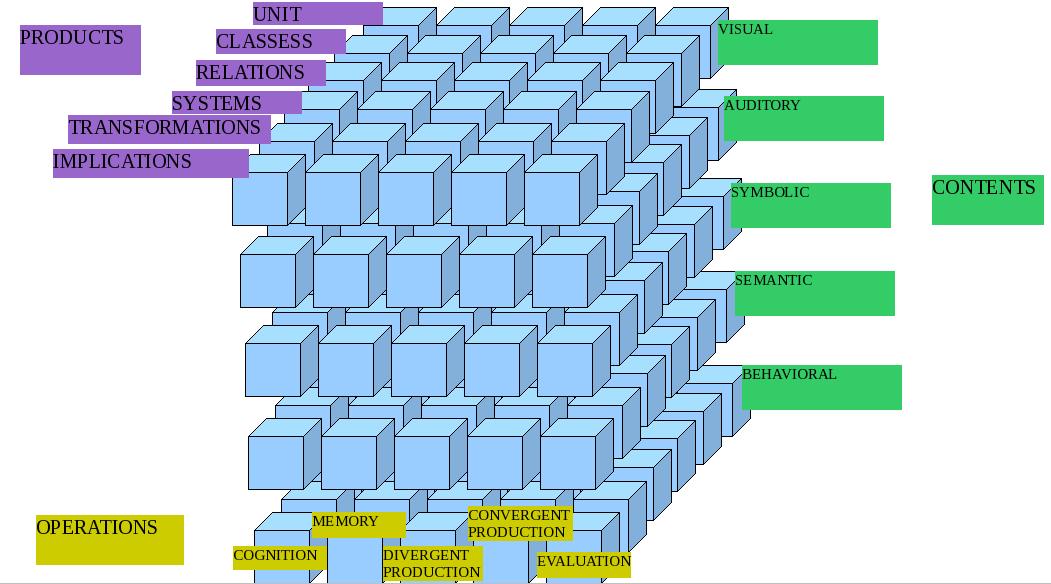

Key functions and components
The intellectual faculty is often broken down into interrelated operations. Three central activities are:
- Identification — recognizing and naming what a thing is, its essential qualities and category.
- Association — perceiving similarities, relations and patterns that connect different items or ideas.
- Differentiation — distinguishing one thing from another by identifying contrasts and limits.
These operations support higher tasks such as abstract thought, problem solving, planning and theoretical modeling.
History and development
Reflection on intellect stretches back to ancient philosophical traditions, where thinkers explored how humans know, reason and justify beliefs. Over centuries the concept was refined: scholastic and Enlightenment writers analyzed intellectual virtues and methods, while modern psychology and cognitive science study the mechanisms of thought, information processing, and decision-making. The word "intellect" has thus been used in both normative contexts (how one ought to reason) and descriptive contexts (how reasoning actually occurs).
Uses, disciplines and examples
Intellectual activity underpins many formal disciplines and everyday tasks. Academic fields such as Logic, Philosophy and Mathematics explicitly cultivate rigorous modes of thought; science and engineering rely on hypothesis, model-building and critical evaluation. In daily life, intellect guides planning, ethical reflection, language use and problem solving, enabling people to interpret complex information and make informed choices.
Distinctions and notable points
Intellect is related to but distinct from other mental capacities. It is not the same as emotion or volition: feelings influence judgments, and will powers act on intentions, but intellect refers specifically to cognitive appraisal. It also differs from a broader notion of intelligence, which may include social skills, creativity and practical problem-solving. Understanding these distinctions helps clarify educational goals, cognitive assessment, and discussions about human flourishing.
For further exploration of foundational questions about the mind and reasoning, consult introductory texts in cognitive science, logic and the history of ideas or follow specialized resources using the anchors above.
Related articles
Author
AlegsaOnline.com Intellect: nature, functions, history, and practical significance Leandro Alegsa
URL: https://en.alegsaonline.com/art/47548