
Inline skating: overview, equipment, styles, history and safety
Inline skating (rollerblading) is a wheeled form of skating using boots with aligned wheels. This article explains equipment, common styles, history, uses, and safety considerations.
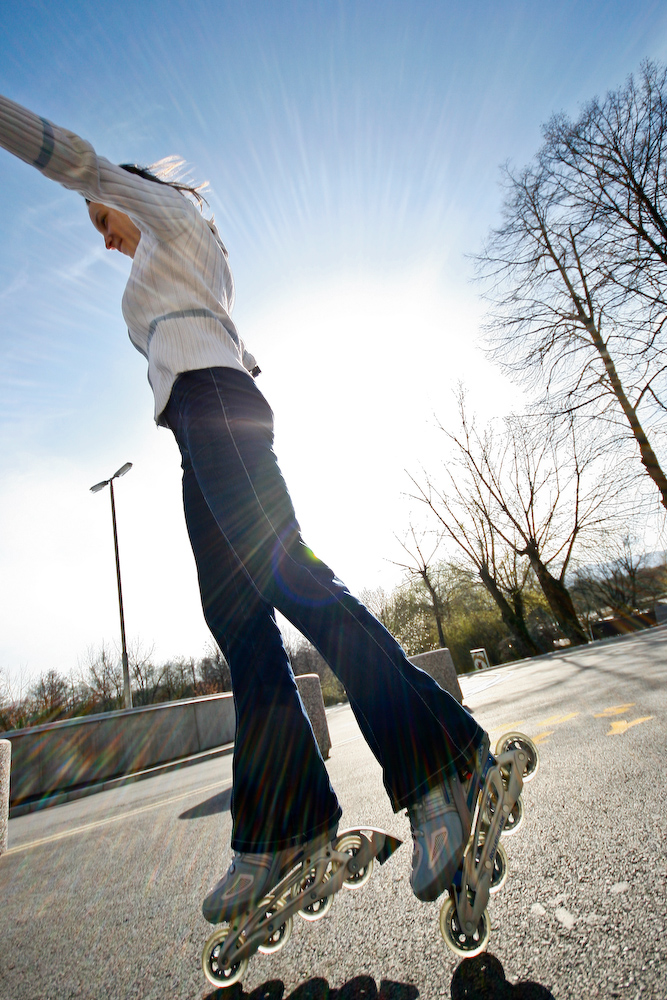
Inline skating is a form of human-powered wheeled movement performed on specially designed boots fitted with wheels arranged in a single line. Participants move across paved surfaces such as bike paths, streets, rinks, and skate parks using balance, stride and technique. Many people call the activity "rollerblading" after a popular brand, and it is closely related to but distinct from traditional roller skating.
Image gallery
8 Images


Equipment and basic characteristics
An inline skate combines a supportive boot, a chassis or frame that holds the wheels, and a set of polyurethane wheels and bearings. The boot may be soft for comfort or rigid for support; you can read about surface suitability at surfaces and terrain. Boots are sometimes called "shoes" in casual use; see manufacturer details at boot types and fitting. Wheels are typically made from polyurethane for grip and durability; more on materials is available at wheel materials. Wheels are arranged inline, usually three to five per skate, which favors straight-line speed and manoeuvrability. Bearings and frame design influence rolling efficiency and turning behaviour; see parts explained at wheels and bearings.
History and terminology
Inline skates emerged as a practical evolution from older wheeled skates. The recreational boom in the late 20th century brought the trademarked name into common speech; learn more about brand history at the Rollerblade story. Inline skating is often compared with roller skating, which typically uses two parallel pairs of wheels; for comparison see roller skating differences.
Common styles and uses
- Recreational/fitness: steady strides for exercise and commuting.
- Aggressive/skatepark: shorter frames and small wheels for tricks and grinds.
- Speed/in-line racing: long frames and large wheels for higher velocity.
- Inline hockey: hockey played on inline skates, adapted from ice hockey.
Inline skating is used for transportation, cardiovascular exercise, competitive sport and freestyle performance. It is popular in urban and suburban areas because of its compact, self-powered nature and the versatility of skate designs.
Safety, technique and notable facts
Proper technique—posture, stride, weight transfer and stopping—reduces injury risk. Protective gear such as helmets, wrist guards, knee and elbow pads is recommended, especially for beginners and aggressive skaters. Inline skates enable higher top speeds on flat, smooth surfaces than many quad skates because the inline wheel arrangement reduces rolling resistance. Maintenance of wheels and bearings is important for safe performance and longevity; periodic cleaning and wheel rotation help maintain even wear.
For further reading and resources on equipment, local clubs, competitions and maintenance guides, consult authoritative suppliers and community organizations linked below. Additional manufacturer, material and usage information can be found through the references at surfacing guides, boot fitting, and technical pages such as wheel/bearing basics.
Historical background and trademark information are discussed at brand histories, while comparisons with similar activities are available at roller skating resources and material science links at polyurethane properties.
Related articles
Author
AlegsaOnline.com Inline skating: overview, equipment, styles, history and safety Leandro Alegsa
URL: https://en.alegsaonline.com/art/47385