
Indonesian rupiah
The rupiah (IDR, symbol Rp) is Indonesia's official currency, issued by Bank Indonesia. This article summarizes its denominations, history, design features, economic role, and notable distinctions.
Overview
The Indonesian rupiah is the official currency of the Republic of Indonesia. Its international currency code is IDR and the familiar symbol is Rp. Bank Indonesia, the country's central bank, is the issuing authority and is responsible for monetary policy, currency issuance, and maintaining public confidence in the money supply. The rupiah has been in use since 1946 following the end of Japanese occupation and the declaration of Indonesian independence. For further official information see Bank Indonesia.
Image gallery
10 Images



Denominations and design
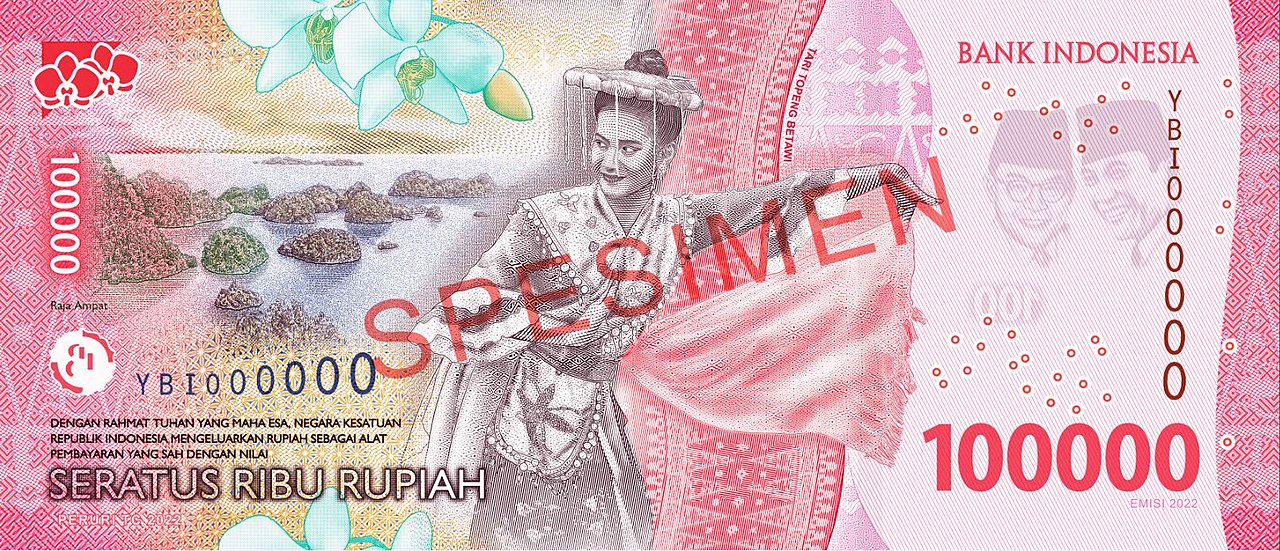
Modern circulating money in Indonesia comes in both coins and banknotes. Current coins include small-value pieces and larger denominations; due to inflation, the smallest coins are seldom used in everyday transactions. Banknotes are issued in a range of values to serve routine payments and larger purchases. Typical denominations in circulation include:
- Coins: 25, 50, 100, 200, 500 and 1000 rupiah (smaller coins often have low purchasing power).
- Banknotes: 1000, 2000, 5000, 10,000, 20,000, 50,000 and 100,000 rupiah.
Designs on notes and coins feature national heroes, cultural motifs, wildlife, and scenes of economic life. Modern banknotes incorporate a variety of security elements—watermarks, security threads, microprinting, intaglio printing, and optically variable features—to deter counterfeiting and to assist authentication by the public.
History and development
The rupiah was introduced as part of Indonesia's transition to independence after World War II. During the second half of the 20th century the currency experienced periods of both stability and high inflation. The late 1990s Asian financial crisis caused a sharp depreciation of the rupiah relative to major world currencies and prompted significant policy responses by Indonesian authorities and international partners. Since then, Bank Indonesia has taken steps to strengthen monetary institutions, improve currency management, and update banknote designs.
Uses, importance and practical notes
The rupiah functions as the medium of exchange, unit of account and store of value within Indonesia. Prices, wages, taxes and contracts are denominated in rupiah. In practice, smaller denominations may be less frequently used in some urban areas because of rising prices over time; conversely, high-value notes are important for larger transactions. Visitors and businesses should be aware of common practices such as retail pricing, cash handling, and the availability of electronic payment alternatives in many Indonesian cities.
Notable distinctions
Compared with some regional currencies, the rupiah has a history marked by episodes of rapid change in value, reflecting both domestic economic conditions and external shocks. The currency is an important symbol of national sovereignty and identity, and its banknotes are often used to celebrate cultural figures and historical milestones. For detailed, up-to-date information about denominations, security features and exchange procedures consult official sources such as Bank Indonesia.
Related articles
Author
AlegsaOnline.com Indonesian rupiah Leandro Alegsa
URL: https://en.alegsaonline.com/art/47205