
Il ritorno d'Ulisse in patria
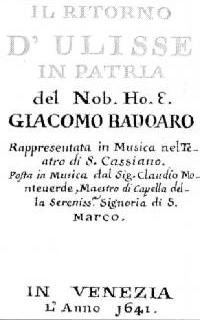
Il ritorno d'Ulisse in patria is an opera by Claudio Monteverdi (libretto Giacomo Badoaro), premiered in Venice 1639–40. It dramatizes Odysseus’ return to Ithaca and his contest with Penelope’s suitors.
Overview
Il ritorno d'Ulisse in patria is an early Baroque opera with music by Claudio Monteverdi and an Italian libretto by Giacomo Badoaro. The work was first staged in Venice during the 1639–40 carnival season. Its narrative draws on the closing episodes of Homer’s Odyssey, concentrating on Ulysses (Ulisse) as he returns to Ithaca and confronts the suitors vying for his wife Penelope.
Image gallery
9 Images





Structure and musical character
Originally presented in a prologue and five acts (later adapted into three), the opera exemplifies Monteverdi’s late style: an expressive mixture of recitative, solo song, ensembles and choral passages designed to serve dramatic text. The music favors rhetorical gestures and flexible instrumental colours to underline changing emotions—longing, disguise, recognition and finally violent resolution—rather than the strict aria structures of later opera.
Principal roles and dramatic outline
- Ulisse (Ulysses) – the returning hero
- Penelope – his faithful wife
- Telemaco (Telemachus) – their son
- The Suitors – rivals for Penelope’s hand
The dramatic core follows Ulisse’s arrival in disguise, the testing and recognition scenes, and the contest that determines Penelope’s future. The plot emphasizes personal loyalty and the psychological dimensions of reunion as much as the physical action of the contest with the suitors.
Performance history
After its Venetian debut the opera was little performed for centuries and survived chiefly through manuscript sources and later editions. It experienced renewed interest in the 20th century as scholars and performers sought to reconstruct Monteverdi’s stage works and to revive early operatic repertory using historically informed approaches. Modern productions often rely on editorial reconstructions and creative decisions about orchestration and staging.
Legacy and notable features
Il ritorno d'Ulisse in patria is valued for its dramatic nuance and its role in the development of opera as a literary-musical form. It sits alongside Monteverdi’s L'Orfeo and L'incoronazione di Poppea as a key surviving example of early Baroque theatre, notable for its attention to character psychology, flexible musical declamation, and its blending of solo and ensemble writing. Because original sources are not entirely complete, listeners and directors frequently encounter varying editions and interpretations, making the opera a living subject for scholarship and performance practice.
For further reading and resources see entries and performances linked via Venetian theatre studies and modern Monteverdi scholarship represented at online and print reference collections.
Related articles
Author
AlegsaOnline.com Il ritorno d'Ulisse in patria Leandro Alegsa
URL: https://en.alegsaonline.com/art/46672