
Icarus: Greek myth of flight, hubris, and the fall from the sky
Icarus, son of the craftsman Daedalus in Greek myth, flew with wings of feathers and wax and drowned after flying too near the sun; his story evokes ambition, disobedience, and limits of human striving.
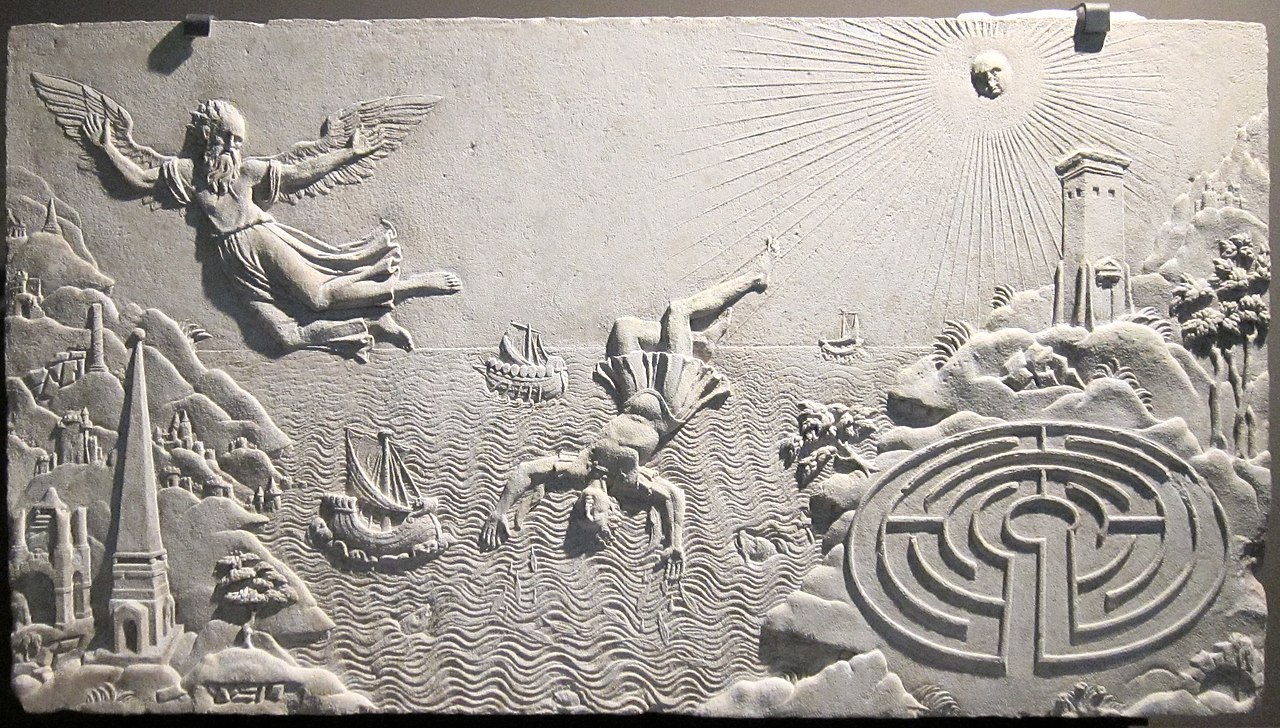
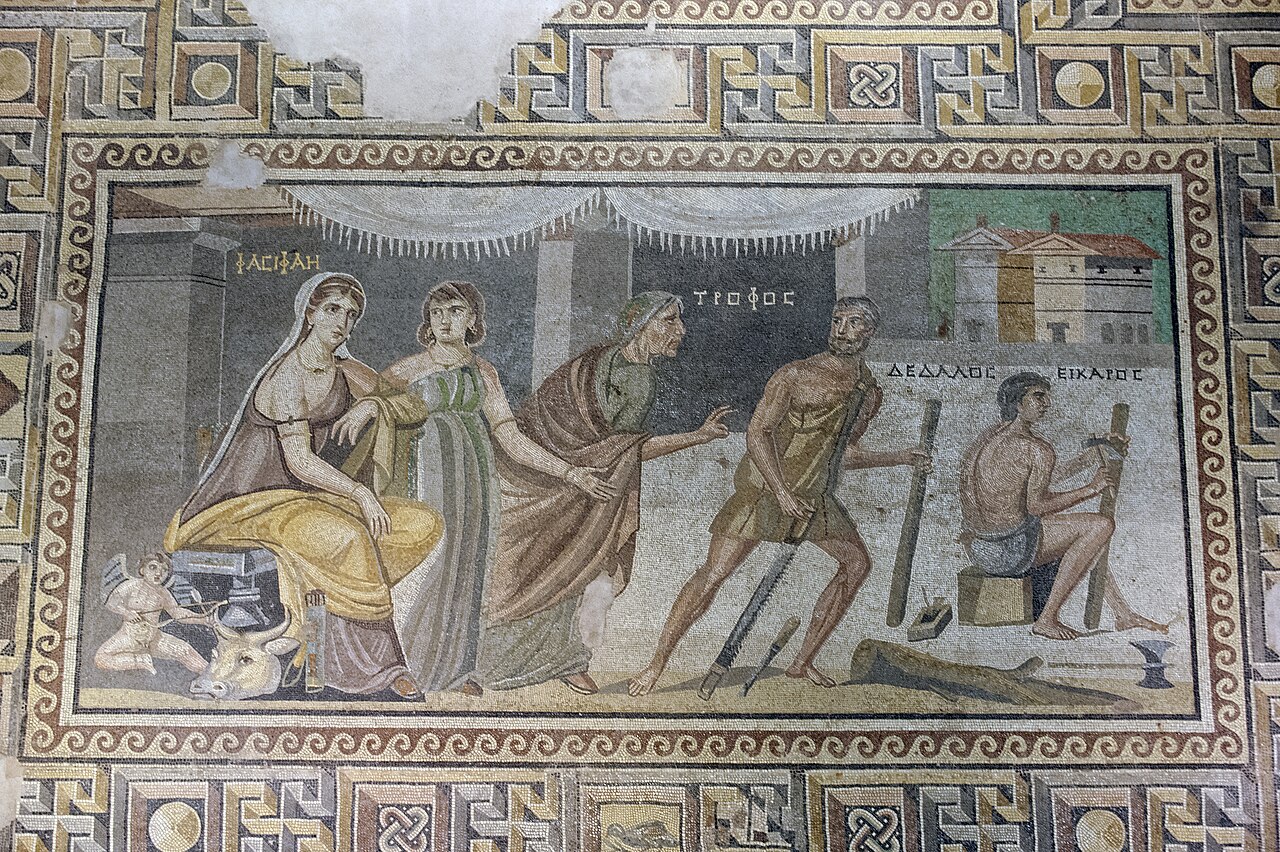
Icarus is one of the best known figures of ancient Greek mythology, remembered for his short-lived flight and tragic fall. He is traditionally described as the son of the inventor and craftsman Daedalus. Trapped on the island of Crete after Daedalus helped the hero Theseus and the princess Ariadne, the two were unable to leave by sea or land because of King Minos's control, so Daedalus fashioned wings of feathers and wax to escape.
Image gallery
10 Images





Story summary
According to the conventional account, Daedalus bound feathers to frames and fixed them with beeswax to make a pair of wings for himself and his son. Before their flight he warned Icarus to keep a moderate course: not too low, where sea spray could wet and weigh the feathers, and not too high, where the sun's heat could melt the wax. Overcome by exhilaration or youthful recklessness, Icarus flew higher, the wax softened, the feathers came loose, and he plunged into the sea and drowned. Daedalus mourned and buried his son on an island that later carried the name Icaria; the surrounding waters became associated in tradition with the Icarian Sea.
Classical sources and variations
The episode is most famously preserved in Ovid's Metamorphoses, though elements of the tale appear in earlier and later authors. Variations exist in small details — the materials described for the wings, the precise words exchanged, and the location of the fall. Some accounts emphasize the ingenuity and technical skill of Daedalus; others foreground Icarus's youthful disobedience or the moral about human limits. The Minotaur and the labyrinth form the wider narrative context for the escape, and the story is often retold alongside the larger myths of Crete, King Minos, and figures such as the Minotaur.
Themes and interpretations
Icarus has been read through many lenses. Common interpretations treat the myth as a cautionary tale about hubris: the danger of excessive pride and the consequences of ignoring prudent counsel. It also functions as a meditation on human aspiration and the desire to transcend natural boundaries, casting Daedalus as the emblem of creative skill and Icarus as the emblem of unrestrained ambition. Modern critics and scholars often explore psychological and social readings too, such as tensions between parental authority and youthful independence, or the cost of innovation when risks are underestimated.
Artistic and cultural legacy
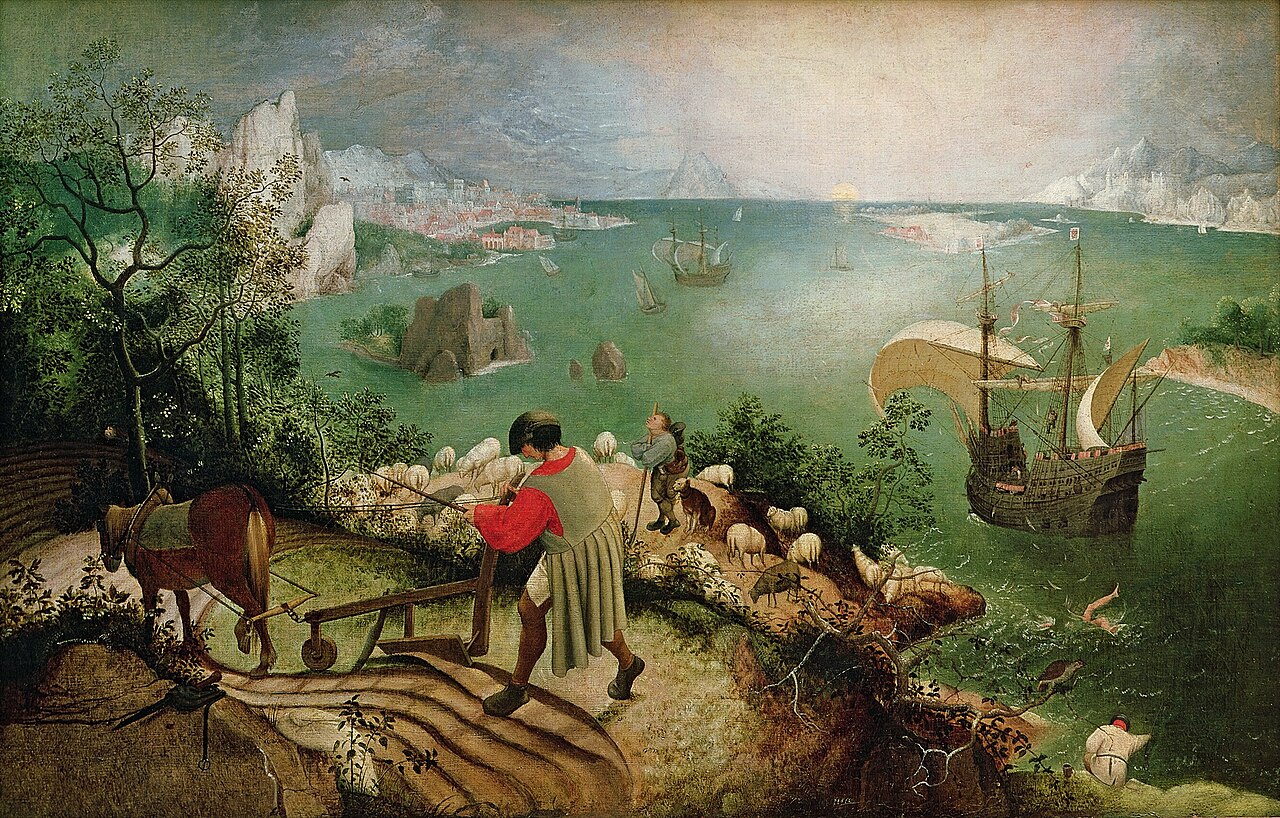
The image of Icarus falling from the sky has had a long cultural afterlife. Visual artists, poets, composers, and filmmakers have invoked the scene to examine ambition, failure, or the sublime. A frequently cited pictorial reference is a painting by Pieter Bruegel the Elder that places Icarus's fall as a small detail within a broad landscape, suggesting how individual tragedy can be overlooked in ordinary life. The phrase "to fly too close to the sun" has entered many languages as a metaphor for overreaching behavior.
Geography and memory
Tradition links the site of Icarus's fall to an island called Icaria (or Icaria), which lies in the eastern Aegean Sea near Samos; classical geographers and later storytellers associated the name of the place with the myth. The label "Icarian Sea" is used in some sources for the waters where he is said to have drowned. Such place-names reflect how myth was woven into landscape and local identity in the ancient world.
Modern relevance
Icarus is often cited in discussions about technological risk, exploration, and ethical limits. His story appears in educational contexts as a way to discuss risk management, the relationship between innovation and caution, and the symbolic costs of failure. Writers and artists continue to find in Icarus a striking emblem for the interplay of aspiration, pride, and human frailty.
For broader context on the mythic background and related episodes, see entries on Daedalus, Theseus, the Minotaur, and Ariadne. These linked traditions help situate the flight of Icarus within the larger cycle of Cretan myths and their enduring presence in Western literature and art.
Related articles
Author
AlegsaOnline.com Icarus: Greek myth of flight, hubris, and the fall from the sky Leandro Alegsa
URL: https://en.alegsaonline.com/art/46408